I Am A Faithful Catholic

I was listening to a new collection of hymns recordings in November of 2021 on The Devotional Hymns Project website produced by Peter Meggison when I heard the hymn I am a Faithful Catholic for the very first time to a melody composed by W. A. Mozart and I knew then that I wanted to include it in my collection of devotional hymns. 

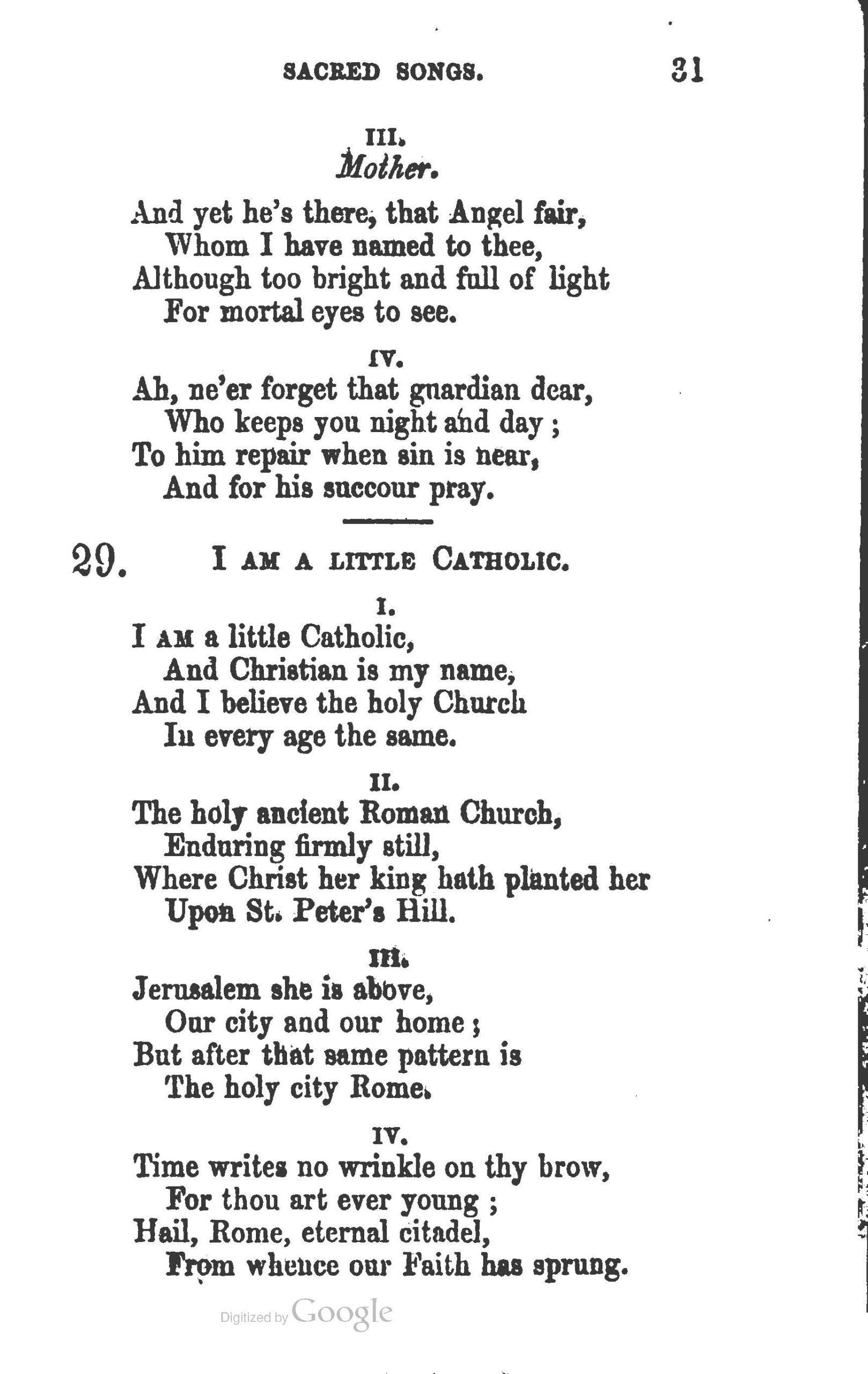
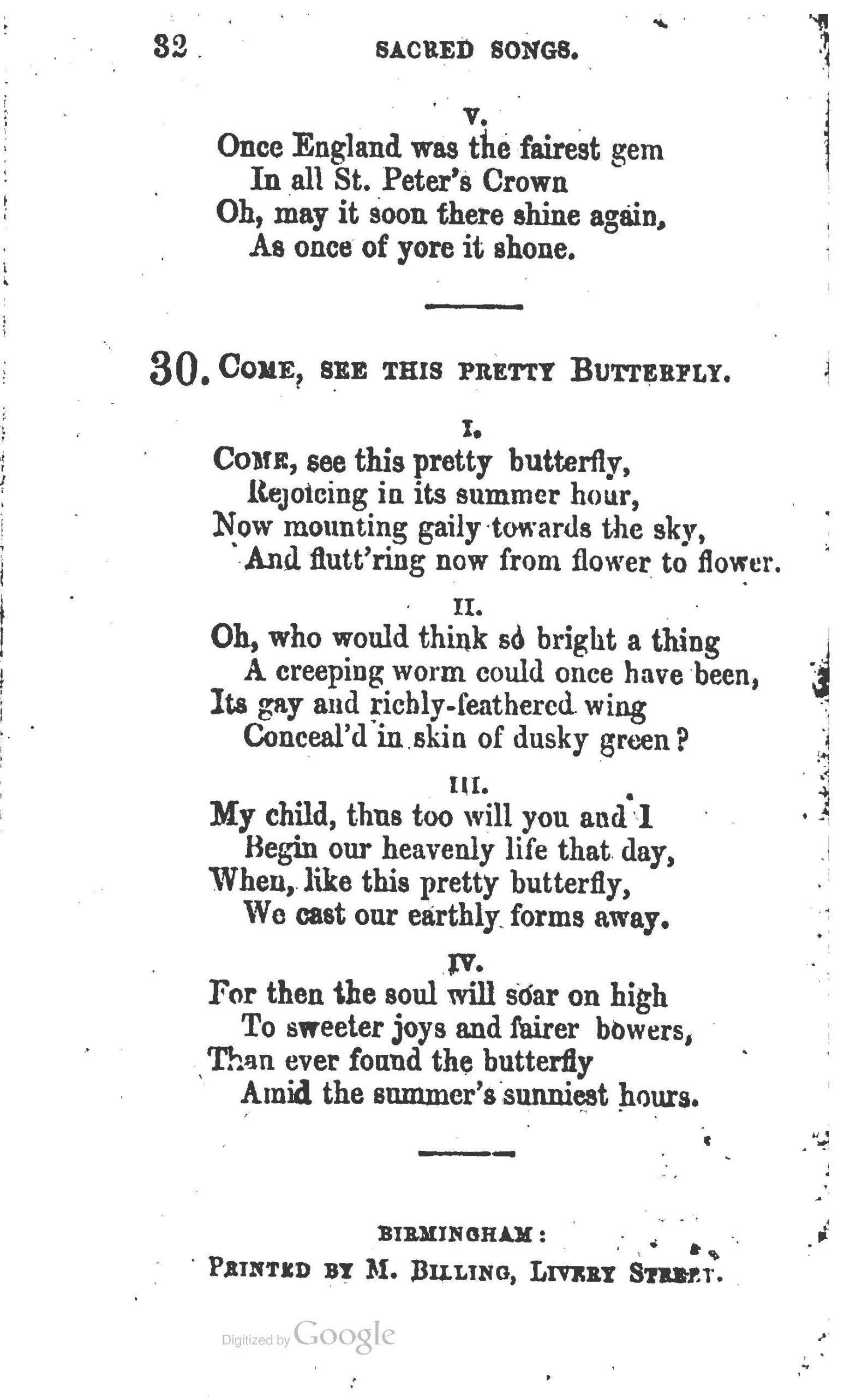
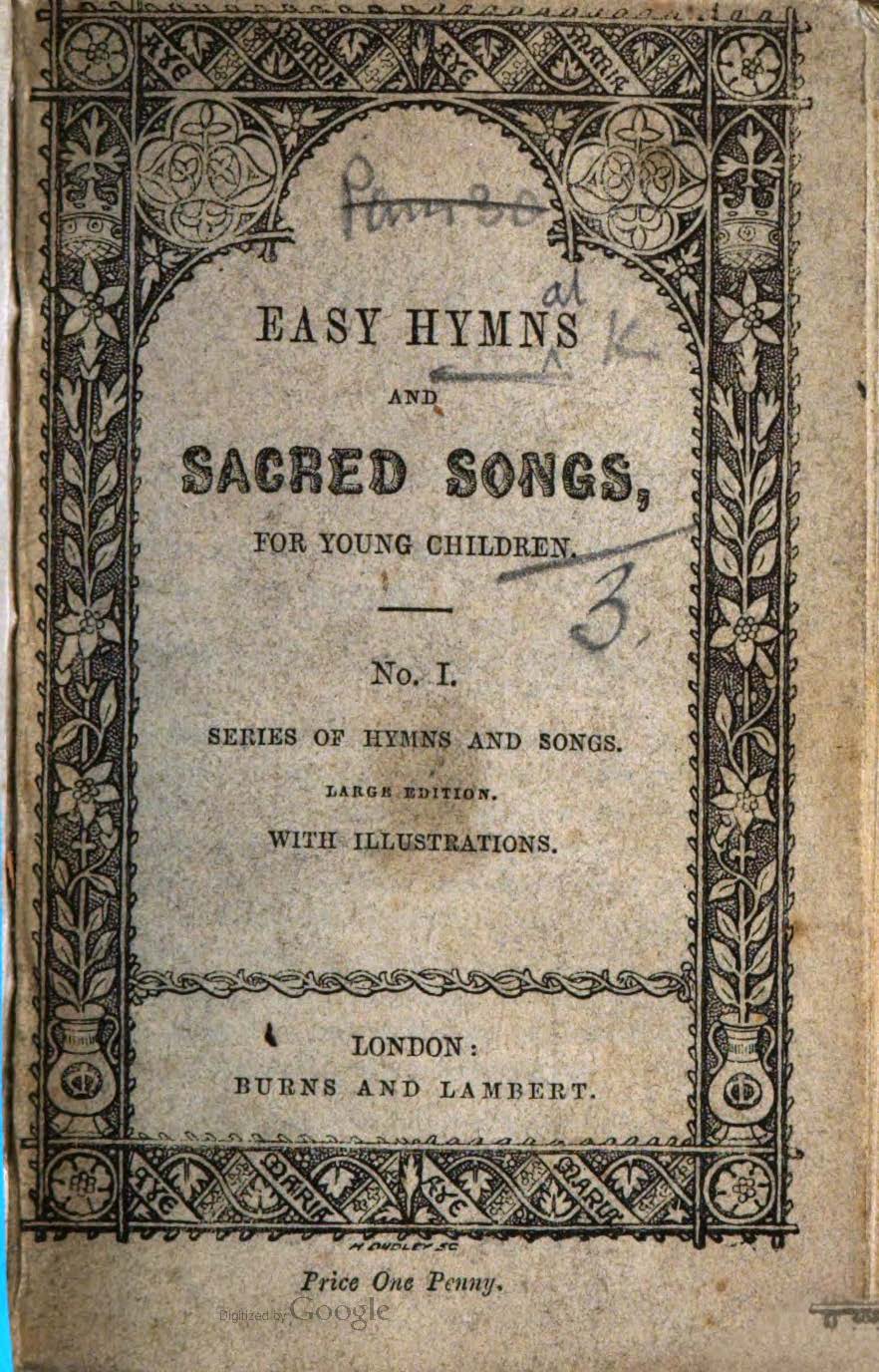
The earliest appearance of this hymn is found in EASY HYMNS AND SACRED SONGS FOR YOUNG CHILDREN, published in London by Burns & Lambert in 1853. This collection of children’s hymns was compiled by Father Henry Formby (1816-1884). This hymnal appeared in a period which produced many hymns for children. (Click on any image to enlarge)

Easy Hymns and Sacred Songs, 1853

Henry Formby was born in 1816, the son of Henry Grenehalgh Formby, second son of Richard Formby, of Formby Hall, county Lancaster, Esg. He was educated at Clitheroe Grammar School, and from there to the Charterhouse School, and ultimately was admitted into Brasenose College, Oxford. He received a Master of Arts and took Orders in the Church of England. He was appointed vicar of Ruardean, county, Gloucester. He petitioned to have his parish divided but was opposed by his bishop. This was during the Tractarian Movement or Oxford Movement, which Mr. Formby followed with keen interest.

The Oxford Movement was a 19th‑century reform effort in the Church of England that aimed to revive its Catholic heritage. It stressed apostolic succession, the importance of the sacraments, and more elaborate, beautiful liturgical worship. One of the most prominent figures of this movement was John Henry Newman, now St. John Henry Newman.

As a result, Mr. Formby was received into the Catholic Church, at St. Mary’s College, Oscott, January 24, 1846. After passing through a course of theology at Oscott, he was ordained a priest by Bishop Wareing (1791-1865) the first Roman Catholic Bishop of the Diocese of Northampton, on September 18, 1847. For several years, Father Formby served at St. Chads, Birmingham, and at Wednesbury, but for the last 18 or 20 years of his life he resided at the Dominican Priory of St. Peter, Hinckley, county Leicester, during which time he assisted in preparing the novices for priesthood. 

Father Formby died while on a visit to Colonel Worswick at Normanton Hall, county Leicester, on March 12, 1884, at the age of 67. He is buried at St. Joseph’s College, Mill Hill.  He spent much of his life dedicated to bringing about knowledge of the Scriptures and the Catholic faith by publishing more than forty volumes of Catholic catechetical material beautifully illustrated with instructive pictures.
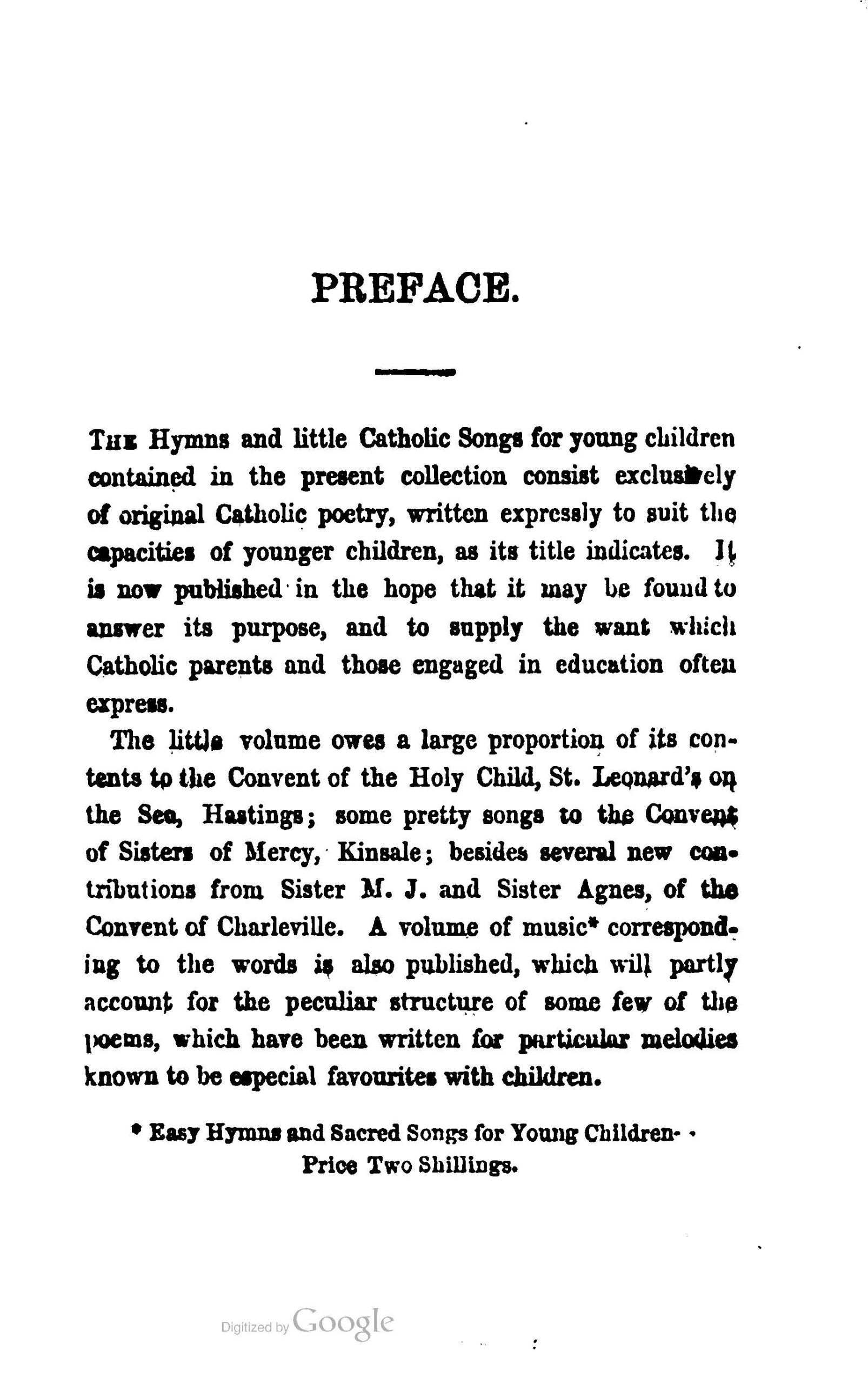
In the preface to EASY HYMNS AND SACRED SONGS, the editor provides attribution for the material included and offers particular thanks to three communities of nuns, acknowledging their contributions and assistance.

  • To the Convent of the Holy Child, St. Leonard’s-on-the-Sea, Hastings.
  • The Sisters of Mercy, those from the Convent of Kinsale and
  • The Convent of Charleville, County Cork, Ireland.

Although the hymns contributed by the Sisters of the Holy Child and the Kinsale community are not individually attributed, the Sisters of Mercy in Charleville are specifically acknowledged by name.

  • Sister M. J., now identified as Sr. Mary Joseph Croke (1825-1888) who wrote the hymn Kind Guardian Angel, Thanks To Thee.
  • Sister Agnes, now identified as Sister Agnes McSweeny (1823-1905) who wrote Hail, Glorious St. Patrick.
  • Sister M. B., her contributions include I am a Little Catholic, Sing A Joyous Carol, Jesus Teach Me How To Pray, and Heart of the Holy Child.

I contacted the archivist for the Sisters of Mercy in County Cork, Ireland to identify Sister M.B. However, because the archives were closed during COVID‑19 restrictions, the archivist could provide only limited information. As a result, Sister M.B.’s identity remains unknown at present. Click the link to learn more about the Sisters of Mercy in Charleville.

Melodies

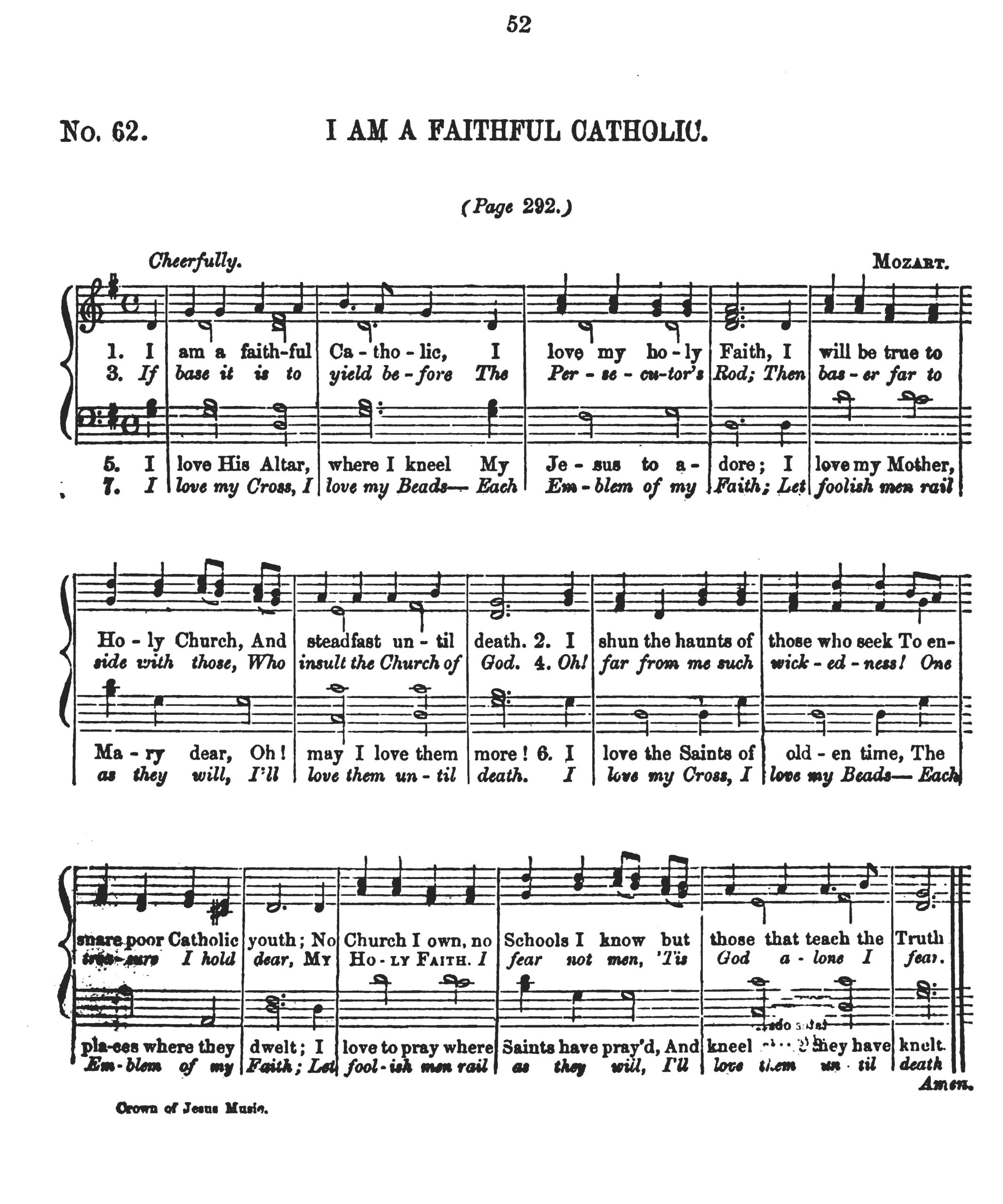
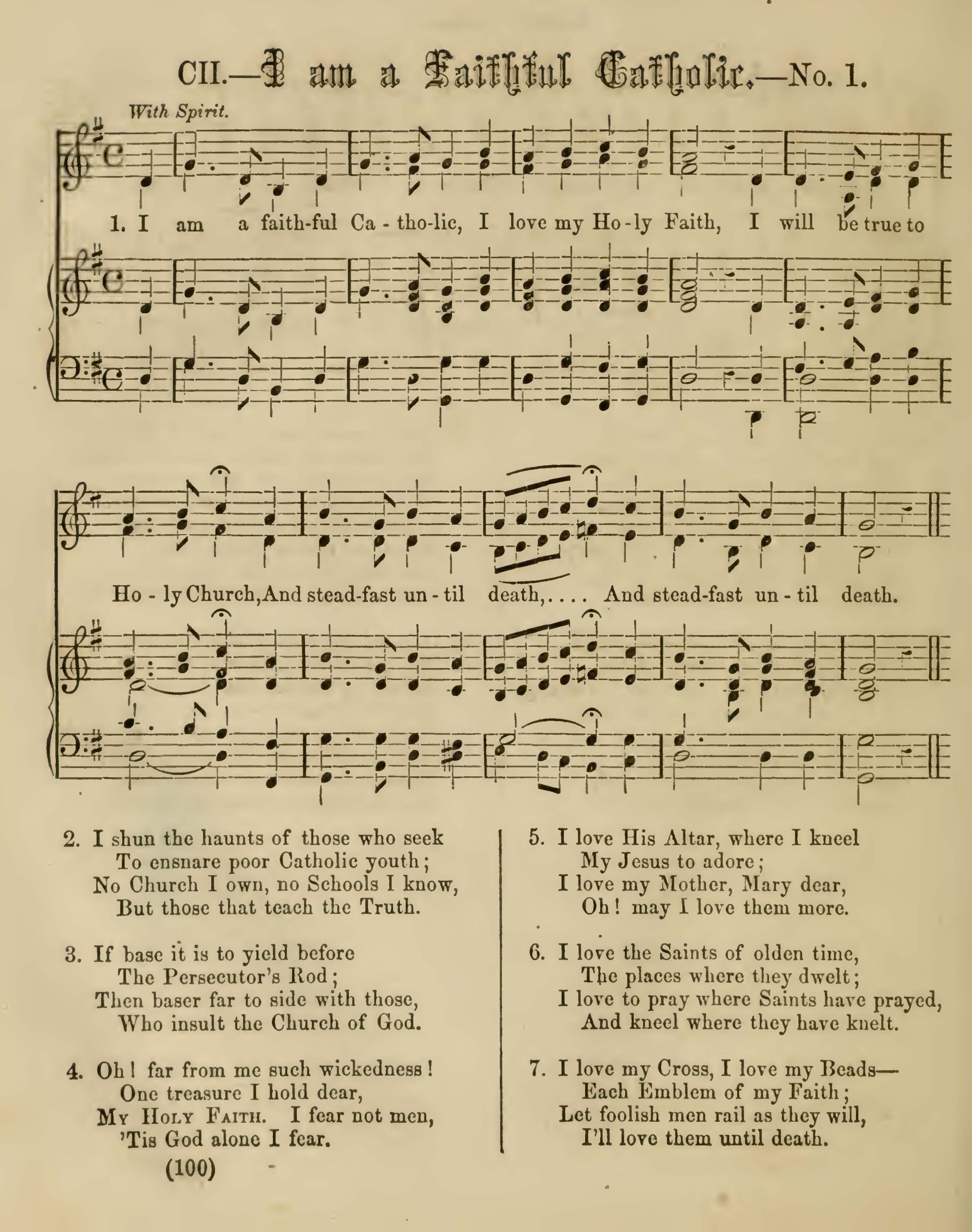
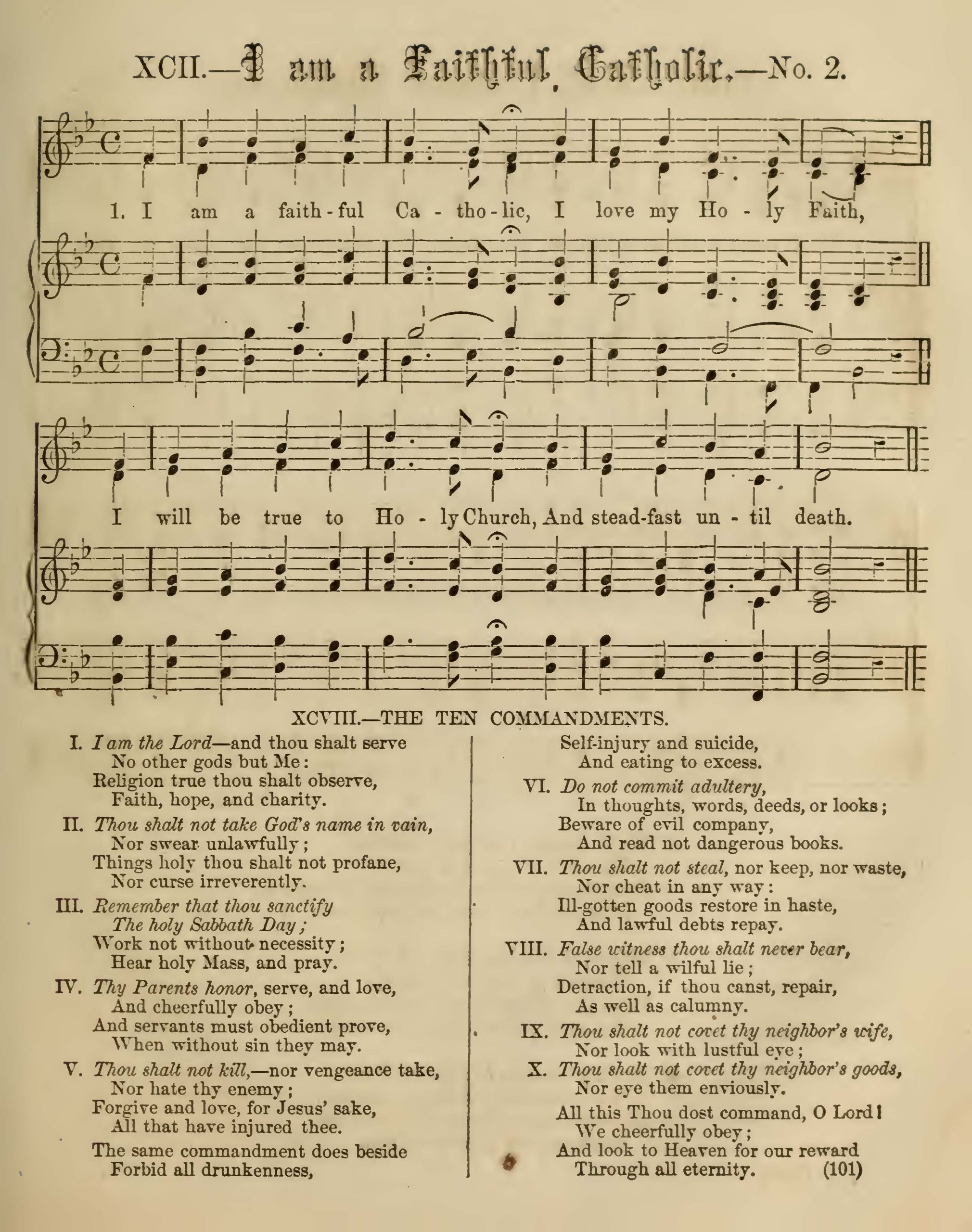
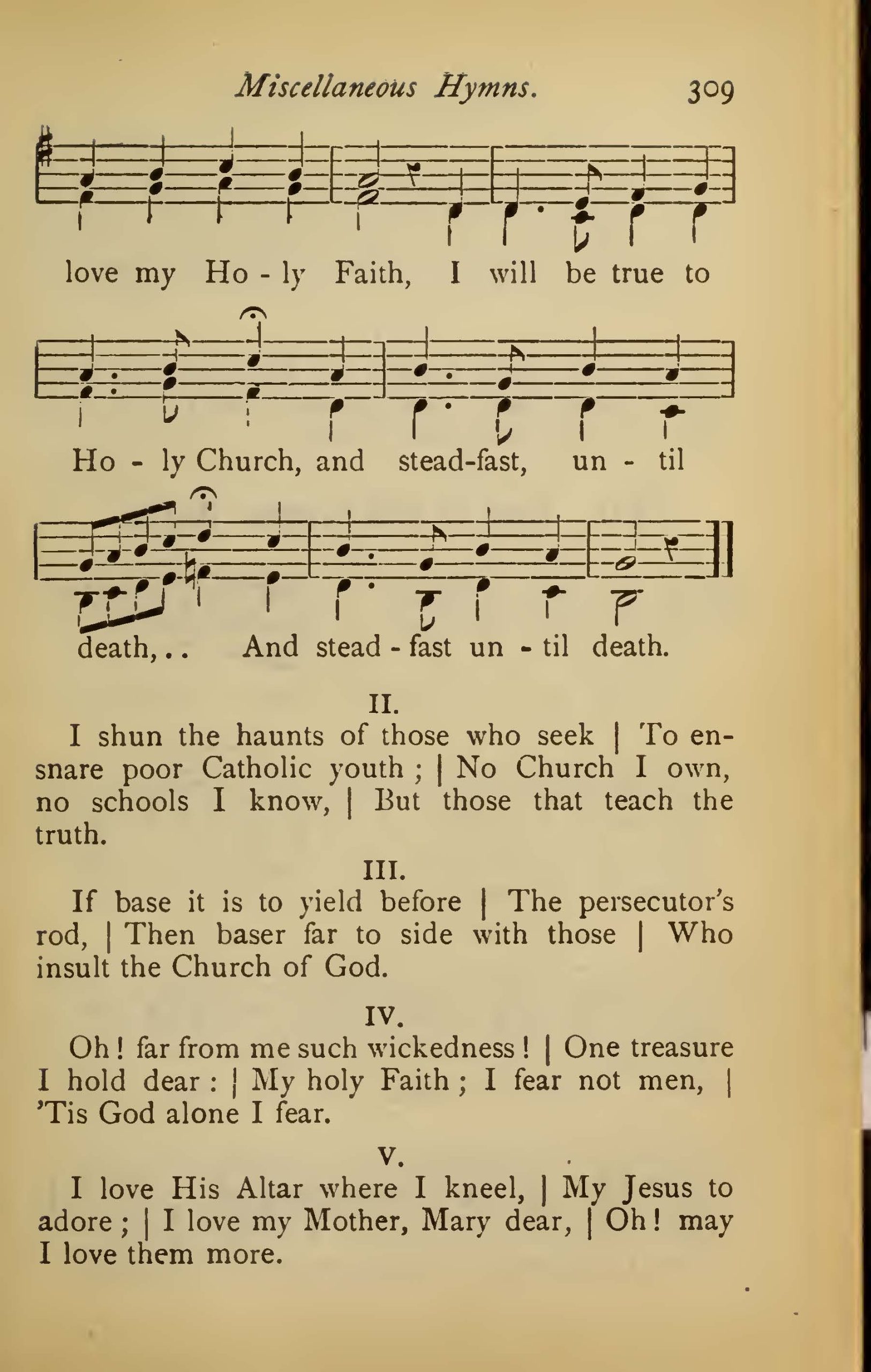
The hymn originally appeared under the title I Am a Little Catholic, with an opening verse affirming the singer’s Catholic identity and belief in the Church’s continuity. In the 1864 hymnal CROWN OF JESUS MUSIC, published in London by Thomas Ricardson & Son, set to a melody attributed to Mozart, it was retitled I Am a Faithful Catholic and its first verse was revised to emphasize fidelity and steadfastness to the Church. This revised version became the standard text and continued to be printed in both American and English Catholic hymnals until the 1920s. (Click on any image to enlarge)

Crown of Jesus Music, 1864
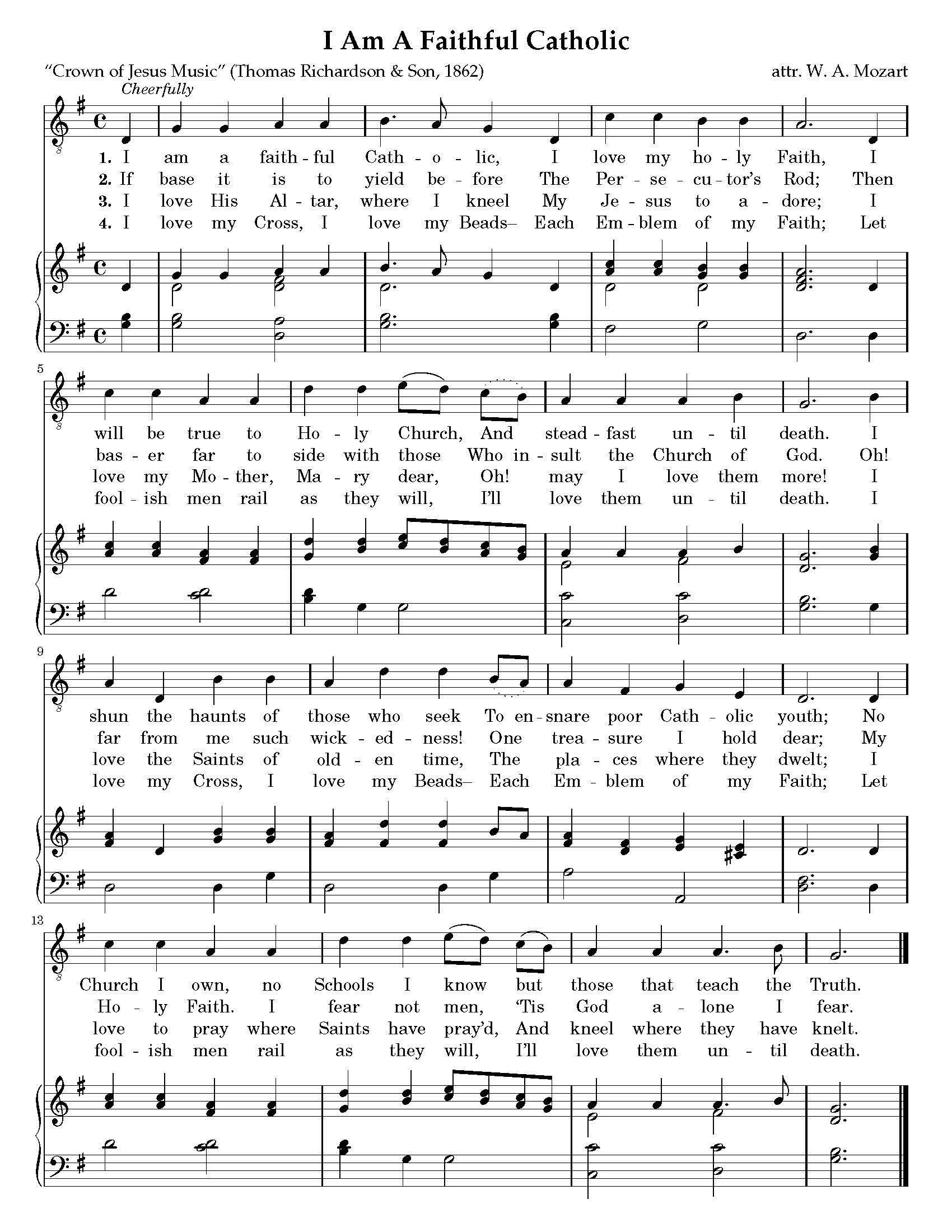
New Score - I Am A Faithful Catholic
Courtesy of The Devotional Hymns Project

In addition to the melody attributed to Mozart, five other tunes for the hymn were identified.

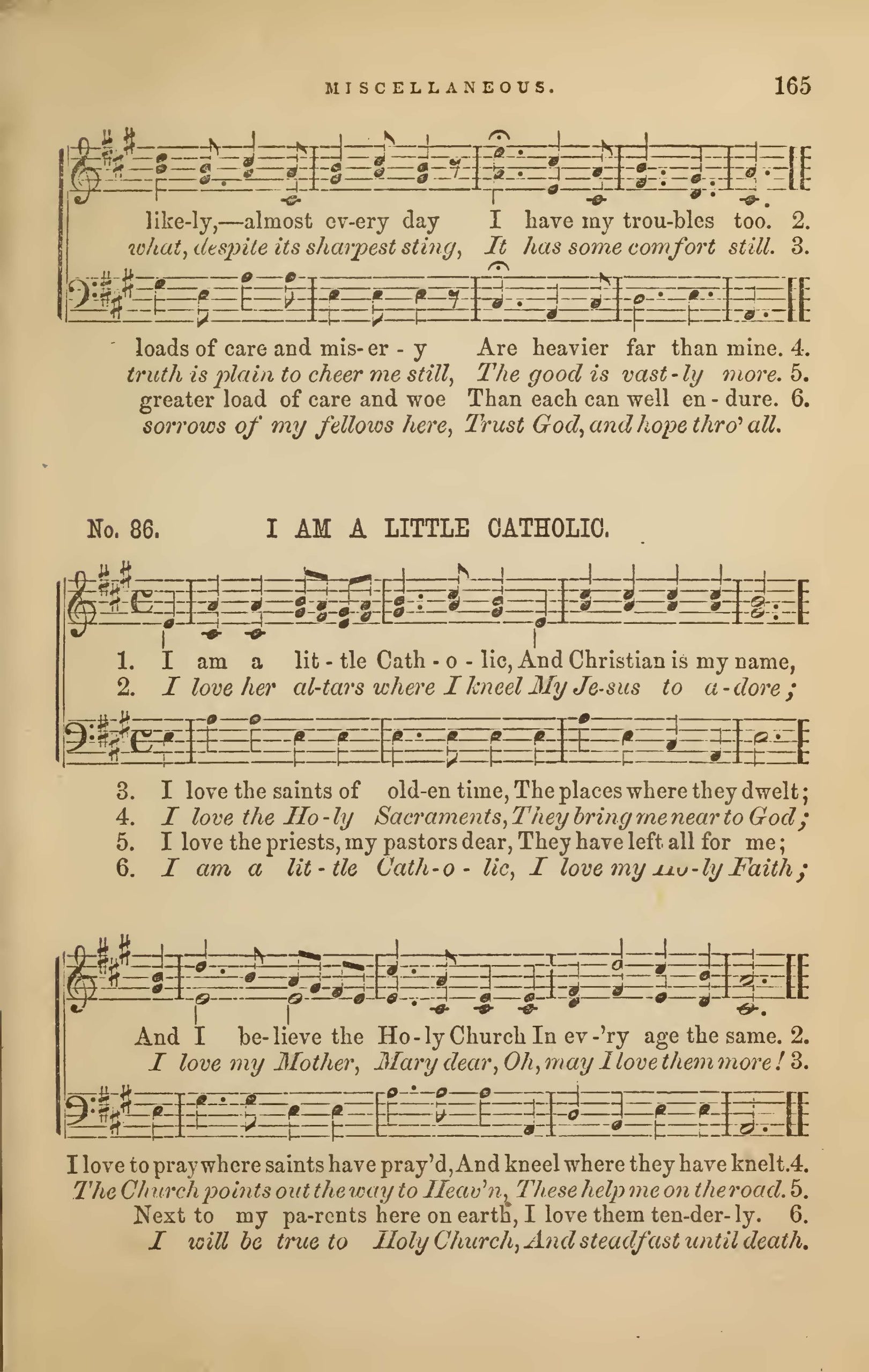
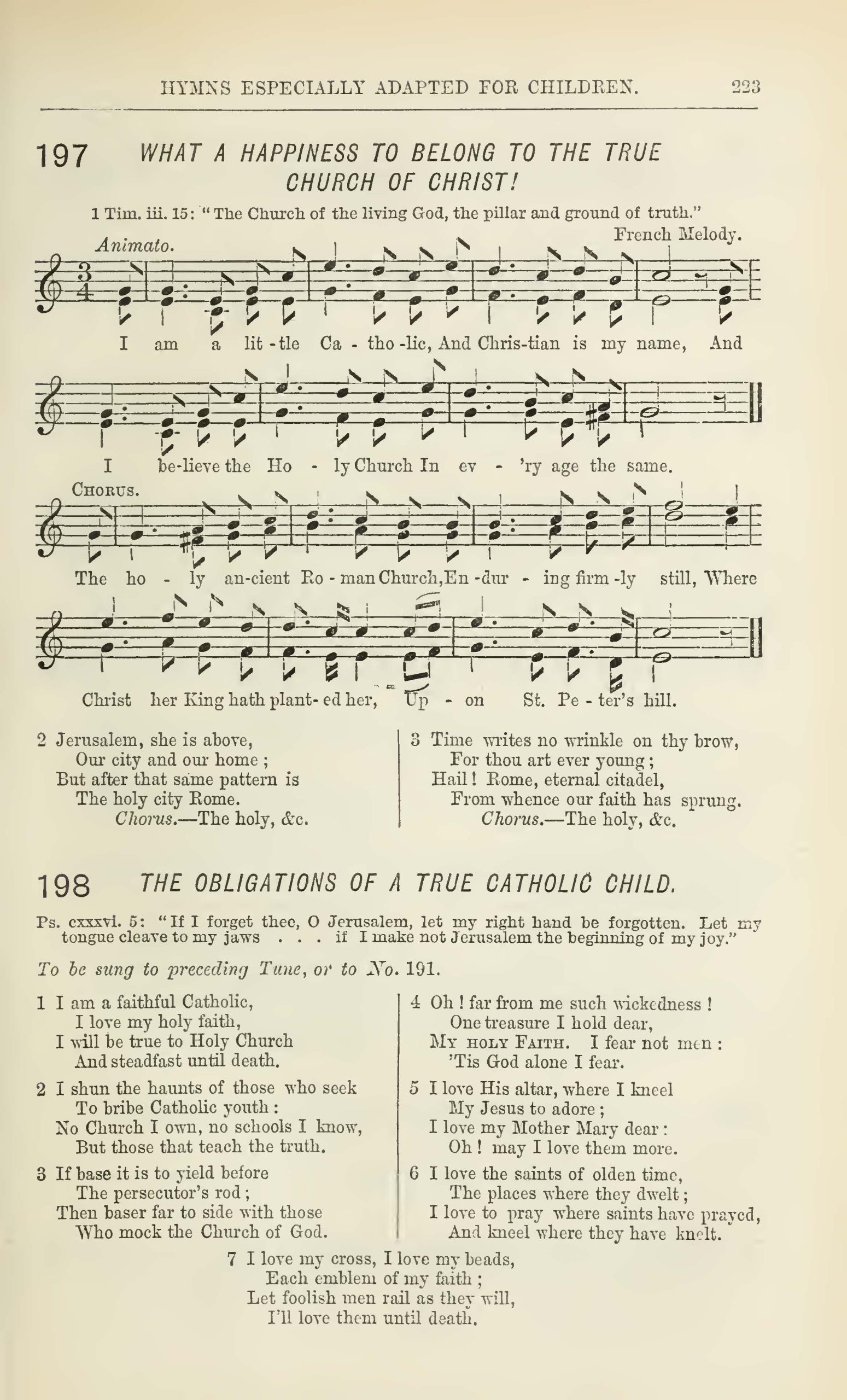
CATHOLIC HYMNS AND CANTICLES (1863) and THE COMPLETE SODALITY MANUAL (1863), both compiled by Father Alfred Young, C.S.P. (1831–1900) of St. Paul the Apostle Parish in New York, preserve the hymn in its original form, I am a little Catholic. Father Young composed and arranged the tunes for more than forty hymns.

Catholic Hymns and Canticles, 1863
The Complete Sodality Manual, 1863

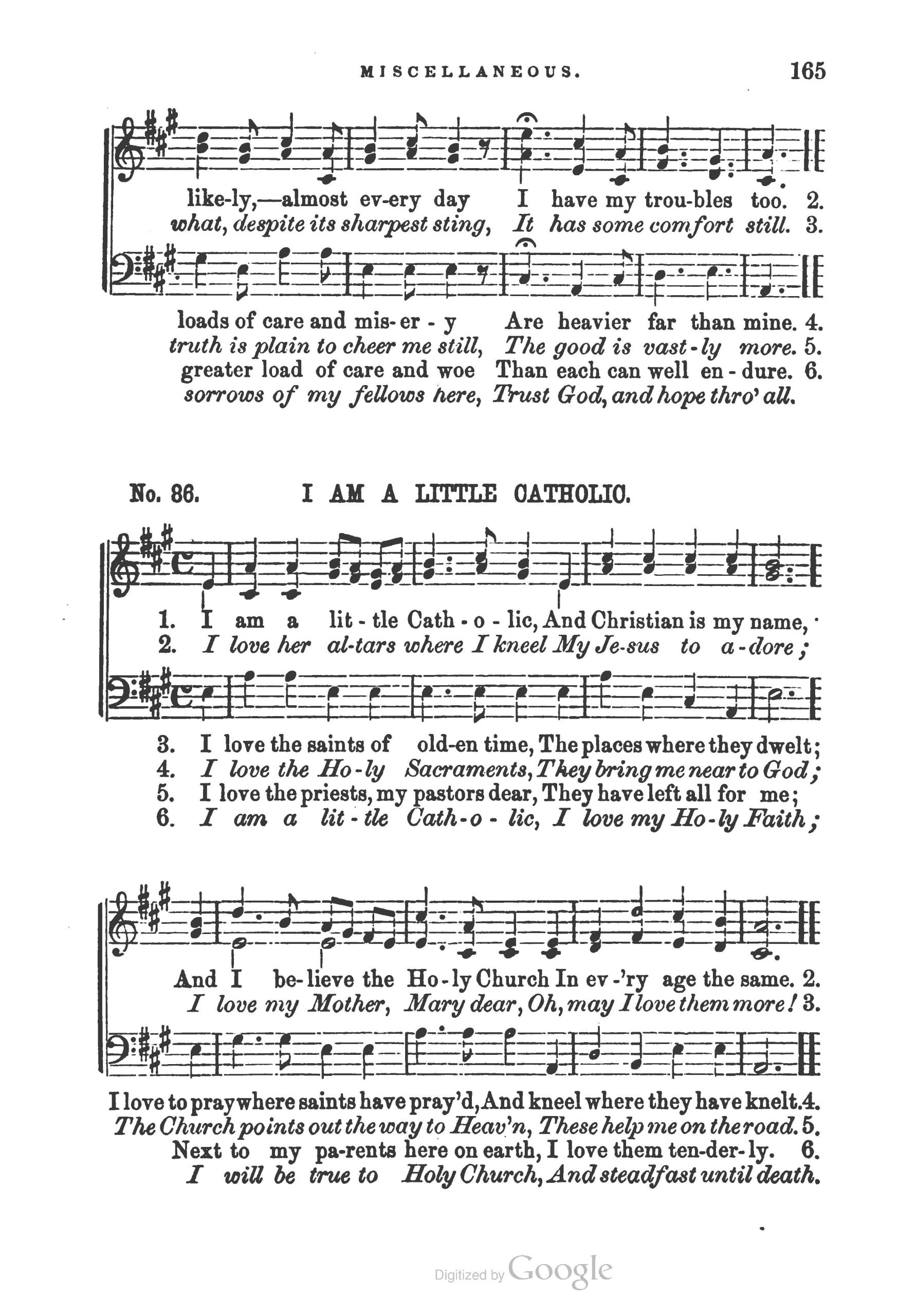
CANTICA SACRA or Hymns for the Children of Catholic Schools (1880) contains two melodies. This new edition of CANTICA SACRA was published because many priests and school leaders asked for it. It includes new litanies to the Blessed Virgin Mary and a Requiem Mass arranged so children can sing it.

The publishers also thanked the clergy, the Sisters of Notre Dame, and J. Frank Donahoe from the Cathedral of the Holy Cross in Boston for their help. The melodies were likely composed or arranged by the organist J. Frank Donahoe. The first edition was published in 1865, a second edition in 1871, and a third edition in 1880.

Cantica Sacra, 1865
Cantica Sacra, 1865

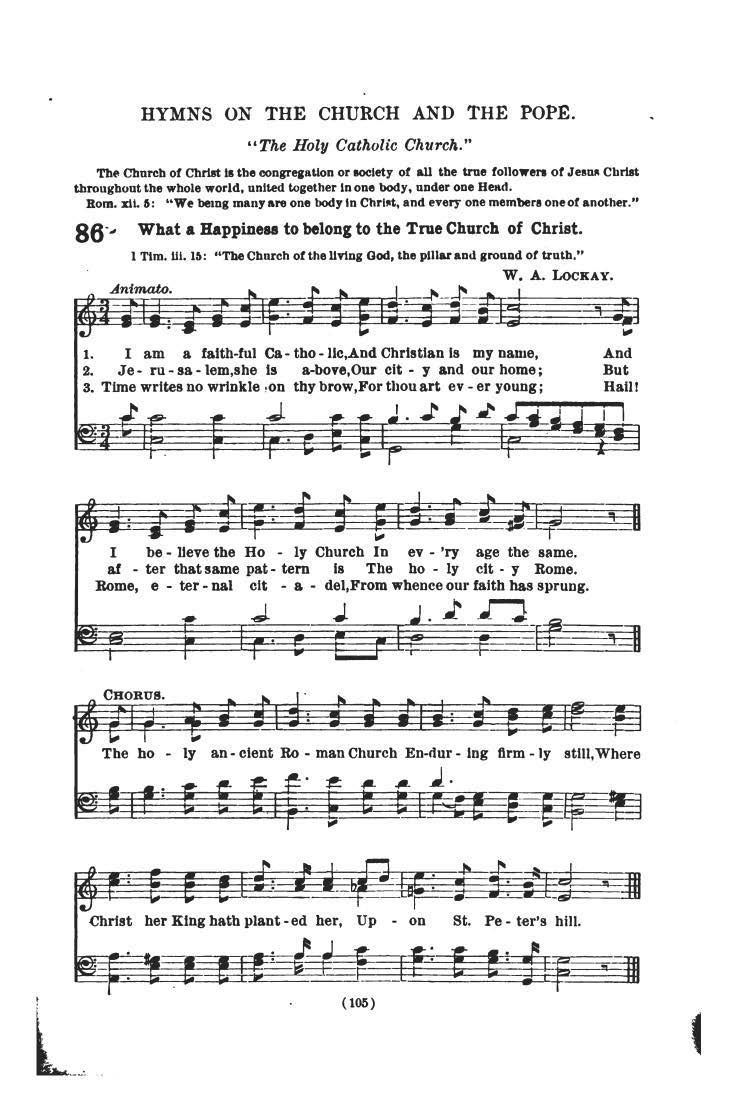
The PAROCHIAL HYMN BOOK (1883, 1897) credits the melody to W. A. Lockay, yet no trace of him appears in any musical or hymnological records. The 1883 edition identifies the tune as a French melody, making it likely that Lockay was not the composer but a local parish musician who arranged or adapted an existing French devotional air.

The 1883 edition was published by Burns & Oates in London, and the 1897 edition was published in Dublin, London and New York. The compiler of both hymn books was Father Anatole Police, S.M. (1834 – 1896) who was an accomplished musician and widely known in Boston for his devotion to the ministry of confessions.

The Parochial Hymn Book, 1883
The Parochial Hymn Book, 1897

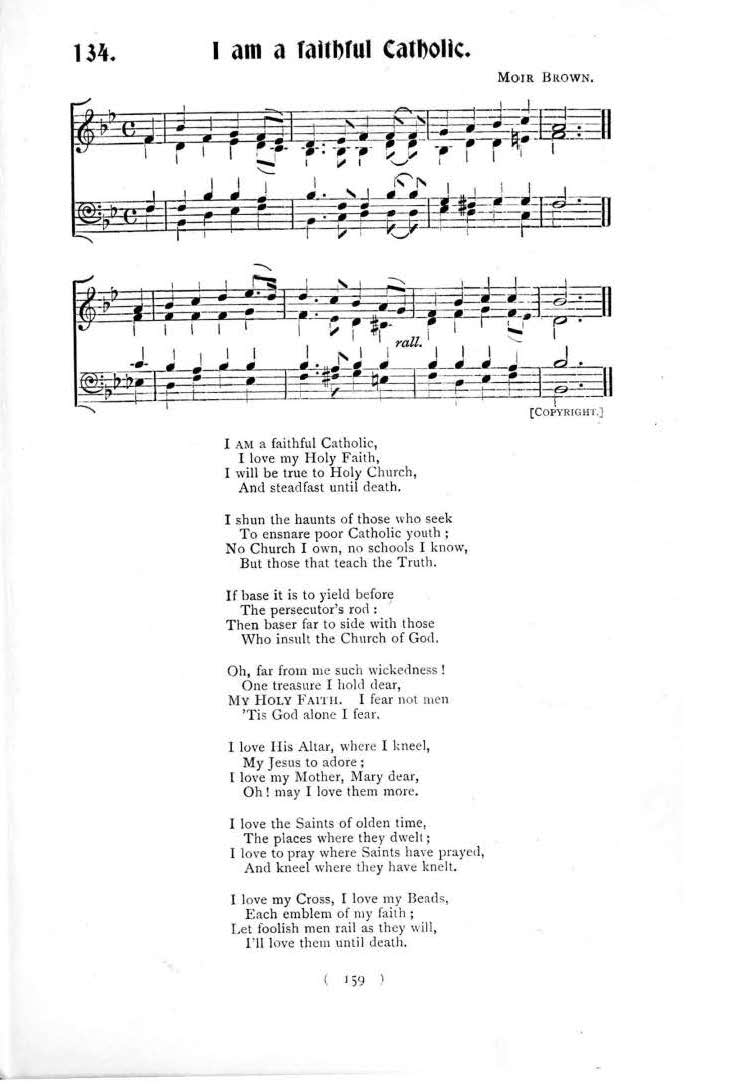
THE NOTRE DAME HYMN TUNE BOOK (1905) credits its melody to Moir Brown, who helped compile the hymn book with Frank N. Birtchnell. Brown wrote more than twenty original tunes for the collection. The book was published in Liverpool by Rockliff Brothers and was created to provide complete musical settings for the hymns used by the Sisters of Notre Dame. Traditional melodies were kept, and many hymns received musical settings for the first time.

The Notre Dame Hymn Tune Book, 1905

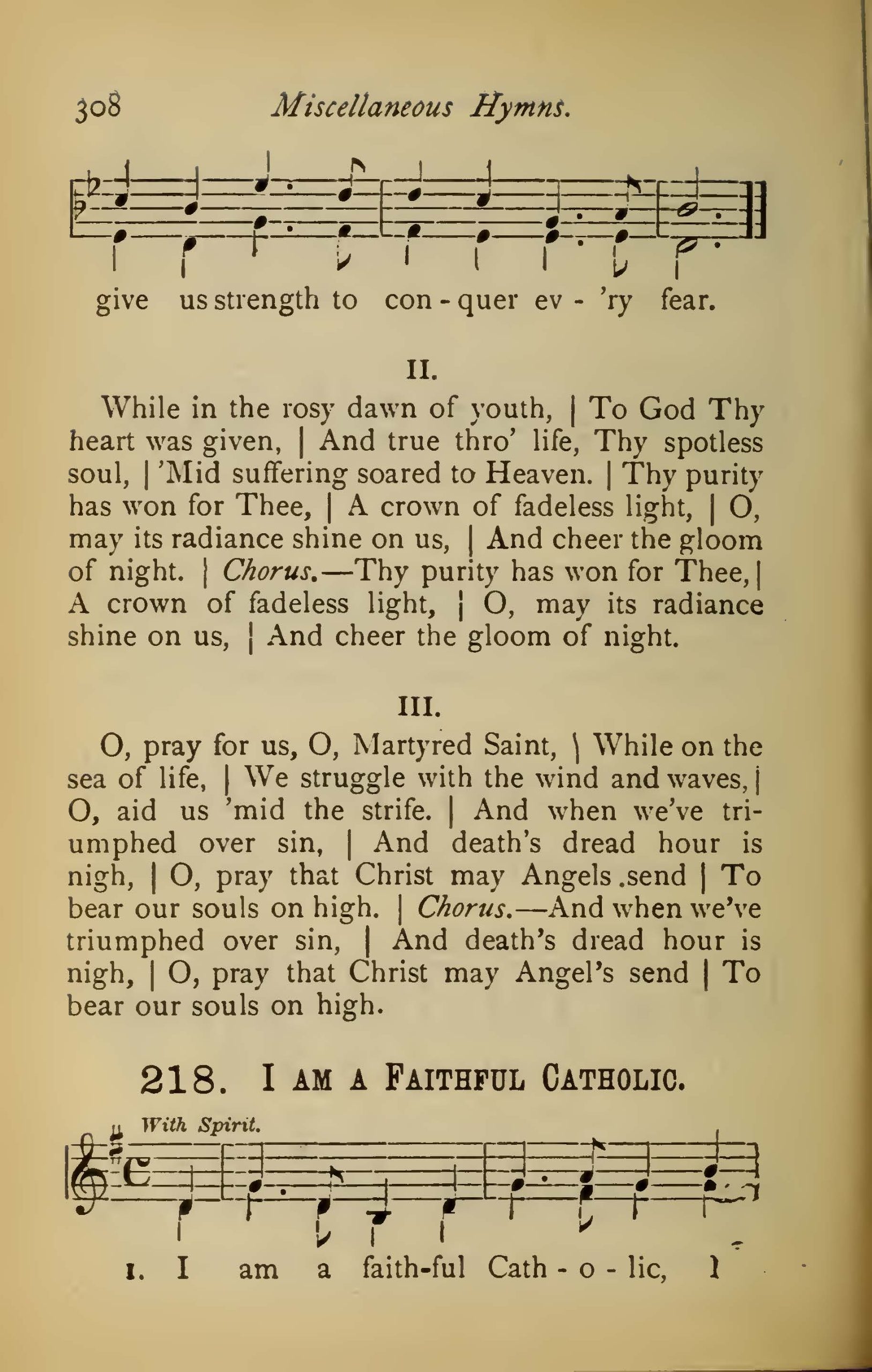
The MANUAL OF SELECT CATHOLIC HYMNS AND DEVOTIONS (1885, 1925) reprints the No. 1 tune found in the Cantica Sacra. This collection of hymns for the use of schools, colleges, academies, and congregations was compiled and arranged by Father Philip Mary Colonel, C.SS.R. (1843-1925).

Father Philip Mary Colonel was a Bavarian‑born Redemptorist priest whose life was marked by steady, devoted service. Born in 1843 and professed at a young age, he spent twenty‑five influential years at St. Mary’s Church in Buffalo, where he ministered to German‑Catholic immigrants and published a well‑used hymnal in 1885. His brother Joseph was also a Redemptorist, serving in the St. Louis Province. Father Colonel spent his final years in the Baltimore community of St. Michael the Archangel, where he died in 1925.

Manual of Select Catholic Hymns, 1885

Reflection

The verses of this hymn present a series of affirmations of Catholic belief, each one pointing to a cherished element of the Church’s life and tradition. The hymn invokes my Holy Faith, the Holy Church, His Altar, Mother Mary, the Saints, the Cross, and the Beads—a clear reference to the Rosary. Together, these form a tapestry of sacramentals and devotions that have long served as visible signs of Catholic identity.

The text also hints at the contrast between believers and those who do not share the faith, captured in the line Let foolish men rail as they will. This gentle but firm acknowledgment of opposition underscores the steadfastness of the believer’s commitment.

Although originally written for children, the hymn carries a simplicity and sincerity that speak to all ages. Its clear expression of faith makes it especially suitable for school religion classes, Youth Ministries, or as a joyful entrance or recessional hymn at Mass.

What part of those verses stays with you the most—the celebration side, or the truth claim underneath it? Take a moment to reflect on the verses and I think you’ll agree that its message is timeless: a confident, heartfelt celebration of the beauty and truth of the Catholic Faith.

A special thank you to Peter Meggison producer of The Devotional Hymns Project for allowing me to link to a recording of I Am A Faithful Catholic as sung by The Ensemble Cor et Vox at St. John Cantius Church in Chicago.  

In addition, piano arrangements of the melodies mentioned above are included below. These sound files are computer‑generated. While the tempos are approximate, they should give listeners a clear sense of how each hymn is intended to sound. All selections are in the public domain. Music directors who choose to use any of these hymns in their Sunday or weekly programs and create a recording are invited to contact the author; selected recordings may be featured in the What’s New section of the website.

album-art

00:00

Recommended Posts