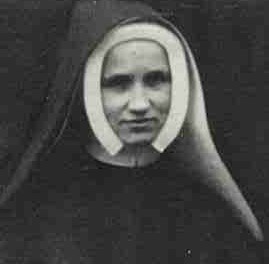
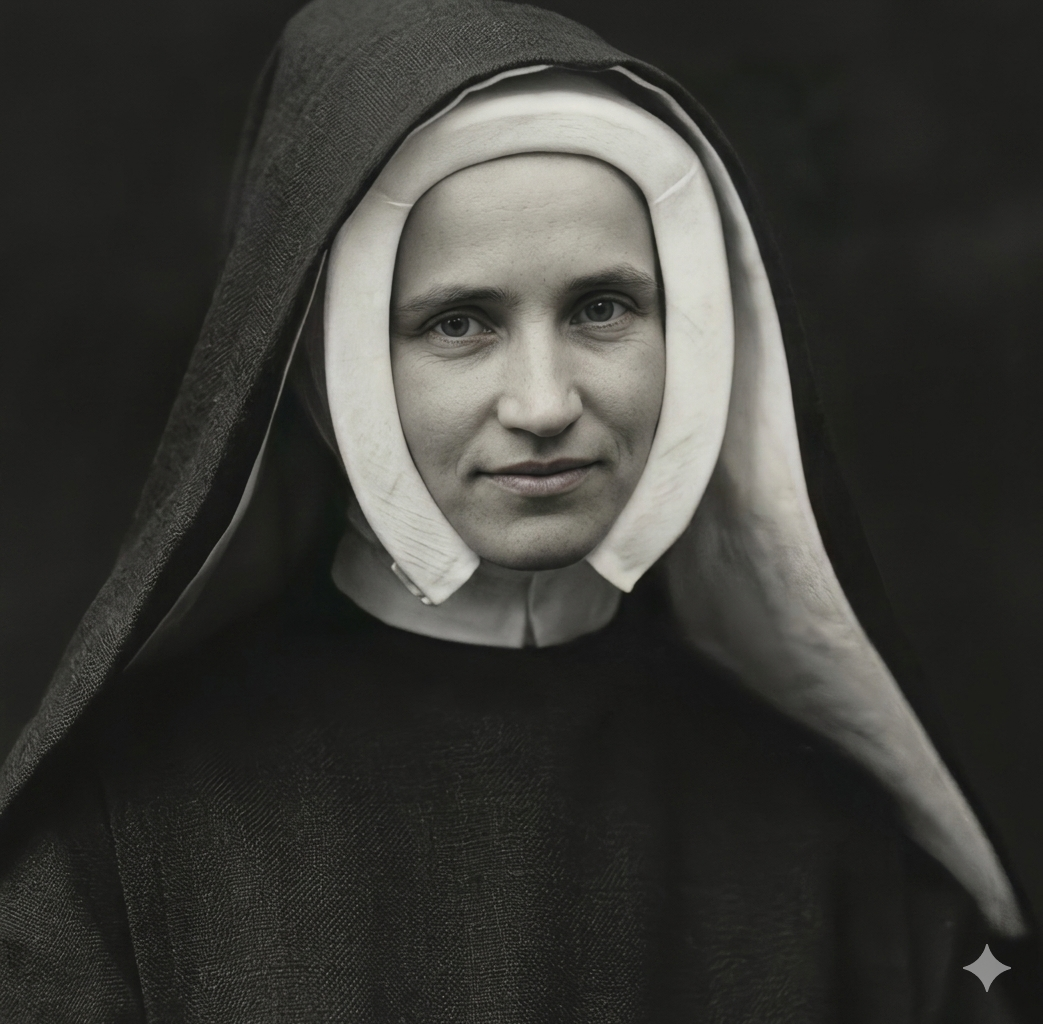
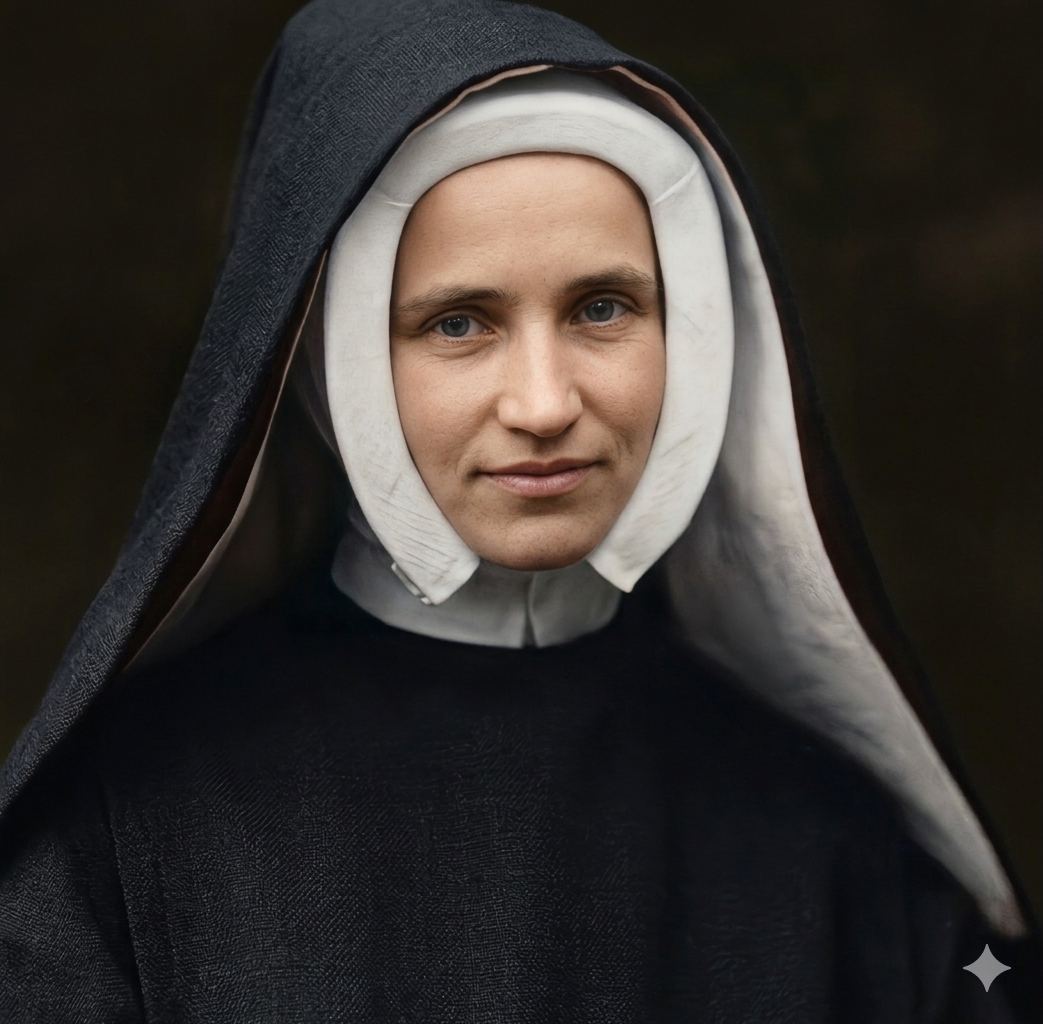
Though her musical legacy spans decades, the portrait above is the only photograph the Sisters of Charity of the Blessed Virgin Mary possess of Sister Mary Editha Flannagan, B.V.M. (1858–1939) Yet, while her visual record is sparse, her extraordinary contributions to Catholic music speak volumes.
Biography of Sister Mary Editha Flannagan, B.V.M.
Sister Mary Editha was born on August 9, 1858, in Haverhill, Massachusetts and baptized Mary Elizabeth. At an early age she came with her parents John and Honora (née Carey) Flannagan to Iowa City, Iowa where she received her musical education. She entered the Sisters of Charity of the Blessed Virgin Mary (BVMs) from Iowa City on October 29, 1872, at the young age of fourteen. She was received on September 19, 1873, and was given the religious name Editha.
She should have been received in February or March of 1873, but this was delayed until after her 15th birthday. She made her first vows on July 27, 1876, and renewed these vows every year until December 31, 1914, when she was among the first group of BVMs to make perpetual vows after the congregation received papal permission for perpetual vows.
Her brother, John Thomas Aloysius Flannagan (1860-1926), would become a priest and later a monsignor, and the bond between the two would remain one of the defining relationships of her life. Father Flannagan served as the second president of St. Ambrose College in Davenport, Iowa from 1891 to 1906.
For thirty-eight years, Sister Mary Editha served at Immaculate Conception Academy in Davenport, Iowa, as both music teacher and superior. She also served for six years as Superior at Holy Angels High School in Milwaukee, Wisconsin although archive records are unclear as to the exact dates.
In 1915, she entered the highest levels of congregational leadership as a Councilor, and in 1926 she became Provincial, a role she held until 1935. Remarkably, even while carrying on the responsibilities of Provincial, she returned to teaching music at Immaculate Conception Academy, demonstrating her unwavering devotion to the artistic and spiritual formation of her students.
Selected Compositions
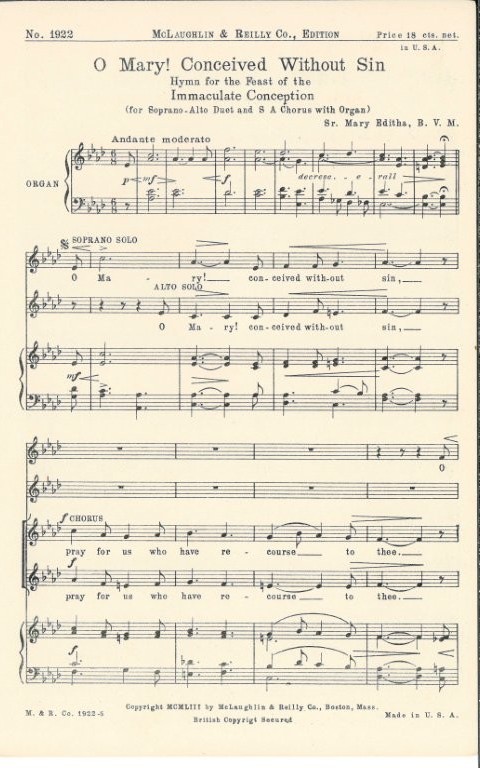
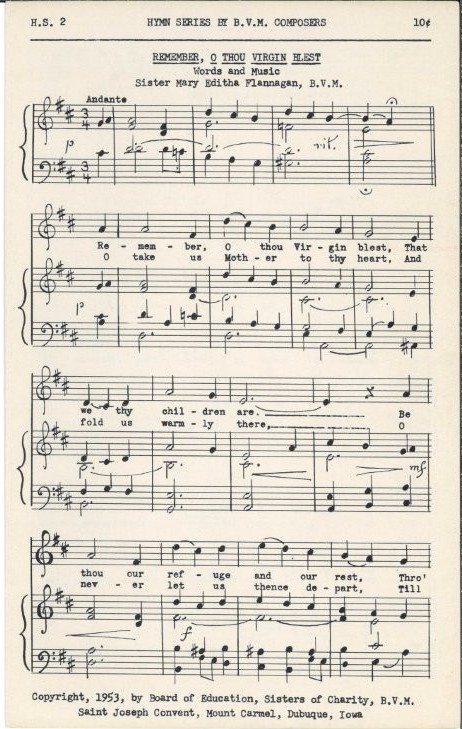
Across her long career, Sister Mary Editha produced an extraordinary body of music, much of it written for the voices and instruments available in B.V.M. schools and convents. Her compositions reveal both her technical skill and her deep devotion to the Church’s musical tradition. Among her known works are:
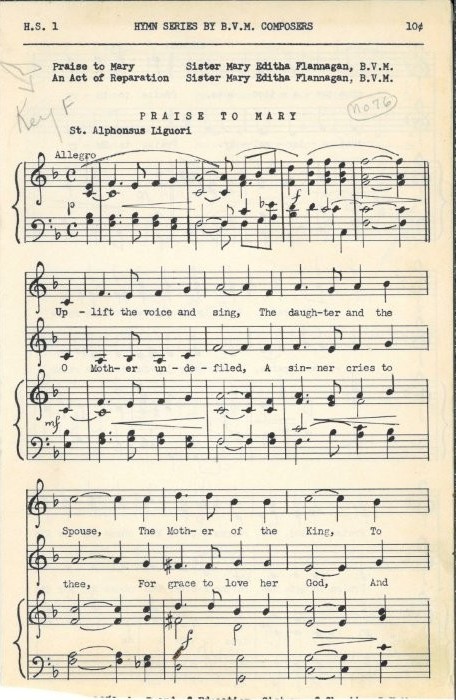
Her talent received national recognition in 1932, when she won fourth prize in a hymn-writing contest sponsored by Miraculous Medal Magazine for her hymn Praise to Mary. The piece was published in the magazine’s November issue, bringing her work to a broad devotional readership.
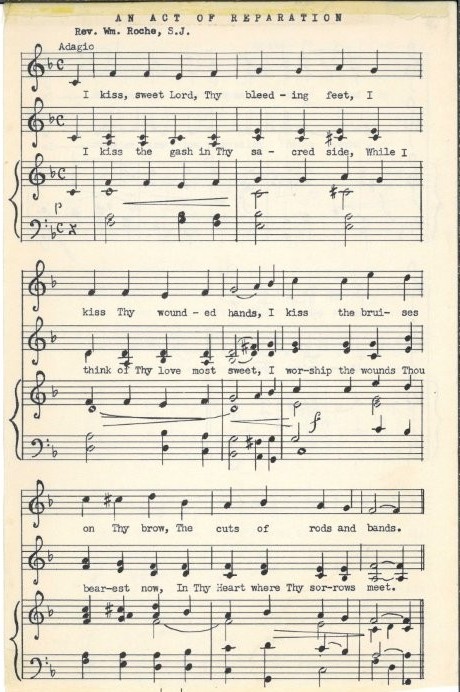
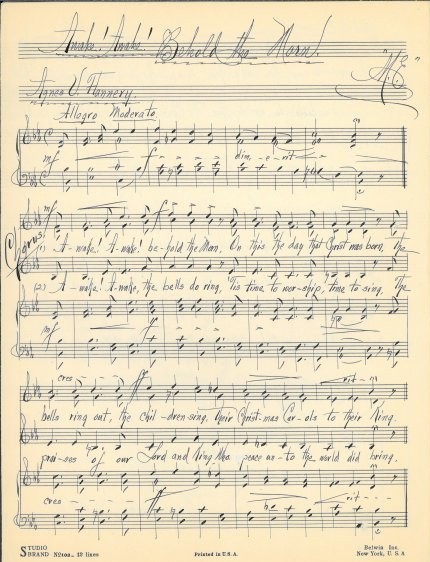
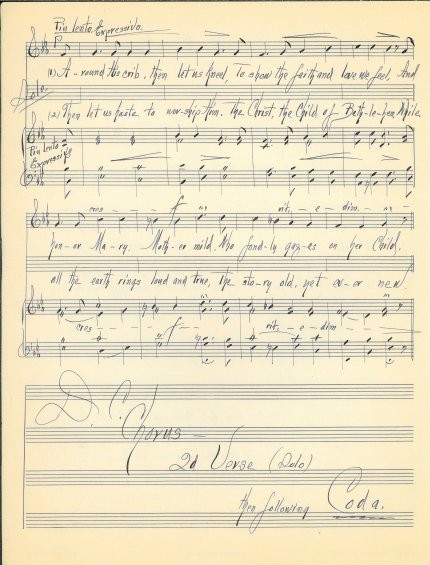
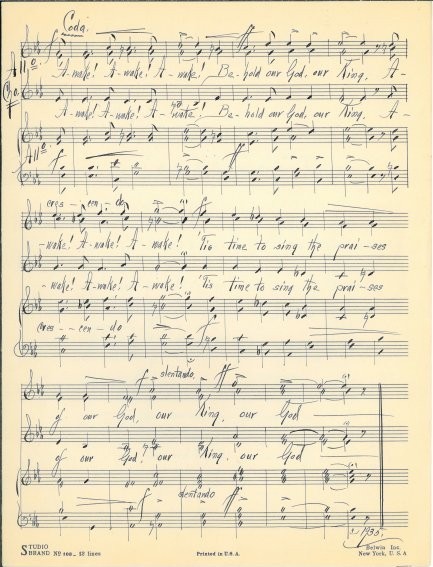
Many of her hymns and choral works were performed publicly, especially at diocesan music festivals. Her compositions appeared on programs at St. Ambrose Hall in Davenport, in Chicago, and at other regional gatherings where Catholic school choirs showcased their finest work. One of the most striking tributes to her influence came in 1935, when her musical setting of the Christmas carol Awake! Awake! Behold the Morn (with text by Agnes V. Flannery) was performed by 950 high school students at Immaculata High School in Chicago during the school’s Christmas program. Below are manuscripts of the choral piece. (Click on any image to enlarge)
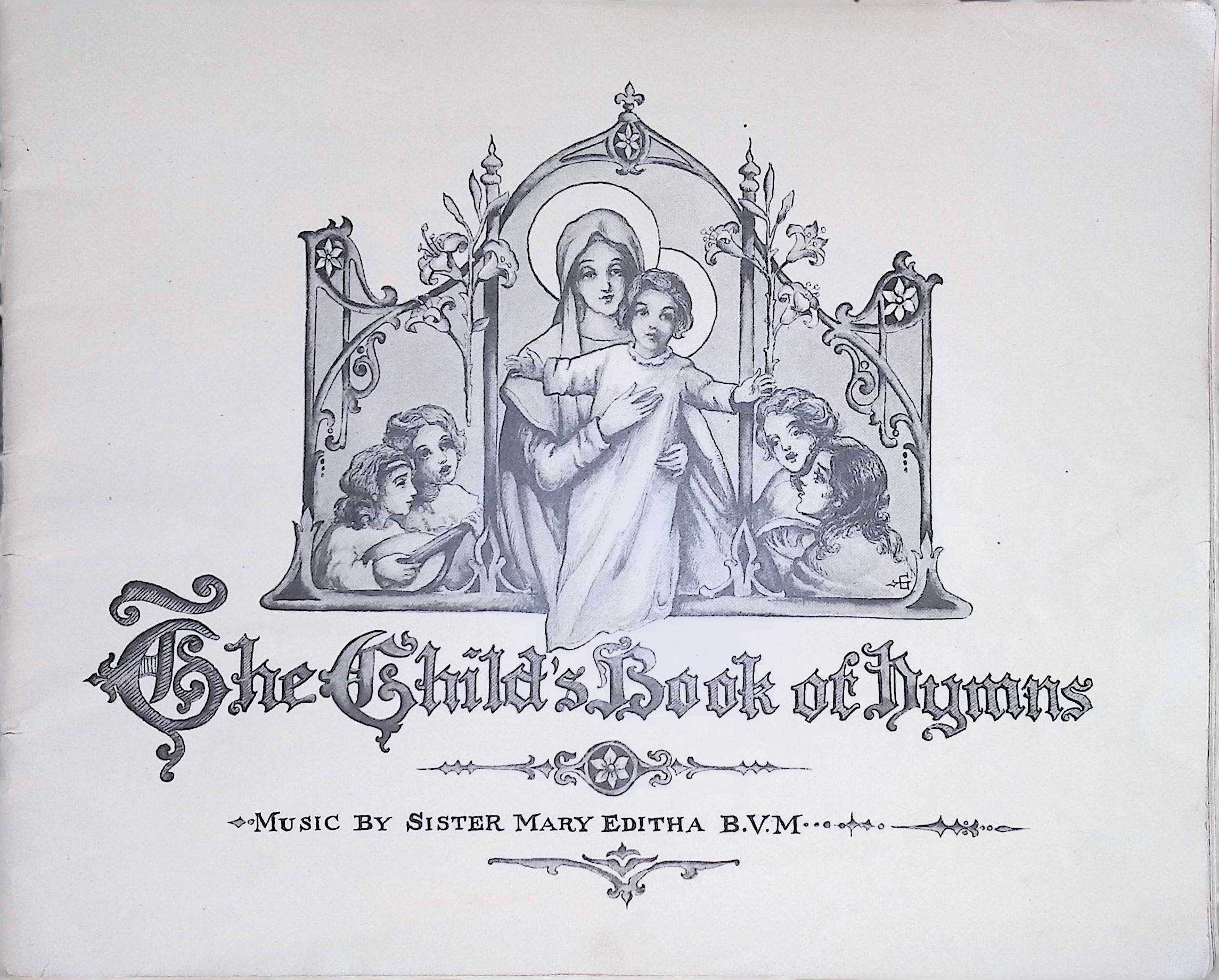
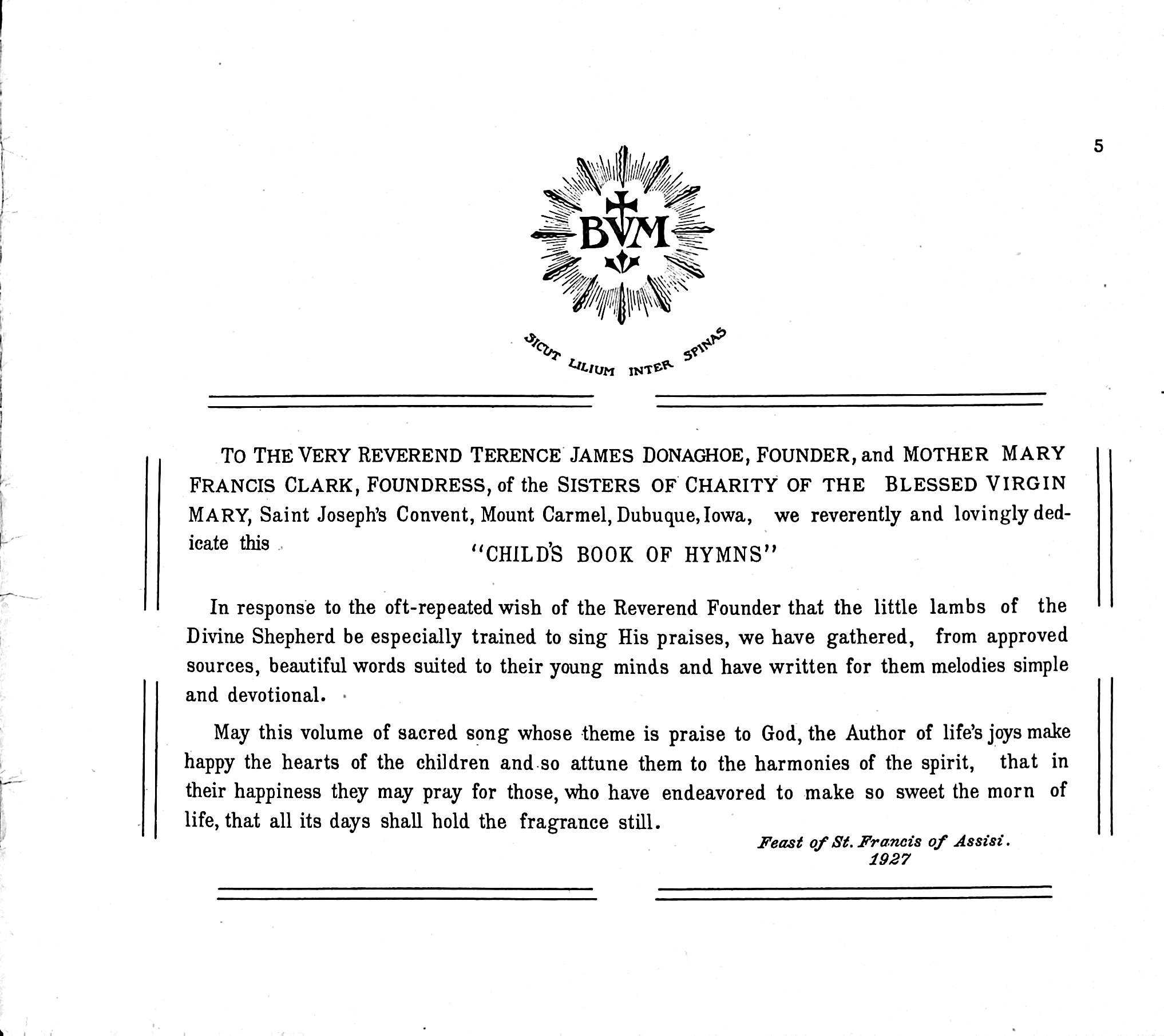
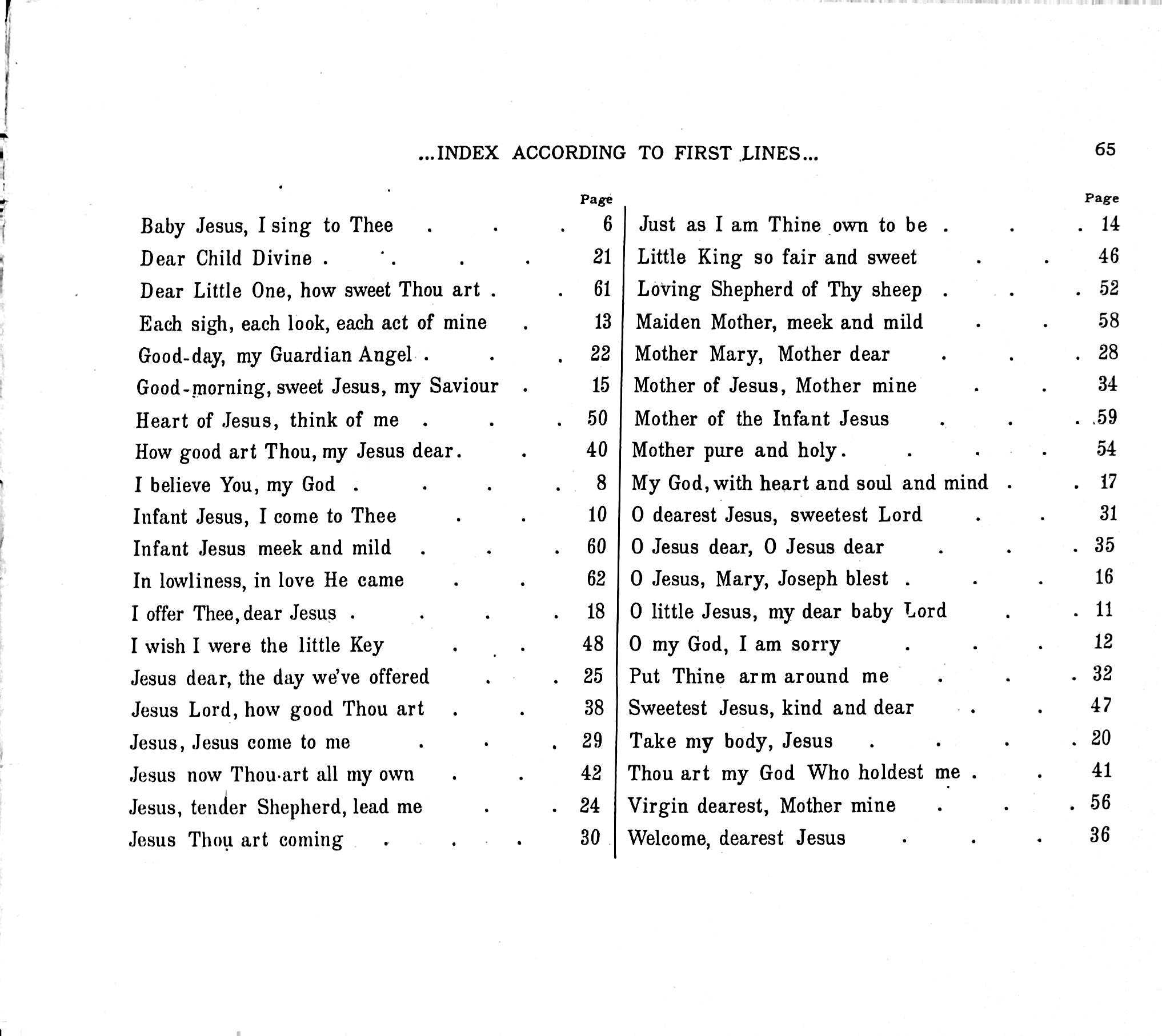
Despite her accomplishments, Sister Editha remained a lifelong student of her craft. In the early 1920s, during the beginning days of Immaculata, she traveled to Chicago to study harmony and counterpoint with John Singenberger, the noted composer and music director at Mundelein Seminary. Sister Editha had in mind the publication of several works—a goal she realized over the course of the decade, culminating in her 1927 collection, Child’s Book of Hymns. While community memory later associated her Chicago trip with the 1927 publication year, the study itself took place just before Singenberger’s death in 1924. This published volume beautifully reflects her deep belief in the formative power of music for young hearts and minds, cementing her contribution to children’s religious education.
Personal Character and Daily Life
Though Sister Mary Editha was often remembered as a stern and formidable presence, those who knew her well spoke just as readily of her deep kindness. Stories circulated within the community about her quiet generosity toward anyone in need, gestures offered without fanfare and often without witnesses. Her outward seriousness concealed a heart that responded instinctively to suffering.
In appearance, she was short and a little stout, but her physical stature was overshadowed by a personality that, as one sister put it, seemed to be bursting out all over. Determination was one of her defining traits. When she set her mind to a task, she pursued it with unwavering focus — and often, she achieved exactly what she intended.
The great love of her life was her brother, Msgr. John Flannagan, whose death left a lasting wound. Soon after she had celebrated her golden jubilee, her brother, Monsignor John Flannagan died. She mourned him for many years, carrying his memory with her in prayer and in the quiet spaces of her day. Yet grief never diminished her dedication to her work. She poured herself into her music, spending hour upon hour composing, revising, and practicing.
Her practice instrument was often a small pump organ, notorious among the sisters for its harsh, wheezing tone. But even that was nothing compared to her singing voice, which — as Sister Mary Blandina recalled with affectionate humor — was not her strongest gift. She sang everything she wrote, testing each line aloud, shaping melodies through sheer persistence rather than vocal beauty. And when a piece was finally ready, when it was performed for her review by students or fellow sisters, she must have felt a profound satisfaction: the knowledge that the music had traveled from her heart, through her pen, into the voices of others.
Quite early in the “beginning” days of Immaculata, Sister Mary Editha decided to come there to do some harmony and counterpoint study with Mr. Singenberger, who at that time was in charge of music at Mundelein Seminary. She had in mind publication of several works; and the community now has the result of this endeavor. As far as Sister’s music went, I don’t think there was much change from her original writings as she was a woman of very definite ideas. We all knew this and dare not change one tiny bit because she would recognize it.
An illustration of this took place one evening as we were going over some things for Sunday’s Mass. Sister M. Consuelo (Gladys) Ramaley thought that a certain change in wording would be a better expression of a thought and Sister M. Emilita answered her, “Do you want Sister M. Editha to stand up in chapel and exclaim, “O, my God!!”
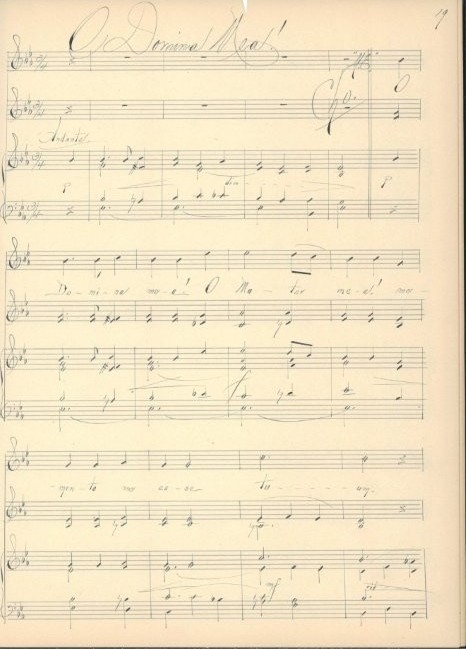
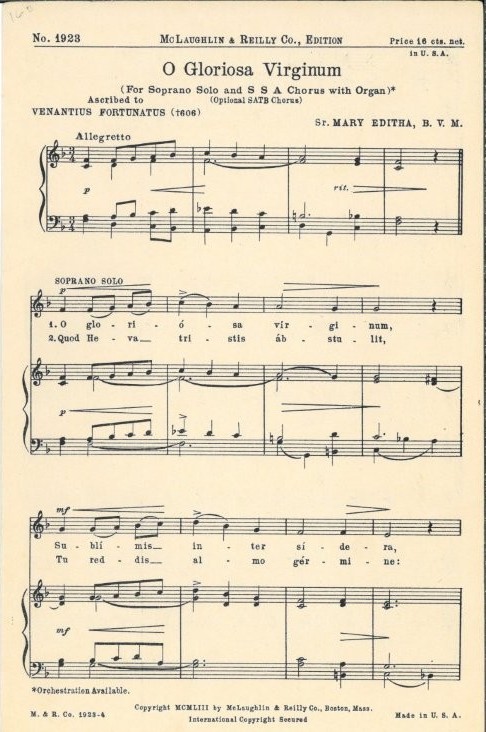
And who had a better right to express her feelings thus that the composer of such beautiful hymns as “O Glorioso Virginum” ,”Remember O Thou Virgin Blest” or “O Domina Mea” sung as solos by Sister Mary Consuela or Sister Mary Jeanine Mulluoy at that time. One happy memory of mine is of singing with Sister Mary Emilita in a duet, the lovely hymn, “0 Jesus, Dearest Lord”.
These recollections, preserved by Sister Mary Blandina Mosgrove, B.V.M., offer a rare glimpse into the human side of Sister Mary Editha — the determined teacher, the grieving sister, the tireless composer, and the woman whose life was shaped by both discipline and devotion.
Final Years and Failing Sight
In her later years, however, she faced a trial that struck at the very heart of her vocation. Cataracts slowly robbed her of her sight, forcing her—most reluctantly—to set aside the work she cherished. Even as her vision dimmed, she continued to write, holding her pen to the music pad until the moment complete darkness made further work impossible. Her faith during this period was described as almost superhuman. She prayed fervently for the restoration of her sight, yet always with a spirit of resignation to God’s will, accepting whatever path lay before her.
Daily life became increasingly difficult. When the bells rang for community exercises, the sisters would see her groping her way up the front stairs or leaning on the arm of a devoted young Sister who guided her with quiet fidelity.
An operation eventually offered hope of relief. Though the procedure was successful, the shock proved too great for her aging body. She slipped gradually into a coma, and death came gently in 1939, closing the life of a woman whose music had shaped generations.
Sister Mary Editha Flannagan’s legacy endures in the hymns she wrote, the students she taught, the schools she guided, and the community she served with unwavering devotion. Her life was a testament to faith, perseverance, and the belief that music—born of the heart and offered to God—can shape souls and communities for generations.
Reflection
Except for the hymn collection “The Child’s Book of Hymns”, I knew very little about Sister Mary Editha, save a few tidbits of information extracted from the Preface of hymn collection and extracts from the 1934 edition of Ceacilia Magazine which featured one of her hymns “O Gloriosa Virginum.”
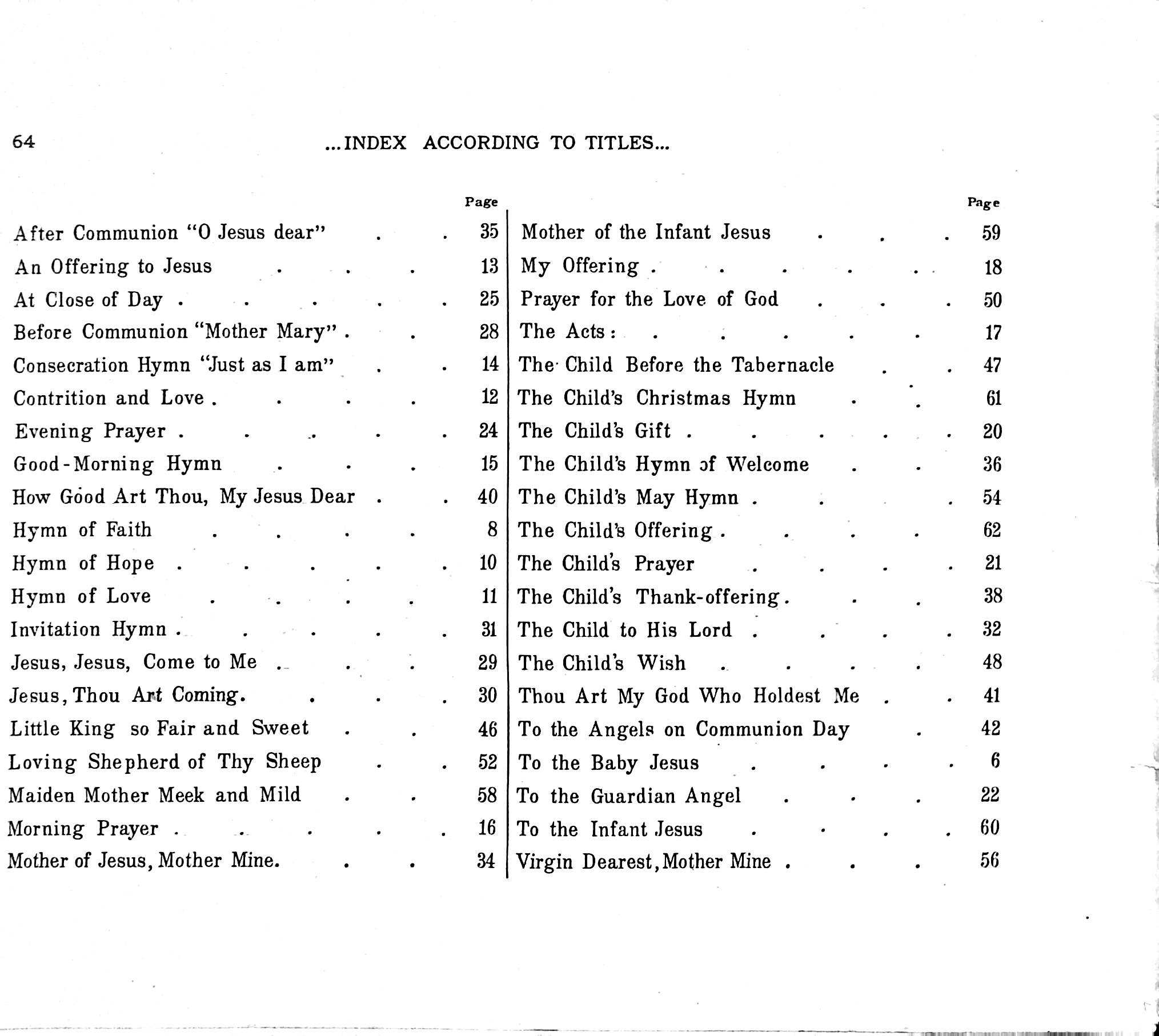
My connection to “The Child’s Book of Hymns” was a personal one. There is a hymn in this collection that I learned when I made my First Communion, “Jesus, Thou Art Coming,” although it is a different melody from the one I learned.
So, about three years ago in October, I reached out the archivist of the BVM Congregation, which is located in Dubuque, Iowa. I explained that each month I do a short write-up on a Catholic hymn, the author and the composer. I sent her a link to my website where I recently completed a tribute to Sister Mary Alexis Donnelly, R.S.M., and her contributions to Catholic music.
“I would like to do a write-up on the hymn “Jesus, Thou Art Coming” and Sister Mary Editha B.V.M., and her contributions to Catholic music, I do not profit monetarily from these write-ups but spiritually I’m sure I do. If there is any information you can share with me about Sister Mary Editha, such as when she joined the Sisters of Charity, when she was born, when she died; are there any photographs of her, is there anyone still living who knew her, I would be most grateful for any help.
Later in the month, I received an email from the archivist with information about Sister Editha. A photograph, the only one known to exist, and a pdf containing information about her life and service. This is were I learned of Sister Editha’s last name – Flannagan. So, I turned to Google and did a search and stumbled upon a BVM Newsletter that was published in the Fall of 2020.
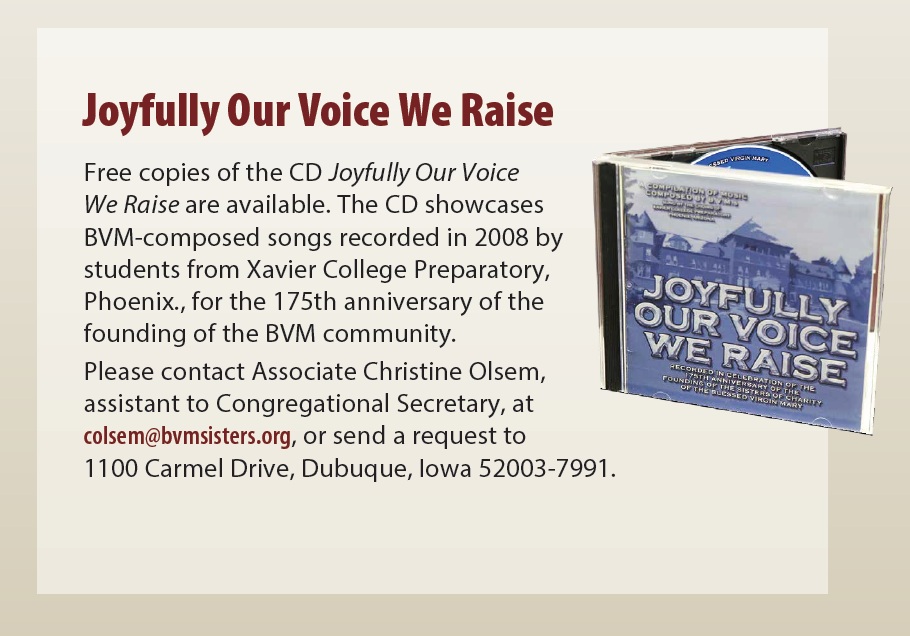
Within it was an announcement for a CD, ‘Joyfully Our Voice We Raise,’ which was a compilation of music composed by B.V.M.s. It was released in time for the 175th anniversary of the founding of the Sisters of Charity of the Blessed Virgin Mary. The CD showcased BVM-composed songs recorded in 2008 by students from Xavier College Preparatory, Phoenix, Arizona.
So, I immediately requested a copy. Not long after, a package arrived in the mail containing a small pamphlet—a lyrics booklet prepared to accompany the ‘Joyfully Our Voice We Raise’ CD. It contained the lyrics for 27 hymns by various B.V.M. Sisters, seven of which were composed by Sister Editha. To a researcher like me, this was a gold mine. I once again reached out to the BVM archivist to inquire if any of Sister Editha’s sheet music was available, specifically the titles featured on the CD. While copies existed, they were housed in a separate facility and would take some time to retrieve. After submitting the formal request forms for the specific titles and obtaining permission to use the CD recordings, I received official approval in February 2026.
Around that same time, I was heavily involved in writing “A Parish Inheritance – A Hymnological Study of St. Mary’s Parish.” Anyway, things have settled down now and I am able to turn my attention once again to Sister Editha.
I initially planned to center this piece on ‘O Domina Mea,’ having found a copy of the score in the Caecilia Magazine referenced earlier. Then, considering this feature would publish in June—a month the Catholic Church dedicates to the Sacred Heart—I thought of showcasing a Sacred Heart hymn Sister Editha composed titled ‘O Heart of Jesus.’ Ultimately, however, my memory pulled me back to my original inspiration: ‘Jesus, Thou Art Coming.’
In truth, Sister Editha’s contributions are far too vast to limit to a single song; selecting just one would not tell the whole story. Therefore, this feature is dedicated to the broader musical legacy of Sister Mary Editha Flannagan, B.V.M., made possible by the generous permission of the Sisters of Charity of the Blessed Virgin Mary to share both her original manuscripts and the recordings of her compositions.
It is my sincere hope that this story serves to raise awareness of Sister Editha’s extraordinary talent, and safeguards the memory of all the religious sisters whose musical gifts might otherwise be forgotten.
Unlike the computer-generated files typically featured on this site, the following audio tracks are actual recordings performed by the student choirs of Xavier College Preparatory in Phoenix, Arizona. They are presented here with the generous and exclusive permission of the Sisters of Charity of the Blessed Virgin Mary. Because these historical compositions and recordings are tightly protected by congregational archives, music directors or ensembles interested in utilizing these hymns or scores for their own liturgies are advised to contact the author for guidance on proper permissions and archival requests. Selected performances or community recordings shared with the author may be featured in the ‘What’s New’ section of the website.