Catholic Hymnody, Authority, and Modern Hymnals

Context and Purpose

Catholic hymnody has always existed under the authority of the Church, yet the way that authority is exercised has changed significantly in the modern era. This article examines why Catholic bishops no longer formally approve hymnody through imprimaturs, how hymn evaluation now functions within the Church, and how modern Catholic hymnals measure up when judged against the Church’s own doctrinal and liturgical standards. Drawing on historical practice, the USCCB’s Catholic Hymnody at the Service of the Church (2020), and What Is a Catholic Hymn?, this study seeks not to be polemical, but ecclesial: to clarify what the Church means by Catholic hymnody and how that meaning is applied today.

1. Why Imprimaturs for Hymnals Disappeared in the U.S.

Historically (pre‑1960s), Catholic hymnals commonly carried imprimaturs. Hymns were treated as catechetical and doctrinal texts, and bishops exercised direct oversight.

After Vatican II, imprimaturs for hymnals faded gradually (roughly 1968–1980)—not by formal abolition, but by a shift in priorities:

  • Episcopal authority focused increasingly on official liturgical texts (Missal, Lectionary, sacraments).
  • Hymns came to be viewed as pastoral or devotional aids, not juridically regulated texts.
  • The explosion of vernacular, ecumenical, and rapidly revised repertoire made exhaustive review impractical.

Importantly, the Church never declared hymn approval unnecessary in principle. Instead, oversight shifted from formal pre‑approval to discernment, formation, and responsibility at lower levels (publishers, pastors, musicians).

2. Criteria for Evaluating Hymns Using the Church’s Own Language

From Sacrosanctum Concilium, Musicam Sacram, the GIRM, the Catechism, and the USCCB (2020), a coherent set of criteria emerged. These were synthesized into four lenses:

Doctrinal Integrity

Hymns must clearly express Catholic doctrine (Trinity, Christology, Eucharist, salvation) without ambiguity. Vague or contradictory theology is not acceptable simply because it is popular or emotive.

Liturgical Function

Hymns must serve the ritual action of the Mass, not merely provide religious sentiment. A hymn can be orthodox yet still liturgically unsuitable if it does not correspond to the rite (Entrance, Offertory, Communion).

Ecclesial Voice

Catholic hymnody should sound like the Church praying as Church, not primarily individuals expressing personal experience. Preference is given to scriptural, liturgical, and traditional sources.

Pastoral Effectiveness

Hymns should be singable, prayerful, and oriented toward reverence—not performance or entertainment.

The USCCB document presents these as guidelines and cautions, not binding judgments.

3. “What Is a Catholic Hymn?” — A Stronger, Definitional Synthesis

What Is a Catholic Hymn? was shown to be fully consistent with the USCCB document but stronger and more precise in its conclusions.

Key contributions of What Is a Catholic Hymn?:

  • It offers a definition, not just an evaluation aid.
  • It states that hymns which obscure doctrine or fail liturgical purpose are unsuitable for Mass, not merely “concerning.”
  • It insists that a Catholic hymn exists under ecclesial authority and permission, even if not through a traditional imprimatur.
  • It integrates doctrine, liturgy, history, and authority into a single coherent standard.

In short:

  • USCCB (2020) asks: What problems should we watch for?
  • What Is a Catholic Hymn? asks: What does the Church mean by Catholic hymnody at all?

They are complementary, not contradictory.

4. Testing Modern Hymnals Against Both Documents

Several widely used U.S. hymnals were evaluated using both standards.

Hymnals Tested[1]

Gather (GIA)

Glory & Praise (OCP)

Breaking Bread (OCP)

St. Michael Hymnal (St. Boniface Roman Catholic Church)

Adoremus Hymnal (Ignatius Press)

A Catholic Book of Hymns (Sacred Music Library)

Results

According to the USCCB (2020):

  • Most modern hymnals contain a mixture of acceptable and problematic texts.
  • They require careful discernment, not wholesale rejection.

According to What Is a Catholic Hymn?:

  • Gather, Glory & Praise, and Breaking Bread fail definitionally as Catholic hymnals, even if they include individual acceptable hymns. They lack consistent doctrinal clarity, liturgical function, and ecclesial voice.
  • St. Michael Hymnal substantially conforms, showing intentional Catholic coherence.
  • Adoremus Hymnal and A Catholic Book of Hymns clearly and fully conform, embodying Catholic doctrine, liturgical theology, and ecclesial intent.

This demonstrates that the stronger definition is not impractical—it is already being met by certain publishers.

5. Core Insight of the Study

The central conclusion is this:

The decline of imprimaturs did not alter the Church’s standards for hymnody, but it shifted how responsibility for applying those standards is exercised.

  • The USCCB document preserves doctrinal vigilance but avoids juridical enforcement.
  • What Is a Catholic Hymn? restores clarity by naming what Catholic hymnody is, not merely what it should avoid.
  • Modern hymnals vary widely, not because Catholic standards are unclear, but because they are applied inconsistently.
  • Two modern hymnals (Adoremus and A Catholic Book of Hymns) demonstrate that coherent, doctrinally strong, liturgically faithful Catholic hymnody is fully achievable today.
[1] Note on Sources:
The hymnals discussed in this document are commercially published and widely used in U.S. parishes. Their contents—hymn texts, indices, and liturgical assignments—are publicly available through publisher materials and independent hymn indices, allowing evaluation based on the texts themselves and the Church’s own liturgical and doctrinal standards.

A Pastoral Look at the Hymns We Sing: Past & Present — The Parish Hymnody Study

PREFACE

This study began with a simple question: What happened to the hymns we once sang at St. Mary’s?

Behind that question lies a deeper story — a story of memory, devotion, and the quiet ways a parish’s musical identity can change over time. This work does not seek to judge or to criticize. Its purpose is pastoral: to understand, to remember, and to honor the musical tradition that shaped generations of parishioners.

For nearly three decades, St. Mary’s sang from a repertoire that was deeply Catholic, profoundly Eucharistic, and richly Marian. These hymns were not merely selections on a page; they were the parish’s devotional heartbeat. When the organists who carried this tradition in their hands and memory was no longer present, the tradition itself began to fade. New hymnals brought new music, and slowly, almost imperceptibly, the parish’s musical voice changed.

This study traces that journey — from the hymns we all shared, to the hymns we lost, to the hymns that arrived later. It is a pastoral look at the hymns we sing, and the hymns we no longer sing, and what that means for the life of a parish.

Companion Document

This study is grounded in the definition of a Catholic hymn presented in the companion document, What Is a Catholic Hymn? which outlines the doctrinal principles used throughout this reflection.

INTRODUCTION

Every parish has a musical memory. Some of it is written in hymnals, but most of it lives in the people — in the voices that rise together Sunday after Sunday, in the melodies that echo through the church long after Mass has ended, in the hymns that accompany baptisms, funerals, weddings, and feast days.

Many pastors assume that the musicians they hire are already familiar with the Church’s documents on sacred music and will naturally choose hymns that reflect those teachings. Musicians, for their part, often assume that if a hymn appears in a widely used missalette—or in the liturgy aid that accompanies it—it must be fully suitable for the Sacred Liturgy.

These resources, however, do not distinguish between Catholic, Protestant, or theologically ambiguous hymns. In this gap of assumptions, hymns with unclear or incomplete theology—such as Ashes—continue to be used simply because they are familiar or long associated with a season. The solution is not more documents, but formation: a shared process in which pastors and musicians learn together how to evaluate hymn texts, understand the Church’s vision for sacred music, and make choices that reflect the faith we celebrate. When clergy and musicians grow in this understanding side by side, the parish’s sung prayer becomes clearer, stronger, and more deeply rooted in the Church’s tradition.

In many parishes, there are also faithful individuals who quietly carry the parish’s musical memory and can help bridge the gap between pastor and musician. These parishioners—often long‑time choir members, organists, or those formed by the parish’s devotional life—can offer gentle guidance, historical insight, and practical support.

Their presence is a gift. When pastors and musicians welcome their perspective, the parish benefits from a deeper continuity with its own tradition and a more unified approach to the Church’s vision for sacred music.

St. Mary’s musical memory is unusually rich. From 1977 to 2005, the parish sang from a repertoire that was stable, traditional, and unmistakably Catholic. The J.S. Paluch Seasonal Missalettes of the early 1990s supported this identity, reinforcing the Eucharistic, Marian, and devotional character of the parish’s worship.

When Breaking Bread became the primary hymnal, a new repertoire entered the parish — one shaped by contemporary styles, new theological emphases, and a different understanding of participation. Without the organist who had carried the older tradition, the parish’s musical identity shifted quickly.

This study tells that story in three pastoral narratives.

How the Research Was Conducted

A Pastoral Explanation for Parish Musicians and Parish Leaders

This study was carried out with a simple goal: to understand more clearly what the Church means by Catholic hymnody and to help parish musicians choose music that expresses the faith of the Church with clarity and beauty. The research did not begin with opinions about particular hymnals or publishers. Instead, it began with the Church’s own teaching.

1. Beginning with the Church’s Documents

The foundation of this work comes from the Church herself. The Catechism of the Catholic Church, the General Instruction of the Roman Missal, and the USCCB’s 2020 document Catholic Hymnody at the Service of the Church provided the core principles. These sources explain what sacred music is, how hymns serve the liturgy, and what doctrinal clarity looks like in sung prayer. Additional guidance came from Sacrosanctum Concilium, Musicam Sacram, Tra le Sollecitudini, and the Roman Missal. These documents shaped the criteria used throughout the study.

2. Examining Hymn Lists with Pastoral Sensitivity

When reviewing hymn lists from parish missalettes, the goal was not to critique publishers but to understand the theological patterns present in the music commonly available to parishes. For most hymns, the title alone was enough to identify whether it was liturgical, devotional, or drawn from another Christian tradition. Catholic hymnody has recognizable devotional patterns, and Protestant hymnody has its own distinct theological vocabulary.

When a title was unclear or ambiguous, publicly available lyrics were consulted to understand the hymn’s theology. Only lyrics that were legally accessible online were used. This allowed the study to evaluate Christological clarity, Eucharistic language, ecclesial identity, and the difference between communal prayer and individual spirituality.

3. Respecting Copyright and Using Only Public Sources

No copyrighted hymn texts were reproduced or stored. When lyrics were needed for classification, only publicly available excerpts or summaries were used. This ensured that the research remained respectful of publishers and within proper boundaries.

4. Recognizing the Value of Parish Tradition

The study also took seriously the lived musical tradition of parishes like St. Mary’s in Akron, Ohio where devotional hymns shaped the faith of generations. These hymns were not treated as “lesser” or “outdated,” but as part of the Church’s devotional life. The research honored these traditions while also distinguishing between devotional hymnody and the liturgical texts of the Mass.

5. Applying Universal Criteria, Not Publisher‑Specific Judgments

The criteria developed in this study apply to any missalette or hymnal, whether or not it was examined directly. Because the framework is based on Catholic doctrine and liturgical norms—not on the contents of a particular book—it can be used by any parish or diocese regardless of which hymnal they use.

6. A Pastoral Purpose

Above all, this research was conducted with a pastoral heart. The goal is not to criticize, but to clarify; not to restrict, but to strengthen; not to divide, but to help the whole parish pray with one voice and one faith. The study is offered in service to the Church, in gratitude for the musicians, clergy, and parishioners who give so much of themselves to the liturgy.

THE HYMNS WE ALL SHARED 

(St. Mary’s • Paluch • Breaking Bread)

Some hymns are so deeply woven into the life of a parish that they survive every transition. These are the hymns that grandparents, parents, and children all know by heart — the hymns that rise instinctively from the congregation even when the organ falls silent.

At St. Mary’s, these hymns formed the continuity spine of parish life. When the parish sang “Holy God, We Praise Thy Name,” it wasn’t simply singing a hymn — it was singing its identity. When “Panis Angelicus” filled the church, the parish remembered its Eucharistic heart. When Advent arrived and the first notes of “O Come, O Come, Emmanuel” sounded, the whole community entered the season together.

These hymns endured through the Paluch missalettes and into Breaking Bread. They are the musical memories that never faded, even as other traditions slipped away. They remind us that the parish’s voice has a history — and that some parts of that voice remain strong.

THE HYMNS WE LOST 

(St. Mary’s • Paluch • Not in Breaking Bread)

This is the tender part of the story.

These hymns were once the heartbeat of St. Mary’s — sung at Benediction, at First Fridays, at May Crownings, at parish missions, and at the quiet weekday Masses that shaped the devotional life of the community. The repertoire of hymns used at St. Mary’s was drawn largely from the popular Catholic hymnals that shaped parish life throughout the first three quarters of the twentieth century — especially the St. Basil’s Hymnal, the Sunday School Hymn Book, and the St. Gregory Hymnal. They were the hymns that taught generations how to pray before the Blessed Sacrament, how to honor the Sacred Heart of Jesus, and how to love the Mother of God with a childlike trust that marked the parish’s identity for decades.

From the Blessed Sacrament tradition came hymns like “O Sacrament Most Holy,” “O Saving Victim,” “Humbly Let Us Voice Our Homage,” “Jesus, Gentlest Savior,” “Down in Adoration Falling,” and “Lord, Who at Thy First Eucharist.” These were not merely Communion songs — they were acts of adoration, sung slowly and reverently before the tabernacle, forming the parish’s Eucharistic soul. The Sacred Heart hymns were equally central to St. Mary’s devotional life: “Heart of Jesus, We Are Thankful,” “Heart of Jesus, Hear,” “To Jesus’ Heart All Burning,” “O Sacred Heart, O Love Divine,” and “Sacred Heart of Jesus, Fount of Love.” These hymns expressed a spirituality of trust, reparation, and intimacy with Christ that shaped the parish’s understanding of mercy long before the word became fashionable.

And then there were the Marian hymns — the crown jewels of St. Mary’s devotional tradition. “Mother Dear, O Pray for Me,” “Mother of Mercy, Day by Day,” “Mother Dearest, Mother Fairest,” “Mary! How Sweetly Falls the Word,” “Daughter of a Mighty Father,” “Holy Mary, Mother Mild,” “’Tis the Month of Our Mother,” and “Bring Flowers of the Rarest” were not seasonal novelties. They were the parish’s year‑round vocabulary of love for the Blessed Mother, sung with a tenderness that only a parish steeped in Marian devotion can understand.

These hymns were not simply selections in a hymnal. They were the parish’s devotional memory — the way St. Mary’s prayed, gathered, and understood itself as a Catholic community. Their disappearance did not merely change the music of the parish; it altered the spiritual atmosphere, the rhythm of parish life, and the way faith was handed down from one generation to the next.

In losing these hymns, St. Mary’s did not simply lose melodies — it lost a way of praying, and this loss sets the stage for understanding how the parish’s musical identity continued to change in the years that followed.

THE HYMNS THAT ARRIVED LATER 

(Breaking Bread Only)

These hymns entered St. Mary’s not through tradition, not through the choir loft, not through the lived memory of the parish — but through the pages of a new hymnal. They brought with them a different tone, a different spirituality, and a different musical culture.

Where St. Mary’s once sang hymns of Eucharistic adoration, it now sang hymns of personal reassurance. Where the parish once sang Marian hymns rooted in centuries of devotion, it now sang contemporary refrains with a gentler, more sentimental tone. Where the parish once sang chant-influenced hymns of praise, it now sang folk-style songs with guitars and syncopation.

These hymns are not “bad.” They simply belong to a different spiritual world. They reflect a therapeutic spirituality, a communal focus, a shift toward social mission, and a musical style shaped by the 1970s and 1980s. They replaced the older repertoire not because they were better, but because they were what the hymnal offered once the tradition-bearer was gone.

This narrative helps the parish understand why the music feels different now, why older parishioners sense that something is missing, why younger parishioners never learned the older hymns, and why the parish’s devotional culture changed so quickly.

A PASTORAL NOTE ON TWO LENTEN HYMNS

Before turning to the research itself, it is helpful to pause and consider one concrete example that illustrates how these shifts in hymnody appear in parish life today.

Ashes and Ashes to Ashes in Light of Catholic Hymnody

Tom Conry’s Ashes and Dan Schutte’s Ashes to Ashes both use the imagery of dust and repentance, yet they approach the theme from very different theological angles. Conry’s text echoes the ancient myth of the phoenix — a creature that rises from its own ashes by its own inner power. Lines such as we rise again from ashes and to create ourselves anew suggest a kind of self‑renewal that mirrors the phoenix’s self‑resurrection rather than the Christian understanding of grace. The USCCB’s 2020 hymnody document specifically cautions against this kind of ambiguity, warning that texts implying self‑redemption or self‑creation do not express Catholic doctrine clearly. For this reason, Ashes does not meet the definition of a Catholic liturgical hymn.

Schutte’s Ashes to Ashes, by contrast, avoids phoenix‑like imagery entirely and remains rooted in the biblical call to repentance. Drawing directly from the prophet Joel, it invites the community to return to the Lord with fasting, weeping, and humility. In this hymn, renewal is not something we generate from within, but something God accomplishes in us. Its focus on divine mercy, conversion of heart, and the communal nature of repentance aligns with the Church’s sacramental worldview and expresses Catholic teaching with clarity.

Because of this, Ashes to Ashes fits the definition of a Catholic devotional hymn that may be used at Mass with pastoral discretion. Where Ashes leans toward the mythic pattern of self‑recreation, Ashes to Ashes remains firmly grounded in the truth that we rise not by our own power, but by God’s mercy. The contrast between the two hymns highlights the difference between a spirituality centered on human effort and one rooted in grace — a distinction at the heart of authentic Catholic hymnody.

Why Ashes Still Appears in Parishes

Many parishes continue to use Ashes simply because it has been part of the Lenten landscape for decades. Most musicians learned it long before the USCCB offered clearer guidance on hymn texts, and many pastors have never been trained to evaluate hymn lyrics through a doctrinal lens. This is not a failure of goodwill; it is a gap in formation. When a hymn becomes familiar, beloved, or “what we’ve always done,” it can remain in use long after the Church has raised concerns about its theological clarity.

Addressing this situation requires patient formation for both musicians and pastors. Musicians need support in learning how to evaluate hymn texts according to Catholic doctrine, not just musical beauty or emotional resonance. Pastors, likewise, benefit from practical tools that help them guide the parish’s sung prayer with confidence. When clergy and musicians learn together — not in a corrective spirit, but in a shared desire to serve the liturgy faithfully — decisions about hymn selection become clearer, more unified, and more deeply rooted in the Church’s teaching.

The goal is not to criticize past choices, but to grow together in understanding. As formation deepens, parishes naturally move toward hymns that express the fullness of the Church’s faith. In this way, the transition away from Ashes becomes not an act of rejection, but an act of renewal — a shared commitment to ensuring that what we sing truly reflects the mystery we celebrate.

Transition to the Research

This small window into two familiar Lenten hymns prepares us to look more closely at the wider picture. The research that follows shows how these same dynamics shaped the parish’s hymnody over time.

WHAT THE RESEARCH REVEALS 

A Pastoral Interpretation of the Numbers

When the hymn lists from St. Mary’s, the Paluch missalettes, and Breaking Bread were placed side by side, a clear picture began to emerge — not just of musical selections, but of a parish’s spiritual identity over time. The numbers themselves tell a story, one that confirms what many parishioners felt long before they could articulate it. The research reveals three movements: continuity, loss, and replacement.

The first movement is continuity. Roughly a quarter of the hymns that St. Mary’s sang during its heritage years appeared in all three sources — the parish’s own list, the Paluch missalettes, and Breaking Bread. These were the hymns that formed the stable backbone of parish life: “Holy God, We Praise Thy Name,” “Panis Angelicus,” “O Come, O Come, Emmanuel,” “Silent Night,” “The First Noel,” and a handful of others. These hymns endured because they were woven into the parish’s memory. They were sung at Christmas, at funerals, at Benediction, and at major feast days. Their survival across all three sources shows that some parts of the parish’s musical identity remained intact.

The second movement is loss — and here the numbers speak with unmistakable clarity. Nearly half of the hymns that St. Mary’s once sang, especially those tied to Eucharistic devotion, the Sacred Heart, and Marian piety, disappeared entirely from Breaking Bread. These were not marginal hymns. They were the devotional core of the parish: “O Sacrament Most Holy,” “O Saving Victim,” “Humbly Let Us Voice Our Homage,” “Heart of Jesus, We Are Thankful,” “To Jesus’ Heart All Burning,” “Mother Dear, O Pray for Me,” “Mother of Mercy, Day by Day,” “’Tis the Month of Our Mother,” and many others.

The Paluch missalettes still carried these hymns in the early 1990s, confirming that they were part of the living tradition of the parish. Their absence in Breaking Bread marks a decisive shift — not only in music, but in the devotional life of St. Mary’s. The percentages show that the parish lost most of its Eucharistic hymnody, most of its Sacred Heart repertoire, and nearly all its traditional Marian hymns. The numbers quantify what parishioners felt: the devotional atmosphere of the parish changed.

The third movement is replacement. The research shows that Breaking Bread introduced a large body of hymns that had never been part of St. Mary’s tradition and did not appear in the Paluch missalettes. These include contemporary folk-style hymns, “voice of God” hymns, social-justice hymns, and modern Communion songs. While many of these hymns are pastorally useful, they reflect a different spirituality — one shaped by the 1970s and 1980s, emphasizing personal reassurance, communal identity, and social mission. The percentages reveal that a significant portion of Breaking Bread’s repertoire consists of hymns that were entirely new to the parish. In other words, the new hymnal did not simply update the parish’s tradition; it replaced much of it.

Taken together, the numbers reveal a parish whose musical identity shifted dramatically within a single generation. The continuity hymns show what remained. The lost hymns show what faded. The new hymns show what took their place. The research does not assign blame; it simply tells the truth. It shows that St. Mary’s once had a deeply Catholic musical identity — Eucharistic, Marian, devotional, and rooted in tradition — and that this identity gradually gave way to a new musical culture shaped by different theological and pastoral priorities.

The numbers confirm what the heart already knew: the music of St. Mary’s changed, and with it, the parish’s sense of itself. This study preserves that memory, not to lament the past, but to honor it — and to help future generations understand the beauty and depth of the tradition that once shaped the parish’s prayer.

A PASTORAL SUMMARY OF THE THREE HYMN SOURCES

Using the Four Doctrinal Categories

When the hymns of St. Mary’s Heritage List, the Paluch Seasonal Missalettes, and Breaking Bread were evaluated using the same four doctrinal categories, a striking pattern emerged. Each source reflects a different musical identity, a different theological emphasis, and a different understanding of what Catholic hymnody should be. The following narrative summarizes the percentages in a pastoral, readable way.
  • St. Mary’s Heritage List was overwhelmingly Catholic in character.
    • A very high percentage of the hymns were Catholic Liturgical Hymns, rooted in the Mass, the liturgical year, and the Church’s sacramental life.
    • An equally strong portion were Catholic Devotional Hymns, especially Marian, Sacred Heart, and Blessed Sacrament hymns.
    • Only a small number were Protestant but doctrinally safe, typically well‑known classics like “Amazing Grace” or “How Great Thou Art,” used sparingly.
    • Virtually none fell into the Not Suitable category.
  • St. Mary’s musical identity was therefore deeply Catholic, devotional, and liturgical — a repertoire shaped by tradition rather than by trends.
————————————————————
  • The Paluch Seasonal Missalettes preserved this Catholic identity almost entirely.
    • Their hymn selection strongly supported Catholic Liturgical Hymns, especially for Advent, Christmas, Lent, and Easter.
    • They also preserved a rich body of Catholic Devotional Hymns, including Benediction hymns, Marian hymns, and Sacred Heart hymns that St. Mary’s relied on.
    • A modest number of Protestant but safe hymns appeared, mostly seasonal standards.
    • Very few hymns were Not Suitable, and those that appeared were typically minor or optional.
  • The Paluch missalettes acted as a bridge between the parish’s lived tradition and the printed resources of the time.
————————————————————
  • Breaking Bread presents a very different landscape.
    • Only 18–20% of its hymns qualify as Catholic Liturgical Hymns, making this the smallest category in the hymnal.
    • 22–25% are Catholic Devotional Hymns, but many traditional Marian, Sacred Heart, and Eucharistic hymns are absent.
    • The largest category — 28–32% — consists of Protestant‑origin hymns that are doctrinally safe, reflecting a broader ecumenical repertoire.
    • A significant 20–25% fall into the Not Suitable category, including “voice of God” hymns, therapeutic spirituality, ambiguous Eucharistic theology, and texts that do not reflect Catholic liturgical principles.
  • Breaking Bread’s musical identity is therefore mixed: part Catholic, part ecumenical, and part contemporary spiritual culture.
————————————————————
  • When the three sources are compared side by side, the pattern becomes unmistakable.
    • St. Mary’s Heritage List: 80–90% Catholic core (Liturgical + Devotional).
    • Paluch Missalettes: 75–85% Catholic core, strongly aligned with St. Mary’s tradition.
    • Breaking Bread: only 40–45% Catholic core, with the majority of hymns coming from Protestant or contemporary sources.
  • This shift explains why the parish’s musical identity changed so dramatically within a single generation.
————————————————————
  • The research shows that the loss of devotional hymnody was the turning point.
    • St. Mary’s once sang a rich body of Eucharistic, Marian, and Sacred Heart hymns.
    • The Paluch missalettes preserved them.
    • Breaking Bread did not.
  • Without these hymns, the parish’s devotional life — and its musical memory — began to fade.
  • The percentages confirm what parishioners experienced emotionally.
    • The music “felt different.”
    • The parish “didn’t sound like itself anymore.”
    • The devotional atmosphere weakened.
    • The sense of continuity with past generations diminished.
  • The numbers simply give language to what the heart already knew.
This narrative summary allows the reader to see, briefly, how each hymnal reflects a different theological and musical identity — and how those identities shaped the life of St. Mary’s across time.

WHAT ARE THE FOUR DOCTRINAL CATEGORIES?

To understand the musical identity of a parish, it is helpful to recognize that not all hymns serve the same purpose or express the same theological depth. For this study, every hymn from St. Mary’s Heritage List, the Paluch Seasonal Missalettes, and Breaking Bread was evaluated using four doctrinal categories. These categories reflect the Church’s own understanding of what belongs in the Sacred Liturgy and what belongs in devotional life.

 C1 — Catholic Liturgical Hymns

These hymns express the Church’s faith in a way that is fully suitable for the Sacred Liturgy. Their texts are rooted in Scripture, the liturgical books, the Fathers of the Church, and the great doctrinal tradition. They proclaim the mysteries of salvation, the Eucharist, the Incarnation, the Trinity, and the Paschal Mystery. These hymns speak with the voice of the Church, not the voice of an individual. They are the “gold standard” of Catholic hymnody.

 C2 — Catholic Devotional Hymns

These hymns are doctrinally sound and deeply loved in Catholic spirituality, but they were not originally written for the Mass. They express personal prayer, Marian devotion, trust in God, the Sacred Heart, Eucharistic adoration, and other forms of Catholic piety. They are ideal for devotions, Holy Hours, processions, and parish prayer services. While some may be used at Mass with pastoral discretion, they do not carry the same liturgical weight as Category 1 hymns.

C3 — Protestant-Origin Hymns That Are Doctrinally Safe

These hymns come from the broader Christian tradition. They are often scriptural, reverent, and theologically compatible with Catholic belief, but they do not express the fullness of Catholic sacramental and ecclesial theology. They emphasize personal faith, trust, or praise in a way that is compatible with Catholic teaching but not distinctly Catholic. Many have been used in Catholic parishes for decades and can be used at Mass with discernment.

C4 — Hymns Not Suitable for Catholic Liturgy

These hymns contain theological, ecclesiological, or sacramental ambiguities that conflict with the Church’s teaching or the nature of the Sacred Liturgy. Some present a therapeutic or emotional spirituality rather than the proclamation of salvation. Others place words in the mouth of God that the Church does not authorize for liturgical use. Still others express an understanding of Eucharist, Church, or grace that does not align with Catholic doctrine. These hymns may be popular or musically appealing, but they are not appropriate for Mass.

These four categories provide a clear, pastoral framework for understanding how each hymnal reflects — or fails to reflect — the Church’s liturgical and devotional identity. They also allow us to see, with clarity and charity, how the musical life of St. Mary’s changed over time.

SAMPLE HYMN CLASSIFICATION

Using the Four Doctrinal Categories

C1 — CATHOLIC LITURGICAL HYMNS

(Hymns rooted in Scripture, doctrine, and the liturgical books)

  • Holy God, We Praise Thy Name
  • O Come, O Come, Emmanuel
  • At the Lamb’s High Feast, We Sing
  • Alleluia! Sing to Jesus

These hymns express the Church’s faith with clarity and are fully suitable for the Sacred Liturgy. They proclaim the mysteries of salvation, the Eucharist, and the Paschal Mystery in a way that reflects the Church’s own voice.

————————————————————

C2 — CATHOLIC DEVOTIONAL HYMNS

(Hymns expressing Catholic piety: Marian, Eucharistic, Sacred Heart, etc.)

  • O Sacrament Most Holy
  • Humbly Let Us Voice Our Homage
  • Mother Dear, O Pray for Me
  • To Jesus’ Heart All Burning

These hymns shaped the devotional life of St. Mary’s for generations. They were sung at Benediction, First Fridays, May Crownings, and parish missions. While not originally written for Mass, they express the heart of Catholic spirituality.


————————————————————

C3 — PROTESTANT-ORIGIN HYMNS THAT ARE DOCTRINALLY SAFE

(Hymns compatible with Catholic belief but not distinctly Catholic)

  • Amazing Grace
  • How Great Thou Art
  • What a Friend We Have in Jesus

These hymns are scriptural, reverent, and widely loved. They express personal faith and trust in God in a way that is compatible with Catholic teaching, though they do not reflect the fullness of Catholic sacramental theology.

————————————————————

C4 — HYMNS NOT SUITABLE FOR CATHOLIC LITURGY

(Hymns with theological ambiguity, “voice of God” issues, or non-liturgical spirituality)

  • Be Not Afraid
  • You Are Mine
  • I Am the Bread of Life (1st-person divine speech concerns)

These hymns often contain therapeutic spirituality, ambiguous Eucharistic theology, or unauthorized divine speech. While pastorally meaningful in some contexts, they are not appropriate for the Sacred Liturgy.

————————————————————

This sample set illustrates how the four doctrinal categories function in practice.

It also shows the contrast between St. Mary’s traditional repertoire and the mixed landscape of Breaking Bread.

CONCLUSION

A parish’s musical identity is not fixed. It lives, it grows, it changes — sometimes slowly, sometimes suddenly. At St. Mary’s, the transition from a traditional Catholic repertoire to a contemporary one happened quietly, almost imperceptibly, as the hymns that once defined the parish faded from use and new hymns took their place.

This study does not seek to turn back the clock. Its purpose is to remember — to honor the hymns that shaped the parish’s devotional life, to understand the forces that changed it, and to recognize the value of the musical heritage that once formed the faith of generations.

In remembering the past, we gain clarity for the present. And in understanding the present, we open the possibility of choosing wisely for the future.

In the summer of 2010, St. Mary’s was closed as part of a diocesan reconfiguration. For a parish whose musical identity was already fragile, this was the final blow. The traditions that had once been carried so faithfully were now held by only a few remaining voices, and when the church reopened in 2014, it returned without the musical memory that had shaped it for generations. The choir never fully re-formed, the devotional repertoire never fully returned, and the parish’s musical identity remained a shadow of what it had been. Today, as the last remaining member of the old St. Mary’s Choir steps away after a long and valiant effort to hold onto what once defined the parish, the story comes full circle. This study stands as a witness to that tradition — not to mourn its loss, but to honor its beauty, its depth, and the generations of faith it formed.

Is This Hymn Catholic?

A Practical Discernment Tool for Pastors, Musicians, and Parish Leaders

Pastoral Preface

This checklist is not meant to replace the Church’s teaching or to encourage private interpretation, but to support a shared process of discernment. Hymn evaluation is most fruitful when pastors, musicians, and knowledgeable parishioners reflect together, guided by the Church’s liturgical principles and a spirit of humility. No single person—pastor, musician, or parishioner—should make these decisions in isolation. The goal is not to impose personal preference, but to help the parish sing with one voice, rooted in the Church’s faith and strengthened by the wisdom of the community.

————————————————————

1. Does the hymn express Catholic doctrine clearly?

  • Does it proclaim the mysteries of salvation (Incarnation, Cross, Resurrection, Eucharist)?
  • Does it reflect the Church’s sacramental worldview?
  • Does it avoid language of self‑redemption or self‑creation?
  • Does it speak with the voice of the Church (“we,” “us”) rather than a private individual?
  • Does it avoid vague spirituality or therapeutic language?

If the hymn obscures grace or implies self‑renewal, it is not suitable for the liturgy.

————————————————————

2. Does the hymn reflect Catholic liturgical identity?

  • Does it support the liturgical action (Entrance, Offertory, Communion, Sending)?
  • Does it avoid “voice of God” texts the Church does not authorize?
  • Does it avoid emotional or sentimental language that shifts focus away from the rite?
  • Does it align with the liturgical season?

If the hymn does not serve the rite, it does not belong at Mass.

————————————————————

3. Does the hymn reflect Catholic devotional tradition?

  • Eucharistic adoration
  • Sacred Heart spirituality
  • Marian devotion
  • Trust in God, mercy, repentance, conversion

These hymns are doctrinally sound but not originally written for Mass.

They may be used with pastoral discretion.

————————————————————

4. Is the hymn Protestant in origin but doctrinally safe?

  • Is it scriptural, reverent, and compatible with Catholic belief?
  • Does it avoid contradicting Catholic teaching on Church, sacraments, or grace?
  • Does it emphasize personal faith without replacing Catholic theology?

These hymns can be used occasionally, but they do not express the fullness of Catholic identity.

————————————————————

Does the hymn contain theological or liturgical problems?

Red flags include:

  • First‑person divine speech
  • Ambiguous Eucharistic theology
  • Self‑help or therapeutic spirituality
  • Sentimental or romantic language
  • Focus on personal feelings rather than the Paschal Mystery
  • Texts implying self‑salvation or self‑renewal 

These hymns should not be used at Mass.

————————————————————

6. Practical Parish Questions

  • Has anyone actually read the text carefully?
  • Does the hymn appear in a missalette without doctrinal vetting?
  • Is the hymn being used simply because it is familiar?
  • Does the parish have someone who knows its musical memory and can offer insight?
  • Have pastor and musician discussed the hymn together?

The goal is shared formation, not correction.

————————————————————

7. Final Discernment Question

Does this hymn help the parish pray as the Catholic Church prays?

If the answer is yes, it belongs.

If the answer is no, it does not.

————————————————————

Closing Paragraph

Ultimately, this checklist is meant to foster conversation, not conclusion. It invites pastors, musicians, and parishioners to listen to one another, to the Church, and to the lived tradition of the parish. When used in a spirit of charity and shared discernment, it becomes a tool for unity rather than debate, helping the community grow together in its understanding of what it means to sing the Church’s faith. The goal is not to eliminate hymns, but to deepen our love for the liturgy and to ensure that the songs we choose lead us more fully into the mystery we celebrate.

What is a Catholic Hymn?

A Doctrinally Grounded Definition for Parish Musicians

Introduction

As Catholic musicians, we are entrusted with shaping the Church’s sung prayer. The Catechism teaches that the sacred liturgy is the public worship of the Church, where Christ the Head and His Body offer praise to the Father¹. In an era when missalettes draw from both Catholic and Protestant hymn traditions, we are invited to ask a foundational question: what defines a Catholic hymn within the Church’s own understanding of liturgical prayer? The Catechism reminds us that liturgical music must express the faith of the Church, flow from her doctrine, and serve the dignity of the sacred rites². How well do we recognize the characteristics that distinguish Catholic hymnody, and can we identify those distinctions when selecting music for the liturgy we serve?

A Catholic hymn is more than a religious song. It is a sung expression of the Church’s faith, shaped by doctrine, rooted in tradition, and ordered toward the liturgical action of the Mass. This definition is grounded in three authoritative sources: the Catechism of the Catholic Church1, the General Instruction of the Roman Missal2, and the USCCB’s 2020 document Catholic Hymnody at the Service of the Church3.

In developing this definition, we also reviewed the major Church documents that guide the Church’s understanding of sacred music, including Sacrosanctum Concilium, Musicam Sacram, Tra le Sollecitudini, De Musica Sacra, the Roman Missal, and the Graduale Romanum. Each of these sources affirms the same core principles: hymns used in the liturgy must express Catholic doctrine clearly, serve the liturgical action of the Mass, participate in the Church’s sacred musical tradition, and be approved by ecclesial authority. The definition presented here is fully consistent with these documents and reflects the Church’s own understanding of authentic Catholic hymnody.

1. A Catholic Hymn Must Express the Truth of the Catholic Faith

Hymns used in the liturgy must faithfully express Catholic doctrine3, especially regarding the Trinity, the divinity and humanity of Christ, the Paschal Mystery, the Eucharist as sacrifice and real presence, the Church as sacramental and communal, and the life of grace1. Hymns that obscure Christ’s identity, weaken Eucharistic doctrine, or reduce salvation to subjective experience are unsuitable for liturgical use3.

2. A Catholic Hymn Must Serve the Liturgical Action of the Mass

The GIRM teaches that sung texts are part of the liturgical action itself2. For example, the Entrance Chant must open the celebration, foster unity, introduce the mystery of the season or feast, and accompany the procession2. A hymn may be beautiful and doctrinally sound, but if it does not serve the ritual action, it is not functioning as Catholic hymnody2.

3. A Catholic Hymn Participates in the Church’s Tradition of Sacred Music

Sacred music exists for the glory of God and the sanctification of the faithful1. A Catholic hymn reflects the Church’s sacramental worldview, draws from Scripture and tradition1, maintains continuity with the Church’s musical heritage, and avoids styles or texts that prioritize performance or sentimentality3.

4. A Catholic Hymn Must Be Approved or Permitted for Liturgical Use

The GIRM requires that sung texts at the Entrance, Offertory, and Communion come from the Roman Gradual, the Simple Gradual, or another liturgical chant approved by the Conference of Bishops2. This means hymn texts must undergo doctrinal review3, hymnals must be approved by ecclesial authority2, and not every Christian hymn is suitable for Mass3.

5. A Catholic Hymn Reflects the Church’s Ecclesial and Sacramental Identity

The USCCB identifies recurring issues in contemporary hymnody3, including overemphasis on individual experience, ambiguous references to Christ, weak Eucharistic language, and reduction of salvation to emotion. A Catholic hymn must present Christ clearly3, express the Church’s communal identity1, reflect sacramental realism1, and support the faithful in entering the mysteries of the liturgy2.

Authoritative Definition

A Catholic hymn is a sung text that faithfully expresses Catholic doctrine3, serves the liturgical action of the Mass as articulated in the GIRM2, participates in the Church’s sacred musical tradition1, and is approved for liturgical use by ecclesial authority2.

6. Comparison Chart: Liturgical, Devotional, and Non‑Catholic Hymns

This chart summarizes the essential differences between the three major categories of hymn texts encountered in parish life. It is designed for quick reference by parish musicians, catechists, and liturgy planners.

Liturgical Hymns

  • Texts that belong to the liturgy itself (e.g., the Gloria, Sanctus, Agnus Dei, sequences, and the Liturgy of the Hours hymns).
  • Their wording is fixed by the Church and cannot be altered.
  • They express the Church’s prayer in an official, juridical sense.
  • They are universal: the same text is used throughout the world.
  • They are not optional “songs” but integral parts of the rite.

Devotional Hymns

  • Texts that arise from the Church’s devotional life rather than the liturgy.
  • They express approved Catholic devotions: Marian, Sacred Heart, angels, saints, Eucharistic adoration, etc.
  • They may be used at Mass when doctrinally sound and pastorally appropriate.
  • They support the faithful’s participation but are not part of the liturgical books.
  • They vary by region, culture, parish tradition, and religious communities.

Non‑Catholic Hymns

  • Texts originating outside Catholic tradition or expressing non‑Catholic theology.
  • May contain ambiguity, incomplete doctrine, or ideas inconsistent with Catholic teaching.
  • Require careful discernment before use in a Catholic liturgy.
  • Not automatically excluded but must be evaluated for doctrinal clarity.
  • Should never replace liturgical texts or obscure Catholic identity.

Key Principle

Liturgical hymns belong to the rite itself. Devotional hymns support the rite and express Catholic spirituality. Non‑Catholic hymns must be evaluated carefully and used only when they clearly express the Catholic faith.

7. The Historical Use of Devotional Hymns at Mass

Although the Church defines a liturgical hymn as a text belonging to the sacred rites themselves, the lived tradition of the Roman Rite reveals a broader musical practice. For centuries, Catholic parishes have incorporated devotional hymns into the celebration of Mass, not as liturgical texts, but as expressions of the Church’s devotional life that support the faithful’s participation. This practice developed especially from the 17th century onward and became a defining feature of parish life across the English-speaking Catholic world.

A. Why Devotional Hymns Were Used at Mass

The Church has always recognized the value of approved Catholic devotions such as Marian devotion, the Sacred Heart, the angels, St. Joseph, the saints, and Eucharistic adoration. Hymns expressing these devotions were permitted at Mass when they were doctrinally sound, expressed Catholic faith clearly, supported the people’s prayer, and harmonized with the liturgical season or feast. These hymns were not liturgical texts, but they were authentically Catholic and served as a bridge between the devotional life of the faithful and the liturgical action.

B. A Common Practice Across Catholic Countries

This was not a local or isolated custom. Hymnologists and researchers consistently report that the same patterns were found in the United States, England, Ireland, and Canada. In all these regions, devotional hymnody formed a shared Catholic culture. Parishioners learned the liturgical year, the saints, and the mysteries of the faith through the hymns they sang.

C. Pre-Mass Devotional Hymns: A Universal Parish Tradition

One of the most widespread expressions of Catholic devotional hymnody was the singing of devotional hymns before Mass. This musical prelude was not part of the liturgy itself, but it served an important pastoral and catechetical purpose: it prepared the faithful spiritually and connected them to the rhythm of the liturgical year.

This custom was practiced across the Catholic world, and your own parish, St. Mary’s in Akron, Ohio, embodied it beautifully. Before Mass, the choir regularly sang older Marian hymns from before the 1960s, hymns to the Guardian Angels, hymns to St. Joseph, and hymns to saints whose feasts were approaching. These hymns were intentionally chosen to announce upcoming feasts, honor the saint or mystery of the approaching day, foster recollection and devotion, and prepare the congregation for the sacred mysteries. This was not merely a musical prelude; it was catechesis through hymnody, forming the devotional imagination of the parish and strengthening Catholic identity.

Researchers and hymnologists consistently report that this same pattern was found throughout English-speaking Catholicism. St. Mary’s was participating in a shared, trans-Atlantic Catholic culture, where devotional hymnody supported the liturgical life of the parish without being part of the liturgical texts themselves.

D. Examples of Devotional Hymns Historically Used at Mass

  • Sacred Heart hymns (“O Sacred Heart, O Love Divine”)
  • Marian hymns (“Mother Dear, O Pray for Me”)
  • Eucharistic devotional hymns (“Veni Jesu, Amor Mi”)
  • Hymns to the angels (“Beautiful Angel from Heaven So Bright”)
  • Hymns to the saints (“Dear Guardian of Mary”)
  • Mission and parish hymns (“O Holy Name of Majesty and Power,” hymn of the Holy Name Society)
  • Hymns from religious orders — especially those whose sisters staffed Catholic schools and shaped parish devotional life:
    • Sisters of Notre Dame
    • Sisters of St. Joseph
    • Sisters of Mercy

These communities produced some of the most beloved devotional hymns sung in American parishes, and their influence was especially strong in places like St. Mary’s in Akron, Ohio, where their hymnody formed generations of Catholic children and shaped the parish’s devotional imagination.

E. The Key Principle

Devotional hymns may be used at Mass when they are doctrinally Catholic, express the Church’s faith, and support the people’s participation, even though they are not liturgical hymns by definition. This historical reality helps parish musicians today understand the full landscape of Catholic hymnody: liturgical hymns, devotional hymns used in liturgical contexts, and non-Catholic hymns.

F. Discernment of Parish Musical Traditions

Every parish carries a musical story — hymns that have been sung for generations, melodies that shaped childhood faith, and devotional songs that became part of the parish’s spiritual “family history.” These traditions deserve genuine respect. They often reflect the devotion of the people, the influence of teaching sisters, and the lived Catholicism that formed so many of us.

At the same time, the Church invites us to look at these traditions with loving discernment. Not every hymn that is familiar is necessarily suitable for Mass, and not every cherished song expresses the fullness of Catholic faith. Discernment does not mean rejecting our past; it means honoring what is good and gently refining what needs clarity.

When evaluating parish musical traditions, we look for hymns that express Catholic teaching clearly and beautifully, draw the faithful toward prayer rather than sentimentality, reflect the mysteries of the liturgical year, strengthen Catholic identity, and help the whole community pray with one heart.

This kind of discernment allows a parish to treasure its musical heritage while ensuring that everything sung at Mass truly serves the sacred liturgy. In this way, tradition and liturgical integrity work together — preserving what has nourished the faithful and passing on what is best to the next generation.

Companion Document

For a fuller pastoral reflection on how these principles shape parish life and musical choices, see the companion document, A Pastoral Look at the Hymns We Sing: The Parish Hymnody Study.

Pastoral FAQs for Parish Musicians

1. Why can’t we just sing any hymn we like at Mass?

Because the Mass has its own texts and prayers given by the Church. Hymns can support the liturgy, but they cannot replace the liturgy’s own words. Our goal is to choose music that helps the whole parish pray with the mind of the Church.

2. What makes a hymn “Catholic”?

A hymn is Catholic when its text expresses the Church’s faith clearly and fully. This includes devotion to Mary, the saints, the angels, the Sacred Heart, the Eucharist, and the mysteries of Christ. Catholic hymnody is rooted in Scripture, doctrine, and the Church’s devotional life.

3. Are devotional hymns allowed at Mass?

Yes. Devotional hymns have been used at Mass for centuries, especially before Mass and at certain points where the Church permits a suitable hymn. They are not liturgical texts, but they can support the people’s prayer when they express Catholic faith clearly.

4. Why did we sing certain hymns before Mass when I was growing up?

Many parishes, including St. Mary’s in Akron, had strong devotional traditions shaped by teaching sisters and parish missions. These hymns prepared the faithful for Mass, taught the mysteries of the faith, and connected the parish to the liturgical year.

5. What about hymns from other Christian traditions?

Some may be usable, but they must be evaluated carefully. If a hymn expresses incomplete or non‑Catholic theology, it may not be appropriate for Mass. Our goal is always to strengthen Catholic identity and clarity of faith.

6. How do we balance parish tradition with liturgical integrity?

We honor what has nourished the parish while also ensuring that every hymn used at Mass expresses Catholic faith clearly and supports the liturgy. This means preserving what is good, refining what needs clarity, and helping the parish pray with one heart.

For a fuller explanation of how the Church understands different kinds of hymns and how parish traditions fit into this, see Sections 6 and 7 of this handout.

ENDNOTES (Quick‑Reference Version)

1. Catechism of the Catholic Church — core teachings for hymn selection:

  • CCC 1066–1075 — What the liturgy is; Christ the Head and His Body offering worship.
  • CCC 1124–1125 — Lex orandi, lex credendi: liturgy must express the Church’s faith.
  • CCC 1156–1158 — Sacred music as integral to liturgy; must express doctrine.
  • CCC 1674–1676 — Popular piety and devotions in harmony with the liturgy.

2. General Instruction of the Roman Missal — norms governing sung texts:

  • GIRM 39–41 — Purpose of sacred music in the Mass.
  • GIRM 47–48 — Entrance Chant: purpose and function.
  • GIRM 74 — Offertory Chant: unity and ritual action.
  • GIRM 86–87 — Communion Chant: expressing unity and joy.

3. USCCB, *Catholic Hymnody at the Service of the Church* (2020) — doctrinal criteria:

  • Christological clarity — hymns must clearly confess Christ.
  • Eucharistic realism — hymns must reflect sacrifice and real presence.
  • Ecclesial identity — hymns must express the Church as communal and sacramental.
  • Doctrinal review — hymns must be evaluated for theological accuracy.

St. Mary’s Choir

In many of my HYMN OF THE MONTH write-up’s, I have mentioned with much affection St. Mary’s Choir, of Akron, Ohio. I have included bits and pieces about the organist and choir members from time to time. As I grow older, and Christmas or Easter comes around, I remember them even more and so I thought I would take the time to share a little history and a few anecdotes with you while I am still able. (Click on any image to enlarge)

Our organist was Ralph Jordan and among the many organists that I have had the pleasure to work with over the years, he was the best. The Howe family sat a couple of pews behind the organ which was near the Sanctuary. This organ console was used primarily for School Masses and Sunday Masses when the choir wasn’t singing, and there was also a duplicate organ console in the choir loft.

We generally, attended the 12 o’clock Mass on Sunday’s and we were Catholic’s who liked to sing, and we weren’t shy about it. During the summer of 1977, my junior year of high school, I remember Mr. Jordan turned to me after Mass one day and asked if I would be interested in singing in the choir. I said, yes but that I would have to ask Mom and Dad and see if they were okay with me joining the choir. Please do that he replied, I would really like for you to sing with us. Well, I asked Mom and Dad, and they didn’t object and so began my musical journey with St. Mary’s Choir. 

St. Mary's Austin Organ near the Sanctuary

Mr. Jordan apart from being a great organist was also a great singing coach. I remember practicing with him on many occasions to learn to sing solo’s. There were several solo pieces that I learned and one in particular that I have fond memories of is the Christmas song The Christ Child which I sang on many occasions as part of our Christmas program. It’s easy to get caught up in reminiscing about him and what he taught me; I have much to be grateful for.

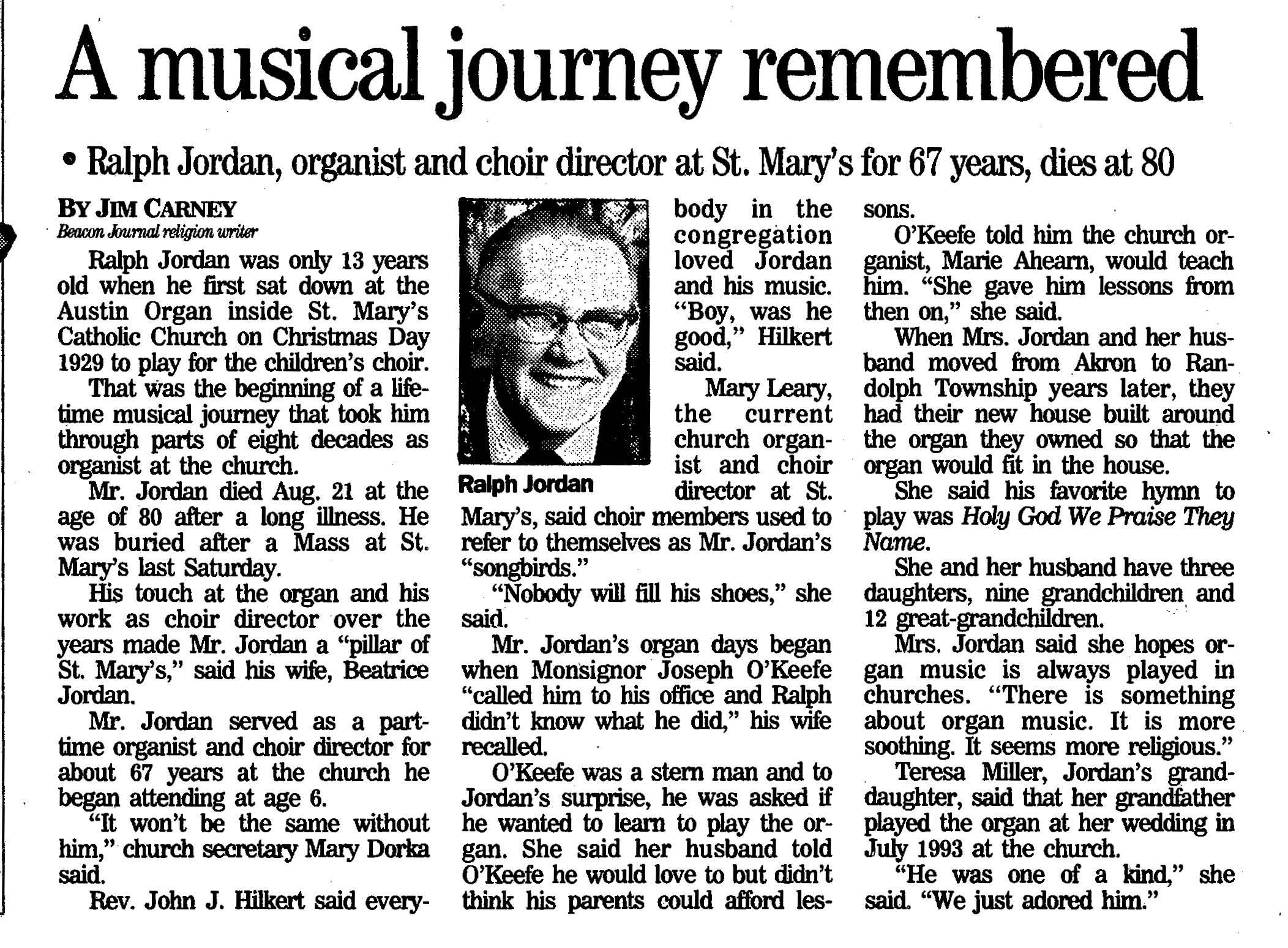
The newspaper article below from the Akron Beacon Journal sums up Mr. Jordan’s own musical journey. He began playing the Austin Organ when he was a young man in 1929, he was only 13 years old.  He last touched the keys of the organ on Christmas Eve of 1995. Shortly after Christmas, he fell ill, was hospitalized and eventually was sent to the hospice center where he lingered until August of 1996.  He served St. Mary’s Parish for 67 years.

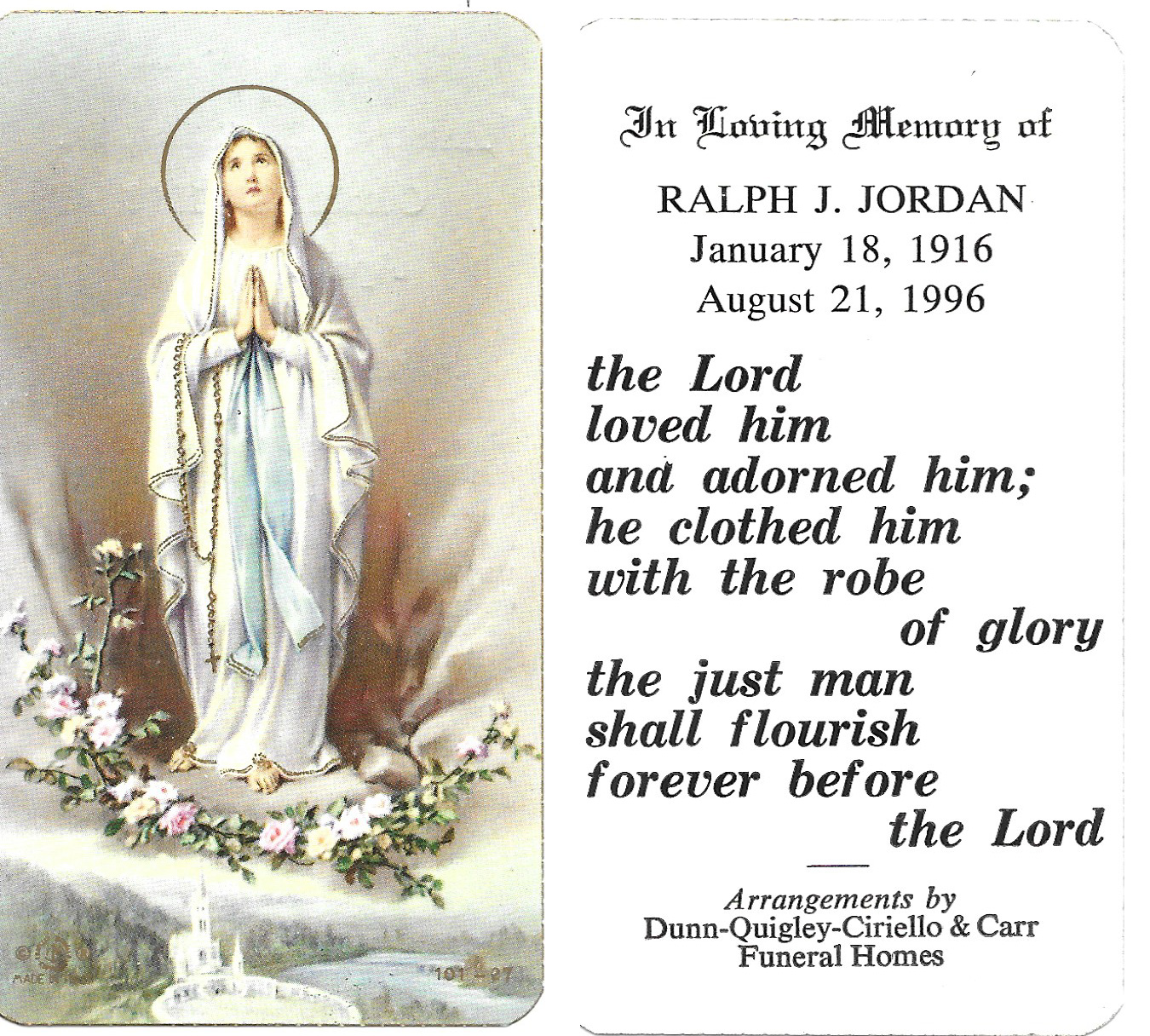
In memoriam of Ralph J. Jordan (1916-1996)
Ralph Jordan Prayer Card

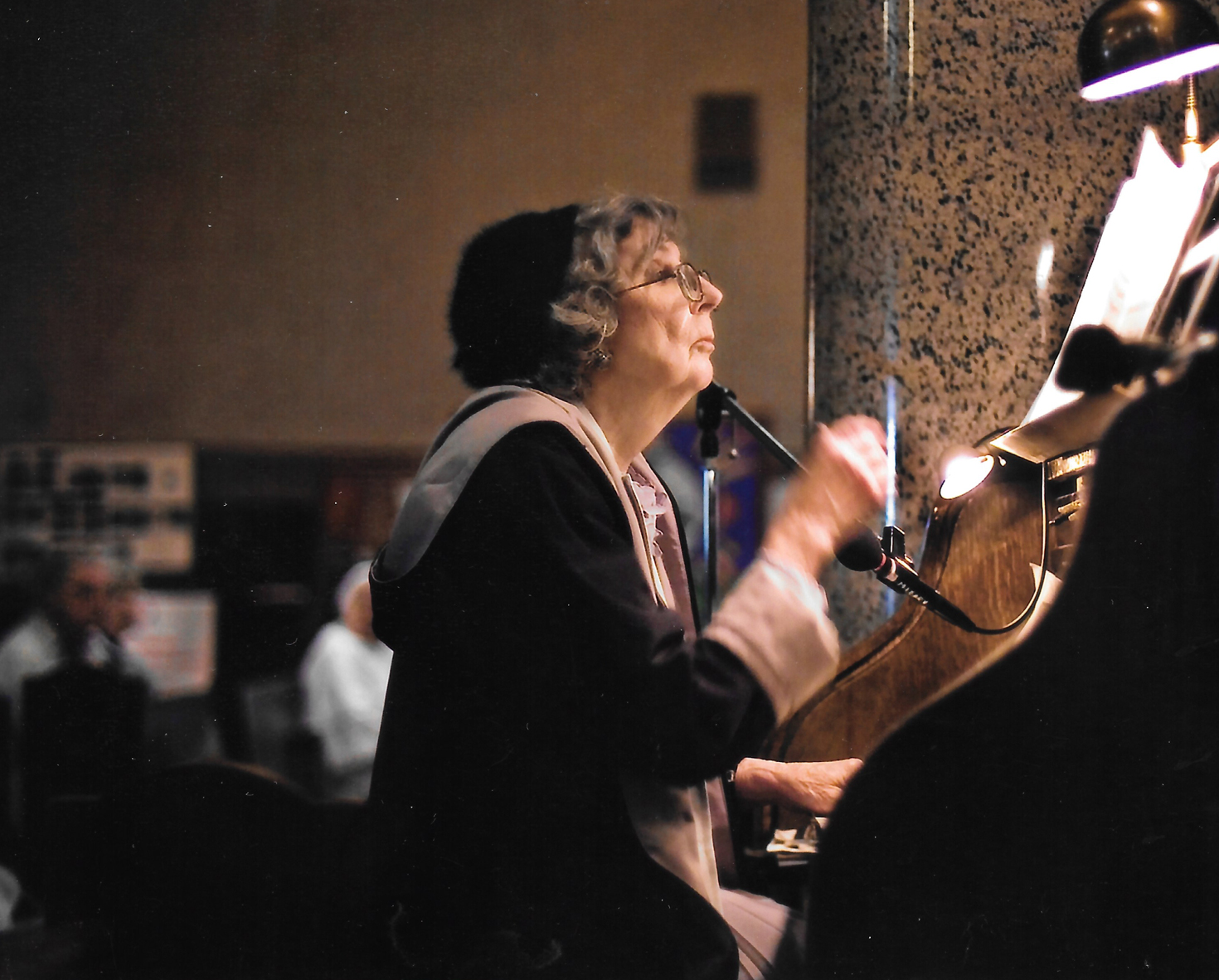
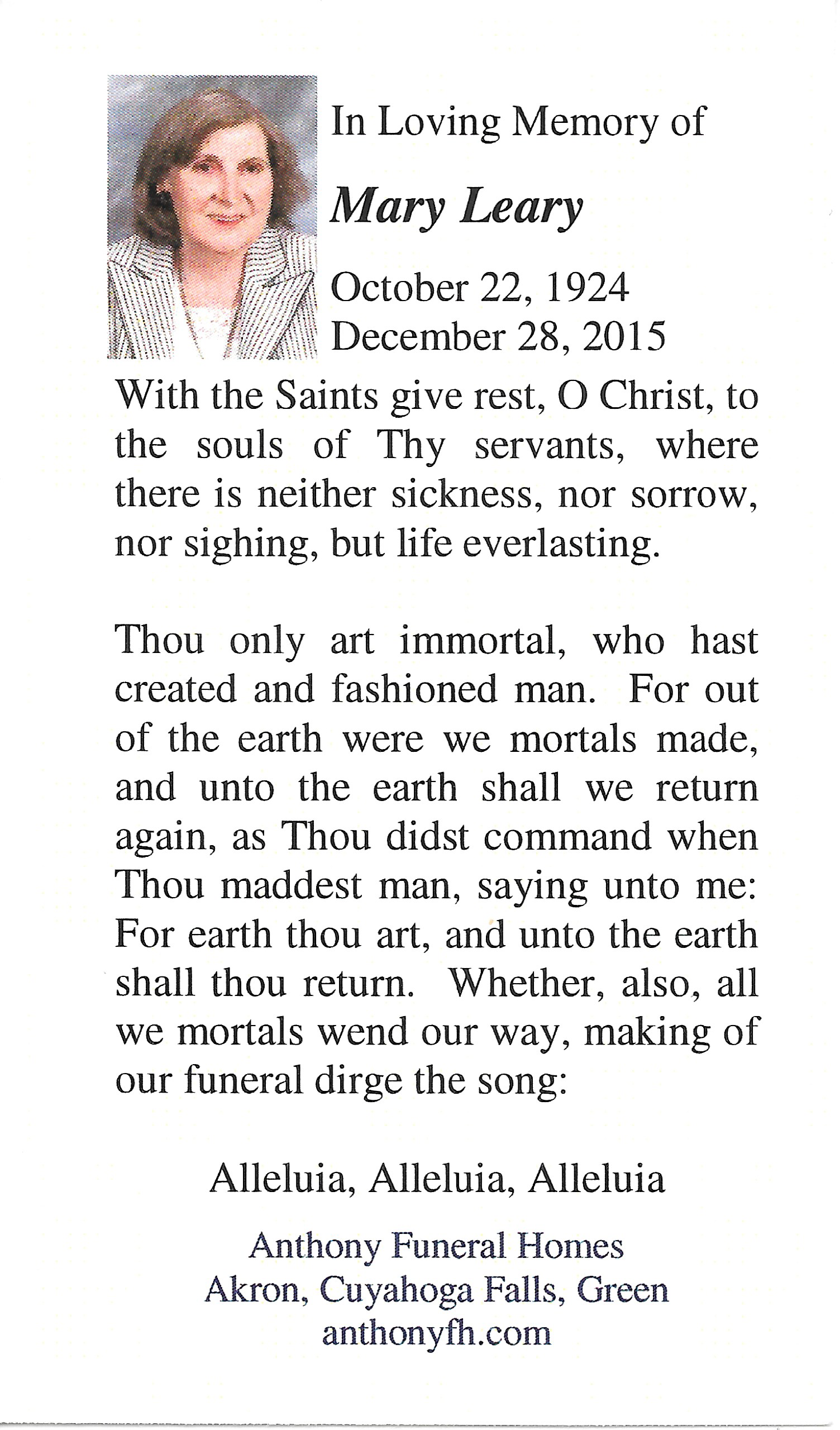
Mentioned in the article above was the assistant organist, Mary Leary. She became the organist after Mr. Jordan died and continued the musical traditions that had become a signature of St. Mary’s. Mary was also Organist and Choir Director for Visitation of Mary (formerly Annunciation Parish) in Akron, Ohio. Her musical career spans 50 years. Mary was also a gifted artist excelling in Watercolor, Japanese Sumi Painting, and Russian Folk Art.

Mary continued as the organist until 2005, she then became ill and it was necessary for her to step down. Mary and I had many conversations regarding the musical traditions of St. Mary’s. She was so proud to be following in the footsteps of a great organist and choir director. She once told me, enjoy the music while it lasts because when it is gone, it will be gone. In many ways she was right, the musical traditions of St. Mary’s are gone now and the wonderful Christmas and Easter music that we used to sing are only memory.

Mary Leary at the Austin Organ
Mary Leary Prayer Card

Being a member of St. Mary’s Choir was like being part of an extended family and one of the fondest memories I have are of the choir picnics and Christmas parties. These wonderful gatherings were hosted at the home of Mr. and Mrs. Jordan who lived in Randolph, Ohio. It was their way of showing appreciation for all our hard work. The Christmas parties were extra special because before the night was over, and with a cup of cheer in hand, we would gather around the organ in the Jordan’s home and sing Christmas carols.

I became good friends with all of the choir members, but two individuals stand out among the rest. The first is Tom McNeill and then Bill Ferreri. Tom and I sang together for the longest time, and I did a special tribute to Tom last year. You can read more about this tribute by clicking on this link: The New Born King.

Bill and I became good friends over the years. He was a connoisseur of music, particularly the opera. He was a member of the Legion of Mary, the Holy Name Society, and a US Navy Veteran. I remember one rehearsal he was helping me to reach a high tenor note. He said, just think of it as climbing a ladder. I am still trying to reach those high notes Bill! We would often sing duets together and our voices blended so nicely that none of the parishioners knew that two voices were singing unless they turned around and looked up into the choir loft.

I credit Bill for starting me off on my Catholic Hymnal collection. He gave me a copy of the 1920 St. Gregory Hymnal and Catholic Choir Book – Complete edition, which he inscribed to me, Given to my very good friend Don Howe this 1st day of May 1984. May God Bless You Always. May you sing his praises forever.

Bill died suddenly in January 1996.

Below are some photos taken of St. Mary’s Choir.

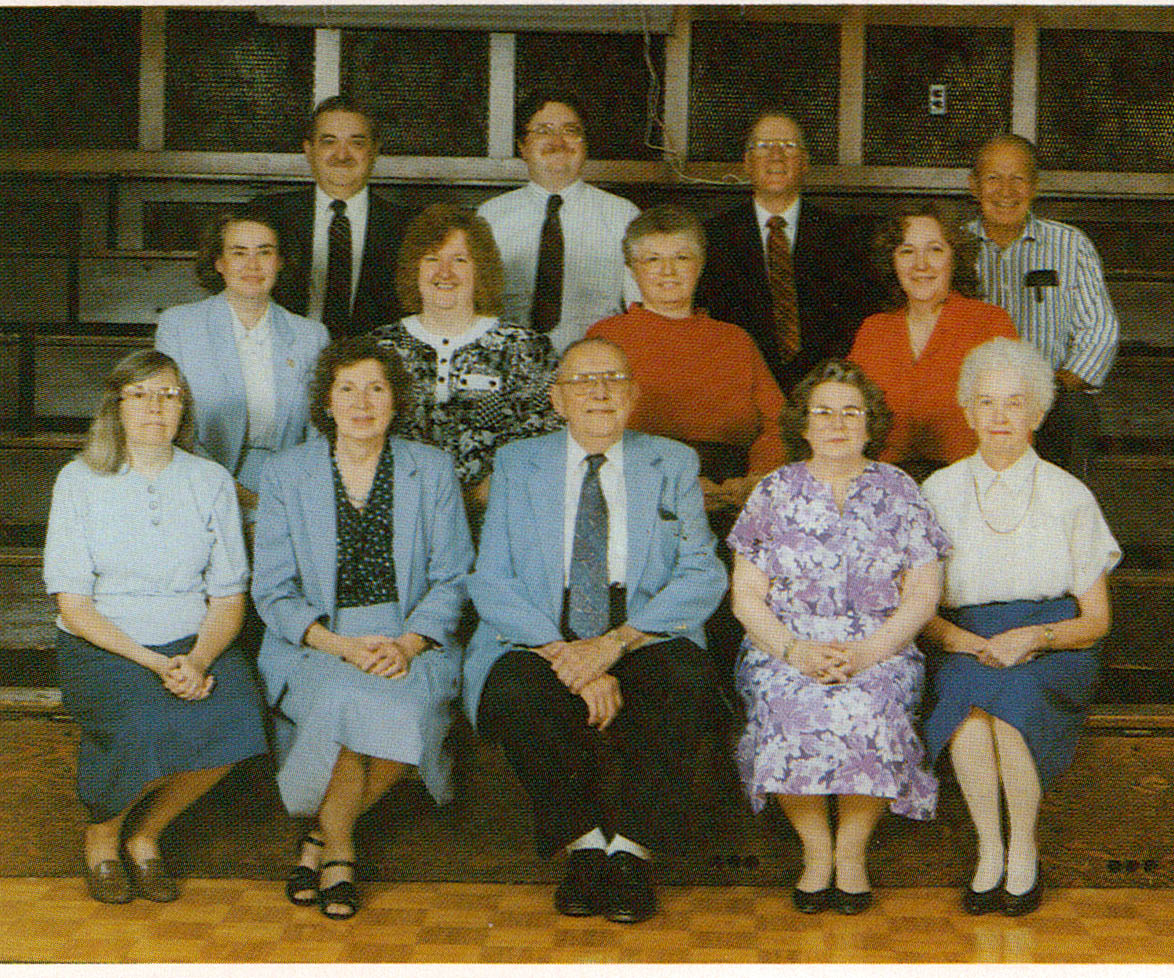
St. Mary’s Choir, 1995
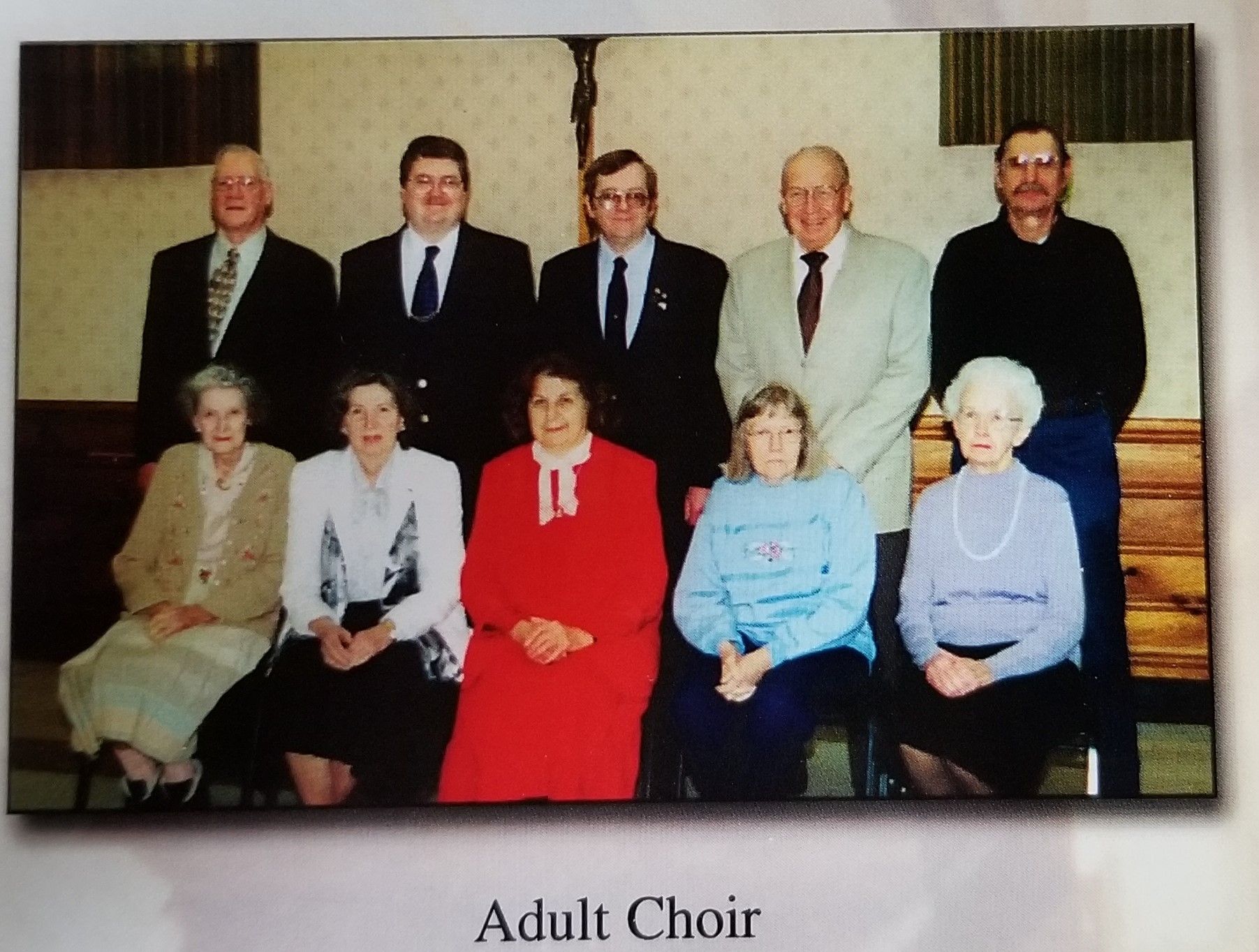
St. Mary’s Choir, 2000

In the photo from 1995, in the top row from left to right is Bill Ferreri, Don Howe, Tom McNeill, and Tel Wartko. In the second row left to right is Kathy Lushbaugh, Charline Cathell, Pat Bettle, and Mary Sargent. In the bottom row is Barb Rotunda, Mary Leary, Ralph Jordan, Dorothy Brouse, and Jeannette McCormick.

In the photo from 2000, in the top row from left to right is Tom McNeill, Don Howe, Bob Howe, Tel Wartko, and Leonard (our trumpet player). The second row is Anna Bennett, Mary Leary, Mary Jo Maximovich, Barb Rotunda, and Jeannett McCormick.

If you live in the Akron area, I invite you to come to St. Mary’s Mass on Sunday’s at 9am, and if you are interested in singing in the choir come and find me. I continue to sing at St. Mary’s, and I share the cantor role with the organist. Most of the St. Mary Choir members pictured above are gone now and I am the last of that wonderful and special group of singers.

In Memoriam

Deceased St. Mary Choir Members

  • Al Jordan (1911-1995) deceased
  • Bill Ferreri (1929-1996) deceased
  • Catherine Wolf (1917-2006) deceased
  • Dorothy Brouse ( d. 2003) deceased
  • Eleonore Kuhne (1922-2018) deceased
  • Harry Considine Jr., (1913-1996) deceased
  • Jeannette McCormick (1923-2012) deceased
  • John Petros (1895-1991) deceased
  • Martin Wolf (1912-1993) deceased
  • Mary Tsakeres (1923-1994) deceased
  • Ted Kellers Sr., (1915-2004) deceased
  • Tel Wartko (1928-2010) deceased
  • Tom McNeill (1933-2019) deceased

Mr. Jordan was faithful to make recordings of our Christmases, Easter’s and special celebrations like May Crownings. He would place his boom box down on the organ bench near the Sanctuary and instructed his wife Beatrice on how to start, stop, flip the cassette tape, and press record. Needless to say, I have played mine repeatedly and so several years back I digitized the best of these recordings which are featured below. They are not professional recordings and you can hear a wide spectrum of background sounds including banging kneelers, people shuffling by each other, individual choir voices, etc. 

The first group of recordings are from a special devotion we did in Honor of the Sacred Heart of Jesus in June 1982. One of the hymns O Sacred Heart, O Love Divine was featured in my HYMN OF THE MONTH, please click on the link to learn more about the author and composer.

The second group of recordings are from the Midnight Mass on December 24, 1985 with special attribution given to the soloist.

album-art

00:00
album-art

00:00

Conducting Hymn Research

I thought some of you might like to know how I do research for my HYMN OF THE MONTH write-ups and so I thought I would take a moment to explain my methodology in hopes that it might inspire and help others. When doing my hymn research, the first step for me is the selection process. Several factors will affect my decision.

  • my own familiarity with the hymn, i.e., The New Born King
  • newly discovered information about the author or composer, i.e., Sweet Name
  • does the hymn fall into any of the categories for Catholic devotions for that month

For example: June is the month of the Sacred Heart, November is the month for All Souls, October is the month of The Holy Rosary, May is the month of Our Blessed Mother, and so on.

Next, to gather information on the hymn, I refer to my prime resource History of American Catholic Hymnals – Survey and Background (1982), and the Handbook for American Catholic Hymnals (1976), written by J. Vincent Higginson, Mus. B., M.A., former President of the Hymn Society of America, an organist, author, and composer. Mr. Higginson’s pioneer research of over thirty years, provides information on the subject of vernacular Catholic hymnody from 1787 to 1970. These two books are a treasure trove of data for anyone interested in American Catholic hymnody. On an aside, he compiled the Catholic hymnal Mediator Dei in 1954 under the pseudonym Cyr De Brant.

In addition to Mr. Higginson’s research, I turn to A Dictionary of Hymnology by John Julian. His work covers the origin and history of Christian hymns of all ages and nations, up to and including the early years of the 20th century. The first edition of his work published in 1892 was one volume. The second revised edition still as one volume was published in 1907. Then in 1957, Dover Publications of New York reprinted John Julian’s work in its entirety in two volumes.

By comparing both Mr. Higginson’s and John Julian’s research and finding similar results, I can be reasonably certain that the data is accurate. However, over time I have discovered errors in these resources. The errors became the impetus for me to start my own library of Catholic hymnals. I also adopted an old axiom, trust but verify.

Other printed resources include:

  • The Early Hymn Writers of Pennsylvania by Lucy E. Carroll, 2008
  • Sing of Mary by Stephanie A. Budwey, 2014
  • The Papers from the Hymn Society, 1948
  • Converts to Rome During the 19th Century by W. Gordon-Gorman, 1885
  • Roman Catholic Music in England: 1850-1962 by Thomas Muir, 2004
  • The Latin Hymn-Writers and Their Hymns by Samuel Duffield, 1889
  • The Popular Marian Hymn in Devotion and Liturgy by Fr. Thomas A. Thompson, S.M., 1994
  • Roman Catholic Catechesis in the United States 1784-1930 by Charles J. Carmody, 1975

My own collection of Catholic hymnals is my next prime resource. They now number over 150 dating from around the 1840s thru the 1970s. I have some modern hymn books, like the Adoremus, Gather III, Glory & Praise, and a few others, but I typically don’t refer to them as a resource because, 90% of Catholic devotional hymns have been removed. 

I also do my best to maintain a parallel collection of hymnals scanned by Google or made available online, such as from Corpus Christi Watershed. Having a scanned copy of the hymnal makes it much more effecient when searching the contents. In addition to my American collection of hymnals, I have hymnals from England, France, Ireland, Australia, and Scotland. I also use the Internet Archive, ChoralWiki, and other online resources such as The Caecilia Archives and The Catholic Choirmaster Archives.

Prayer is also one of my resources, seek and you shall find, knock and the door will be opened, ask and you shall receive, this was the case for the hymn Ave Maria, Bright and Pure. I also have library access for both Cleveland and Akron libraries. I often explore the newspaper clippings and other historical data in connection to a hymn.  

One of the last steps is to examine the different melodies. Some hymns like Bring Flowers of the Rarest have had only one melody throughout its existence while others like God of Mercy and Compassion have several. I use MuseScore to engrave the music and generate an mp3 audio files. 

Often times, I contact Peter Meggison, producer of The Devotional Hymns Project. Peter has been collecting Catholic hymnals for many years and has been extremely helpful in supplying sheet music or SATB arrangements of melodies I can’t find. His knowledge on hymnody is bar none. Peter has also been more than kind in granting me permission to link to newly commissioned recordings of the hymns I write about. Please take some time to visit his website and enjoy the many beautiful recordings and learn more about our rich heritage of Catholic music.

I am also grateful to Noel Jones, Creative Director at Sacred Music Library who published A Catholic Book of Hymns & Chants. Noel has often granted me permission to link to this wonderful hymn collection.

Many of my hymn write-ups would not be possible were it not for the help I receive from the archivists of religious communities and university libraries. A recent example of their help was for the hymn God of Mercy and Compassion.

Needless to say, many hours are spent researching a particular hymn. Sometimes it happens that I will discover an author or composer of one hymn while researching another. This was true for the hymn O Sacred Heart, O Love Divine. Some might call it luck, or coincidence that I locate information on an author or composer, but I like to think that Blessed Mother is guiding my hand and would like a certain melody or story to be known again.

I hope this short explanation of the steps I take to do my research will suffice for those who are curious, who might want to start doing research on their own, or who are in doubt of the accuracy about my work.

Mother Dearest, Mother Fairest

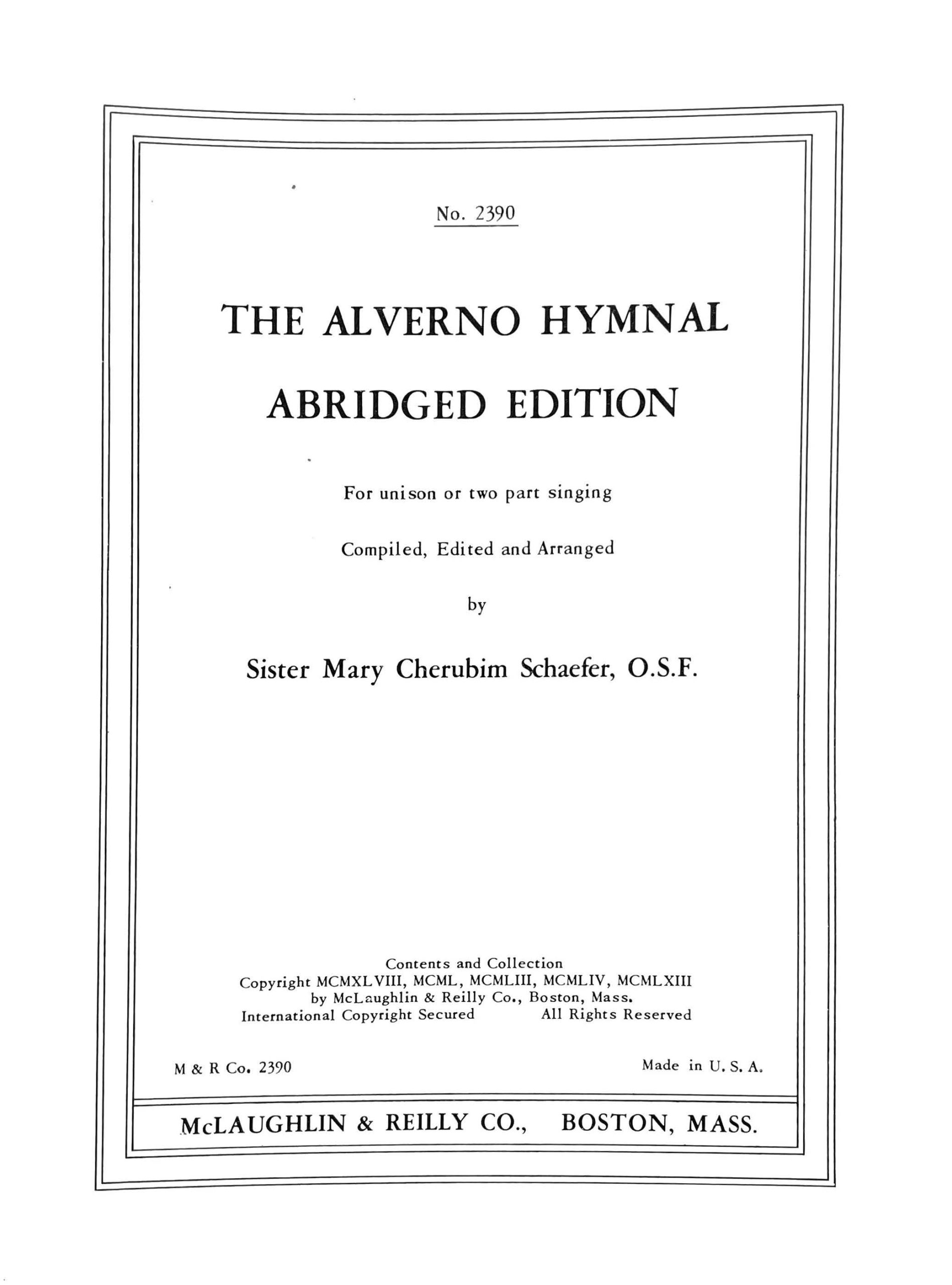
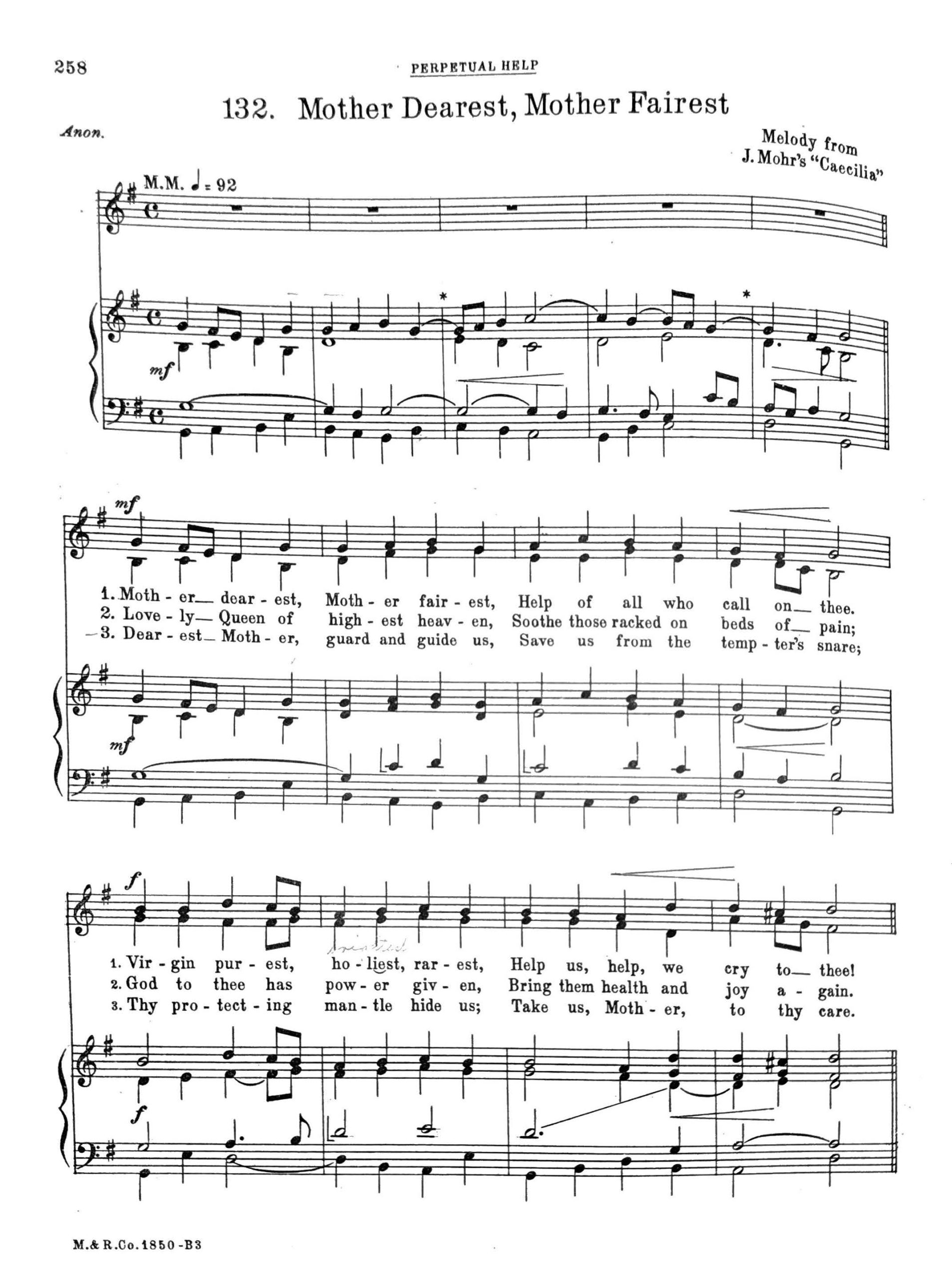
Recently, the archivist for the School Sisters of St. Francis sent me a copy of the organ arrangment from the Alverno Hymnal Abridged Edition published by McLaughlin and Reilly Co., in 1963. This collection is the compilation of the three Alverno Hymnals published between 1948-1953. You can read about this wonderful Marian hymn the authors and composers by clicking on the following link: Mother Dearest, Mother Fairest

Alverno Hymnal Abridged Edition, 1963

Old St. Mary’s Church sings Sleep, Holy Babe

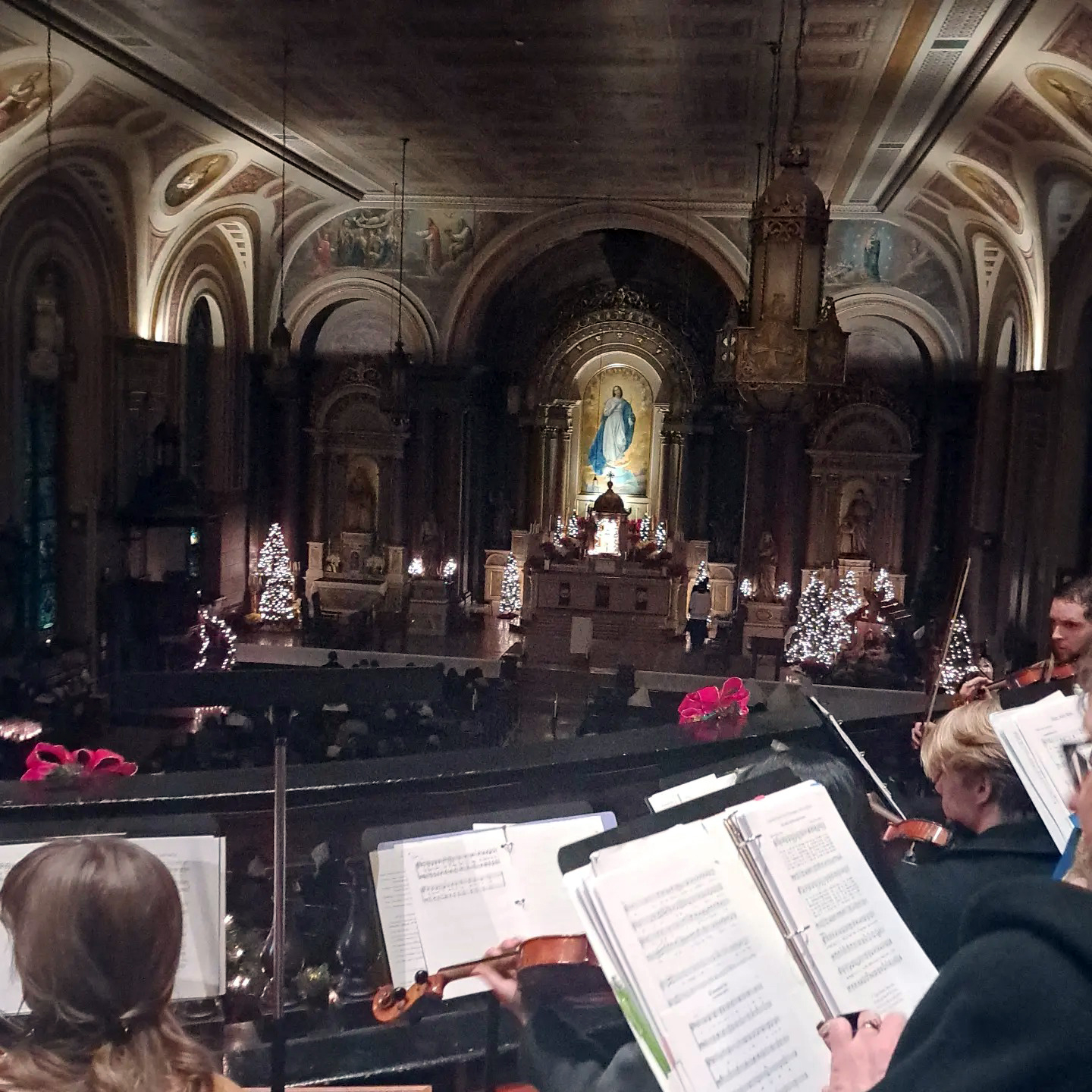
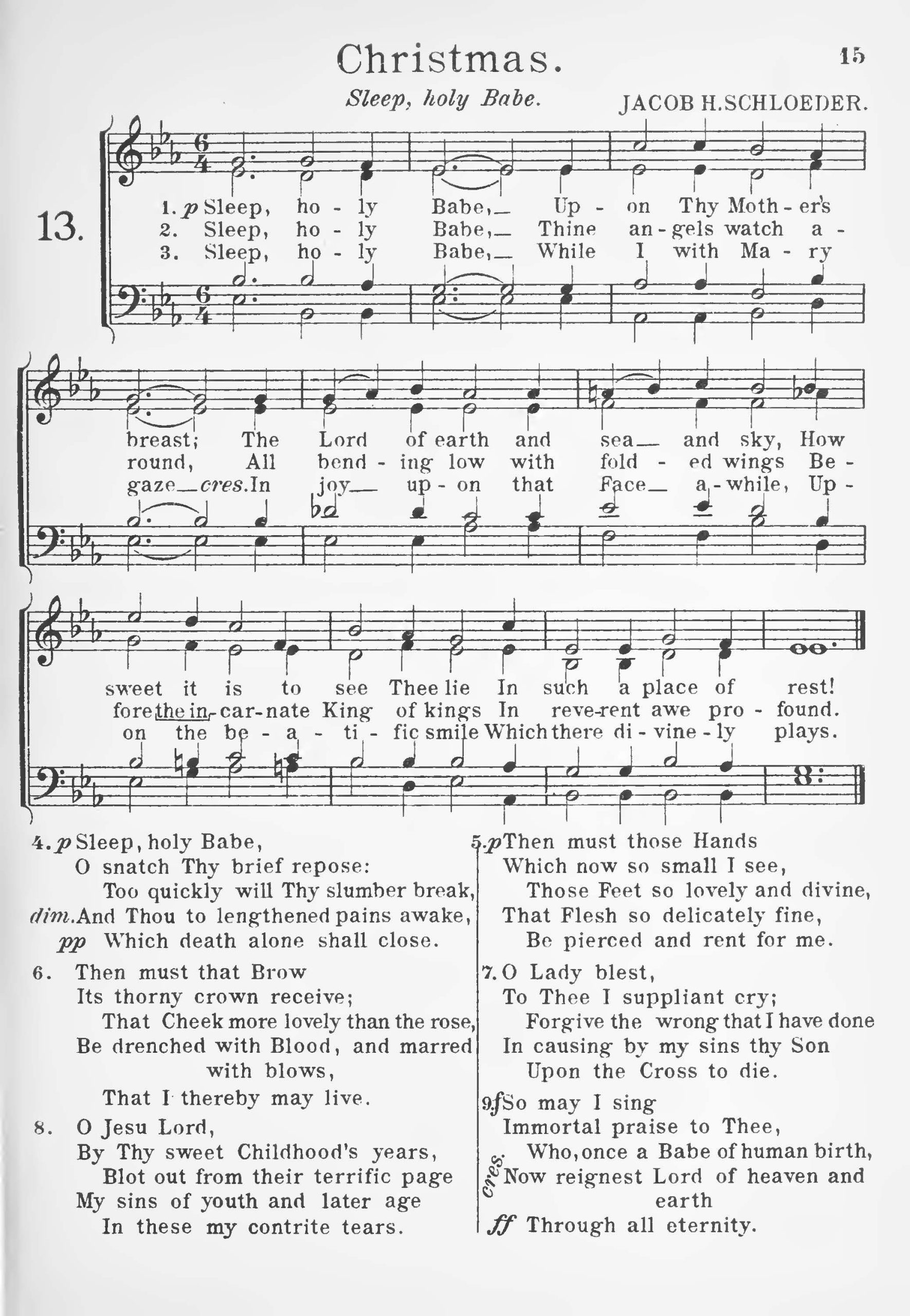
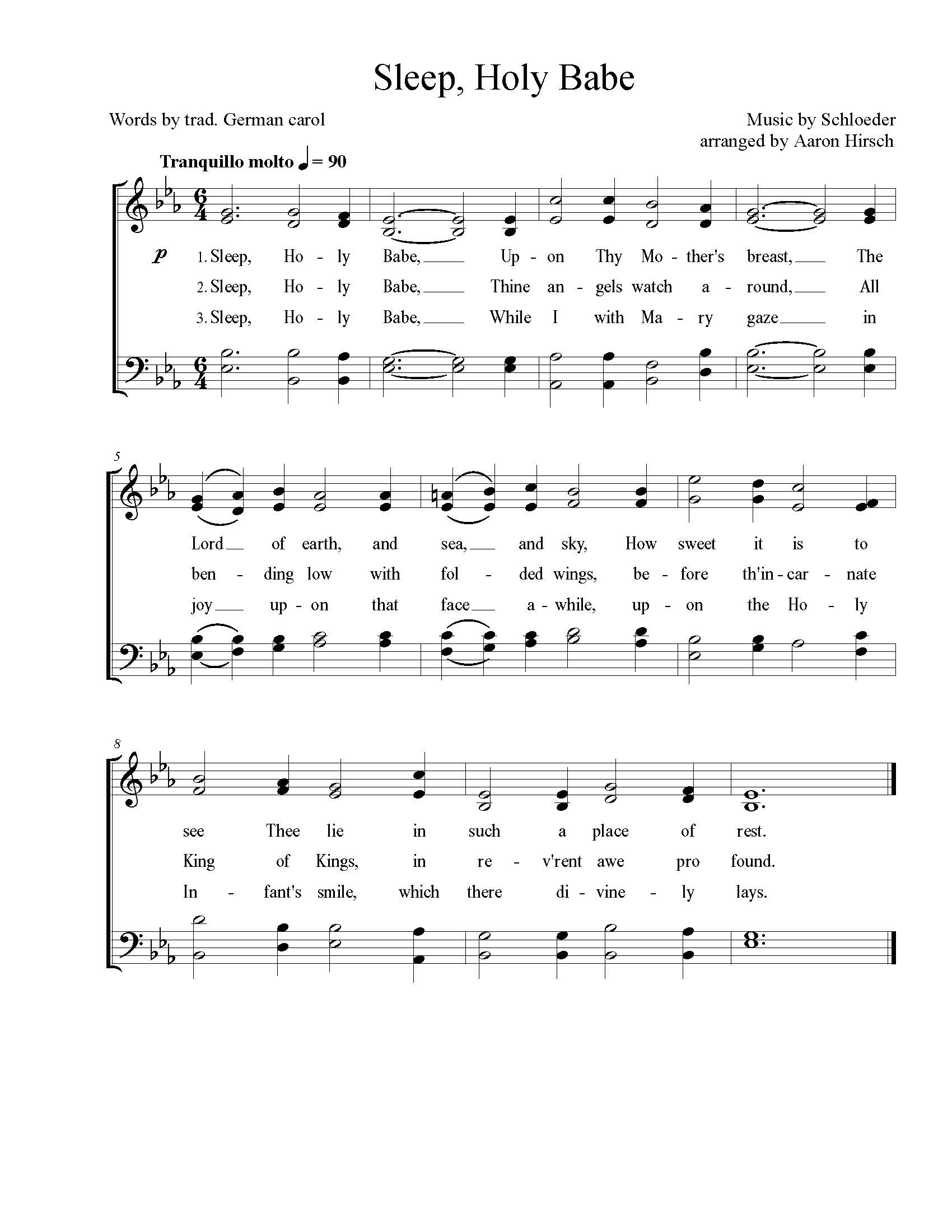
On December 24, 2022 at the Midnight Mass, the Choir and Orchestra of the Cincinnati Oratory, Old St. Mary’s Church, Cincinnati, Ohio, along with the twenty-one member Laudate Pueri Children’s Schola Cantorum sang Sleep, Holy Babe. The melody was composed by Jacob Schloeder (1865-1919) and arranged by Aaron Hirsch. This is one of the wonderful melodies featured in my HYMN OF THE MONTH for December. The words of this hymn were written by Father Edward Caswall (1814-1878) a most holy priest of the Birmingham Oratory in London.

Sean Connolly who is the Director / Organist of the Oratory Choir has provided a recording of this lovely hymn and photo of the choir. The Director of Laudate Pueri is Sophia Decker, and assistant director Fatima Spoor. Fatima was conducting that night. The Laudate Pueri are an integral part of the Oratory music program which Sean simultaneously assists and oversees in their integration.

St. Mary's Oratory - Christmas Eve 2022

Sean brought this arrangement of Schloeder’s tune from his old parish, St Mary, Help of Christians in Sleepy Eye, Minnesota where it was sung every year for nearly a century. To learn more about this beautiful hymn and Father Edward Caswall please take a few moments to read the short story HYMN OF THE MONTH – SLEEP, HOLY BABE.

Catholic Church Hymnal, 1905
Sleep Holy Babe Arr. by Aaron Hirsch
album-art

00:00

St. Mary Parish May Crowning

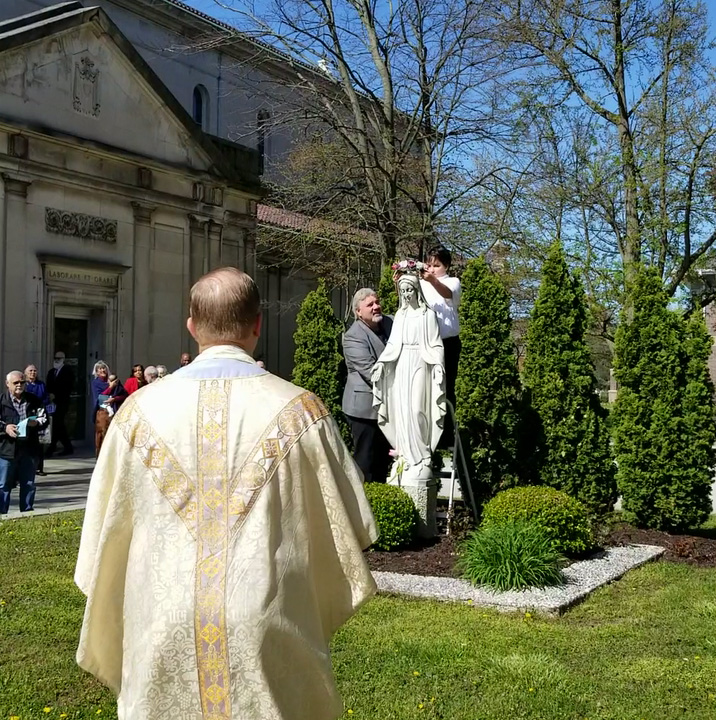
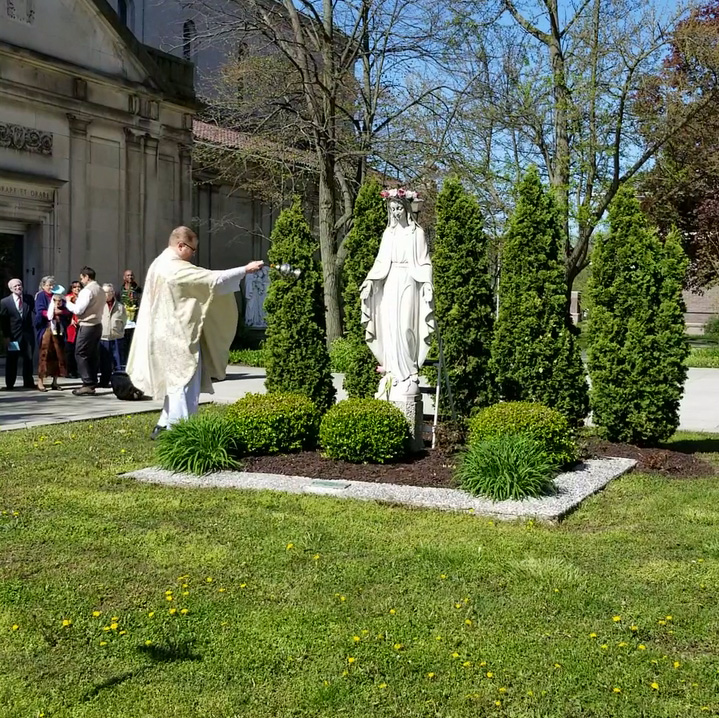
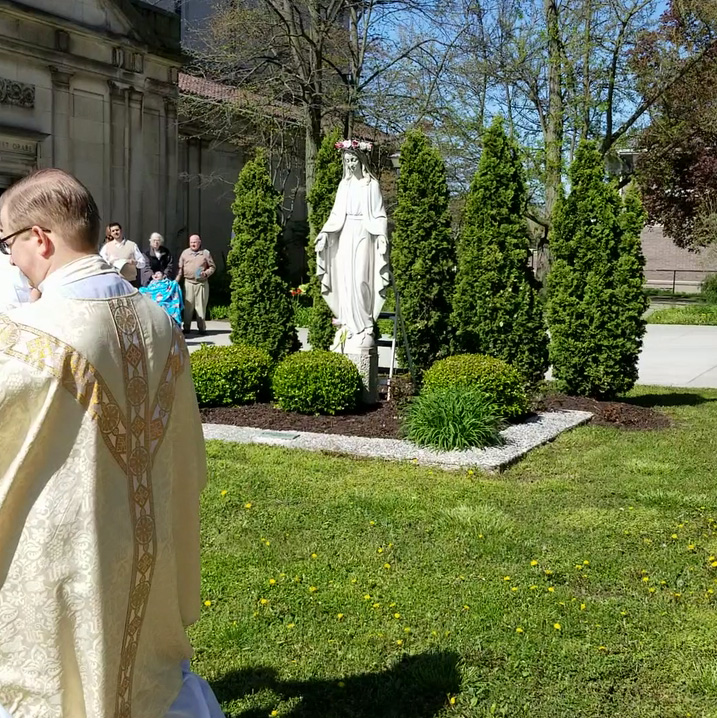
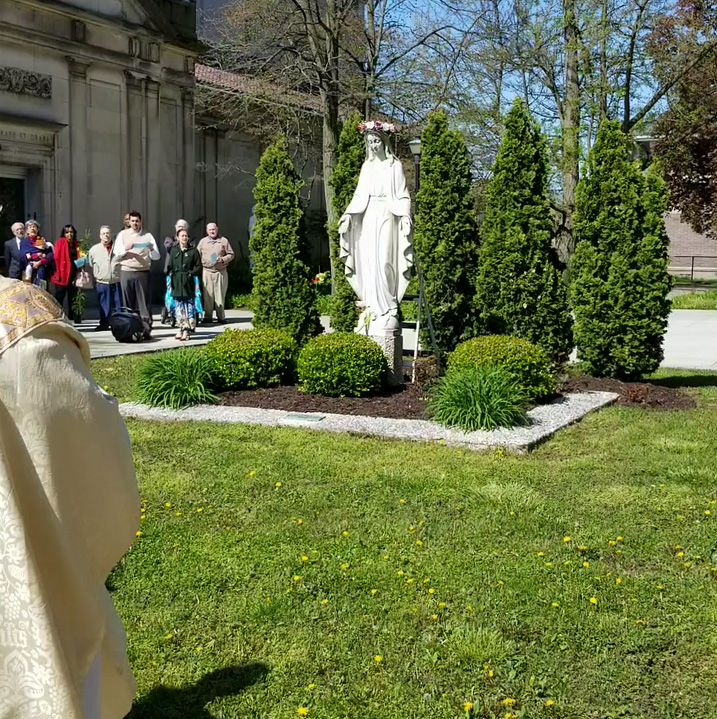
On May 2, 2022, I emailed Father Chris Zerucha, Pastor of St. Mary Parish in Akron, Ohio to share with him my short story on the origins of the most widely used May Crowning hymn in the Catholic Church, Bring Flowers of the Rarest. I grew up in St. Mary’s Parish and sang in the choir for over thirty years (1977-2010). I was happy when Father Zerucha invited me to attend the 9AM Mass at St. Mary’s on May 8, Mother’s Day. They celebrated a First Communion and had a May Crowning after Mass. It was beautiful sunny day for an outdoor gathering to crown Our Lady. 

Everyone received a small blue leaflet entitled May Crowning with the words of the hymns printed on the pages and on the back page of the leaflet were the words of Bring Flowers of the Rarest. There was a small ensemble of singers that led the congregation. It brought back a lot of memories. The Mass included some exceptionally good hymn selections including, Jesus Christ is Risen Today; Jesus My Lord, My God My All, and O Lord I Am Not Worthy for the First Communion hymn. When I arrived, they were praying the rosary before the Blessed Sacrament.

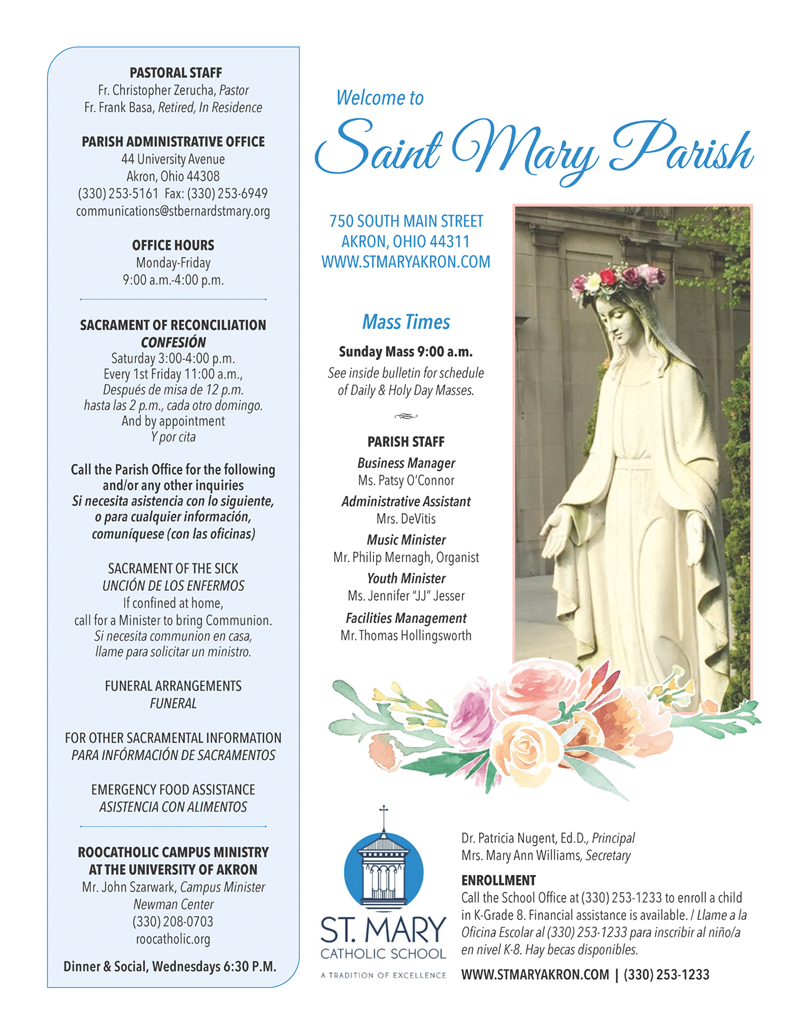
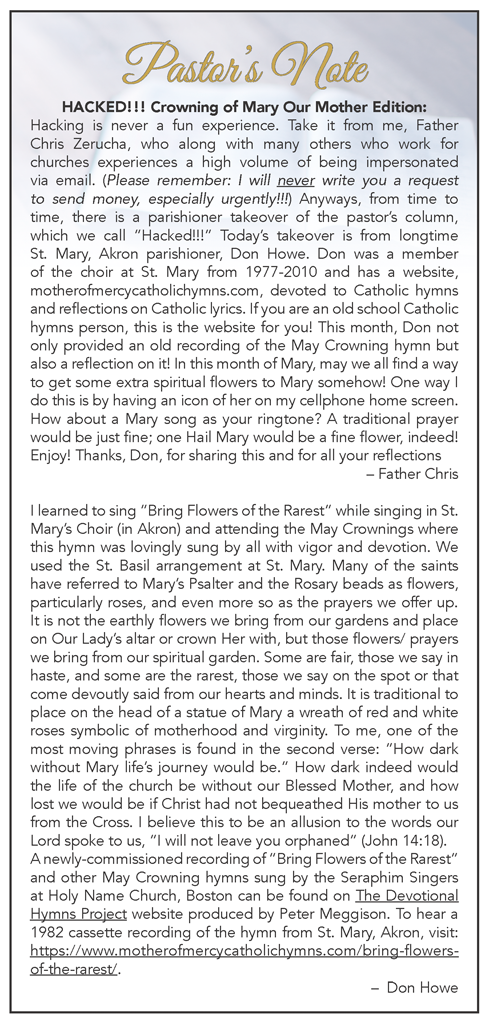
To my surprise Father Zerucha featured my hymn reflections in St. Mary’s weekly bulletin. God Bless you and thank you Father Chris Zerucha.

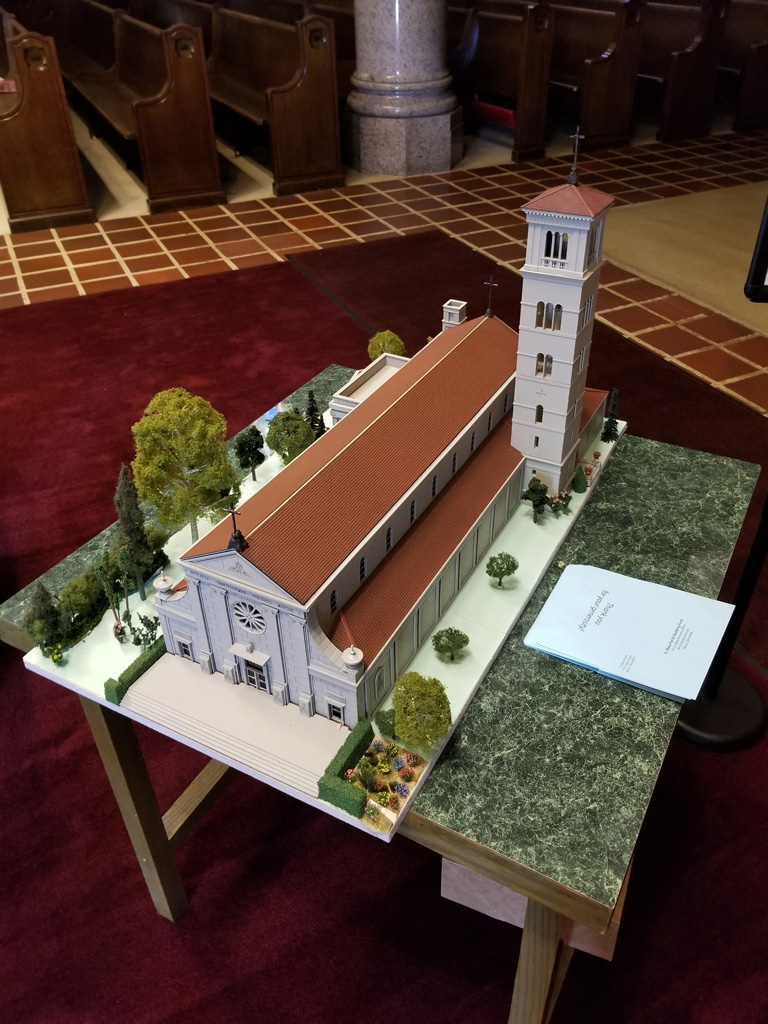
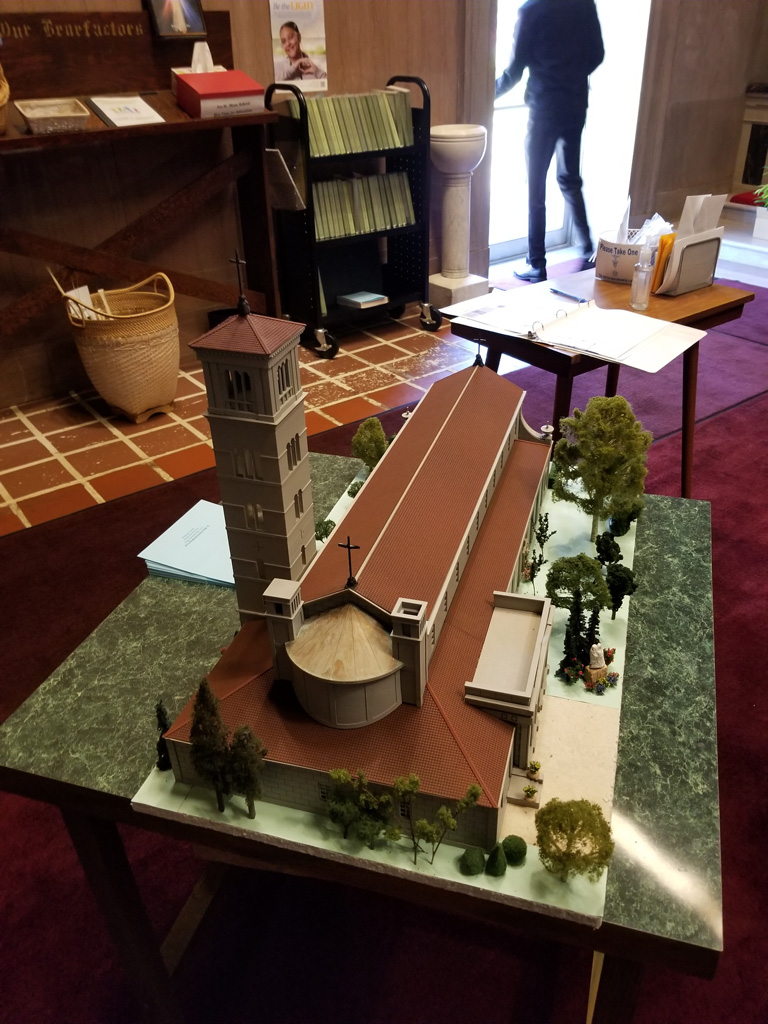
I took a few photos which I thought you might enjoy. As you enter from the side entrance, they have this beautiful scale model of St. Mary’s Church. The parish is currently engaged in a $1 million dollar restoration project.

May Crowning
May Crowning
May Crowning
May Crowning
St. Mary's Church
St. Mary's Church
Parish Bulletin Cover
Pastor's Note
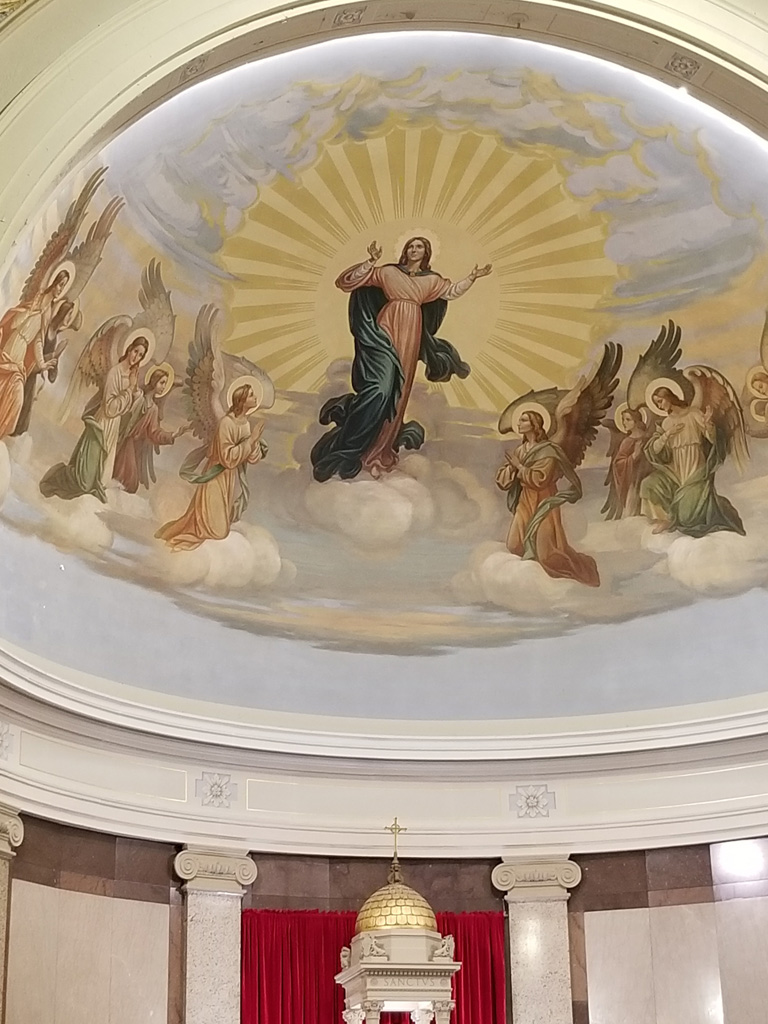
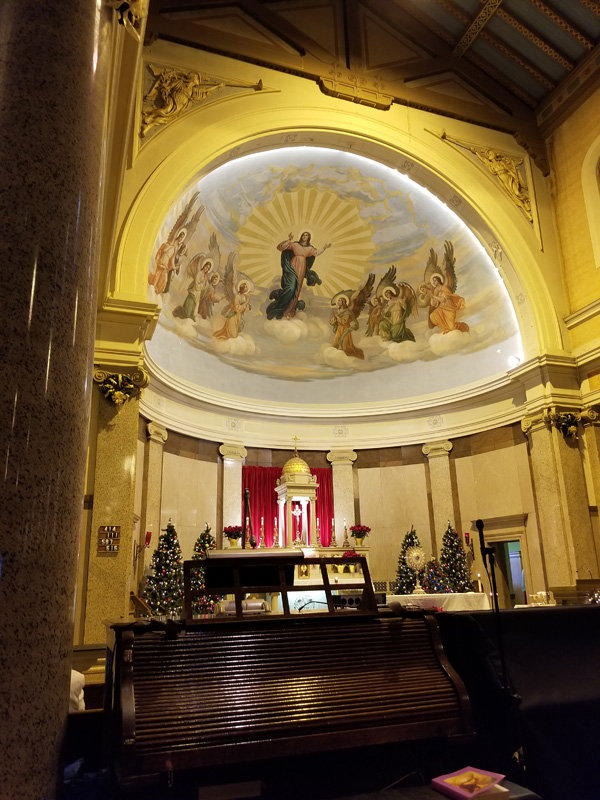
Over the high altar

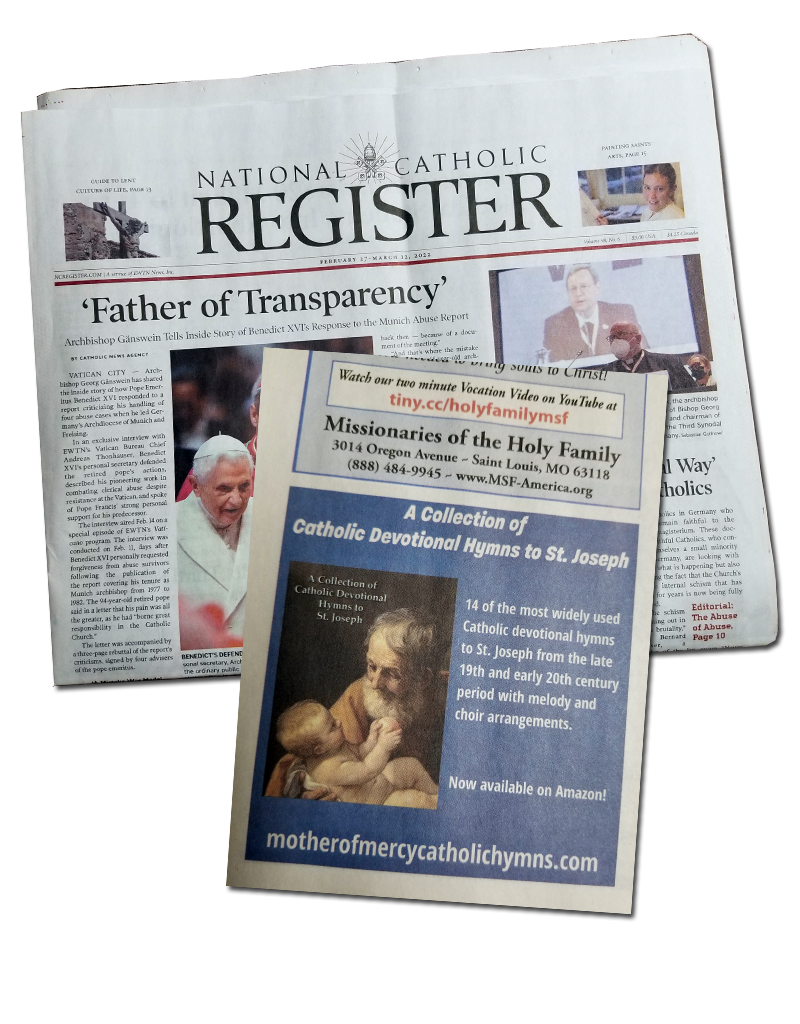
National Catholic Register features Hymns to St. Joseph

I recently bought ad space in the National Catholic Register to promote my collection of hymns to St. Joseph. These traditional Catholic hymns to St. Joseph are available in melody and choir arrangements. I’m very proud of this accomplishment and I believe very strongly about putting approved Catholic devotional music back in the hands of Catholic musicians.

Just in time for the Feast of St. Joseph. These are fourteen of the most widely used hymns to St. Joseph with melody and choir arrangements that are easy to sing with approved text by the Catholic Church. Be sure to look for this ad and buy a copy for yourself and one for your music director.